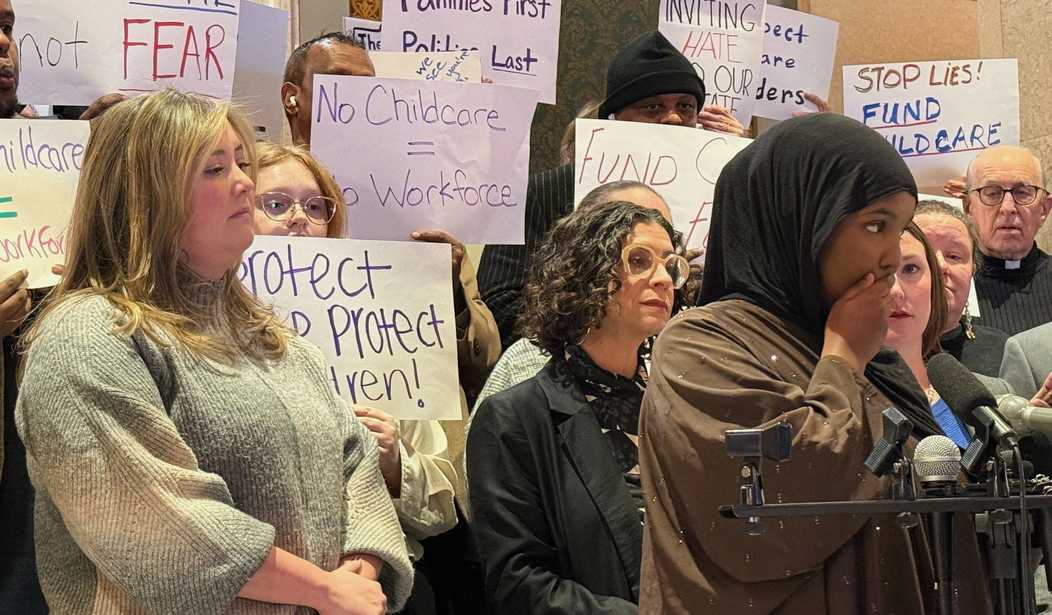

When Minnesota regulators find a family child-care provider with a dirty diaper pail, an unlocked cabinet, or a training certificate that expired last Tuesday, the response is rarely a friendly visit from a coach. It is more often a correction order that carries the real threat of conditional status, a fine, or the kind of cumulative pressure that has driven thousands of home-based providers out of the business entirely. More than 4,000 licensed family child-care programs have closed in the past decade. The ones still standing describe compliance as a full-time second job that can end the first one.
Contrast that with what happens when a center that has already collected more than $7 million in state Child Care Assistance Program money racks up another round of citations. The institutional reflex is “technical support.” Translation: more training, more coaching, more chances to get the paperwork right while the public dollars keep flowing. The message is not subtle. Some providers (coincidentally owned by white people) are problems to be eliminated. Others (coincidentally owned by Somalis) are partners to be coached.
Rep.-elect Abdi Daisane’s Blooming Kids Child Care Center in St. Cloud is the latest illustration. An October 8, 2026 licensing review — weeks before he flipped a long-held Republican seat — produced roughly a dozen new violations. Alpha News reports that the list included hazardous objects accessible to children, sanitation shortfalls, fire-extinguisher problems, missing immunization and allergy documentation, and supervision and training lapses. This is not the center’s first appearance on the licensing docket. Earlier reviews in 2023, 2024, and 2025 also generated citations, and the program paid a $400 fine in late 2024 related to background-study compliance. The license remains active. The money keeps arriving.
Since 2018 the center has received $7.29 million in CCAP payments. It has also drawn $598,251.62 in federal Child and Adult Care Food Program funds since 2020. For part of that period its CACFP sponsor was Partners in Nutrition, the nonprofit that later agreed to an $18.5 million civil settlement with the state after the Attorney General alleged it knowingly submitted false claims for meals that were never served. No public finding has charged Blooming Kids itself with fraud. That fact is real and should be stated. It does not erase the pattern of citations, the scale of the public funding, or the different standard applied to the family providers who do not have the same volume of taxpayer revenue behind them.
The double standard is the story. Family providers operate under rules written for the most cautious interpretation of every square foot and every training hour. They also happen to primarily operate in majority white suburban and outstate areas. When they miss the mark, the system treats the miss as evidence that the business model itself may be the problem. When a higher-volume center owned by Somalis that is already deep in the public-payment system misses the mark, the system treats the miss as a training opportunity. One path leads to empty living rooms and parents scrambling for care. The other path leads to continued enrollment in the programs the legislature funds and the agencies oversee.
Daisane will soon vote on the budgets, the rules, and the oversight structures that govern the industry in which he is a major participant. That is not a theoretical conflict. It is a concrete one. The same agencies that have responded to his center’s citations with the soft tools of technical assistance will be answerable, in part, to the legislator who runs the center. The question is not whether he is allowed to hold the seat. It is whether he will accept the ordinary requirements of recusal and transparency that any other member with a multi-million-dollar stake in a regulated, publicly funded industry would be expected to meet.
A secondary development has drawn more heat than it deserves. The Department of Homeland Security has confirmed that Daisane’s wife crossed the southern border on foot in April 2023, was apprehended near San Ysidro, and was released under the prior administration. She has described the crossing herself. Immigration law applies to her the same way it applies to anyone else; that is not a novel principle. Her status does not determine whether her husband can be seated, and it is not the main accountability question facing Minnesota taxpayers. The main question remains the one that family child-care providers have been living for years: why do the same regulatory words produce coaching sessions for some and closure notices for others?
Minnesota’s fraud problem did not appear overnight, and it will not be solved by another round of technical assistance for the same operators. The family providers who closed their doors did not lack training. They lacked the political insulation that appears to come with the right ethnic ownership, with scale, with public-funding relationships, and with the right institutional friends. If the next legislature is serious about both child-care supply and program integrity, it will stop pretending that the difference in outcomes is accidental. Equal rules require equal consequences. Anything less is just another way of telling one set of providers that the rules were written for someone else.