








DO THE STARS LOOK VERY DIFFERENT TODAY?
~ apologies to David Bowie
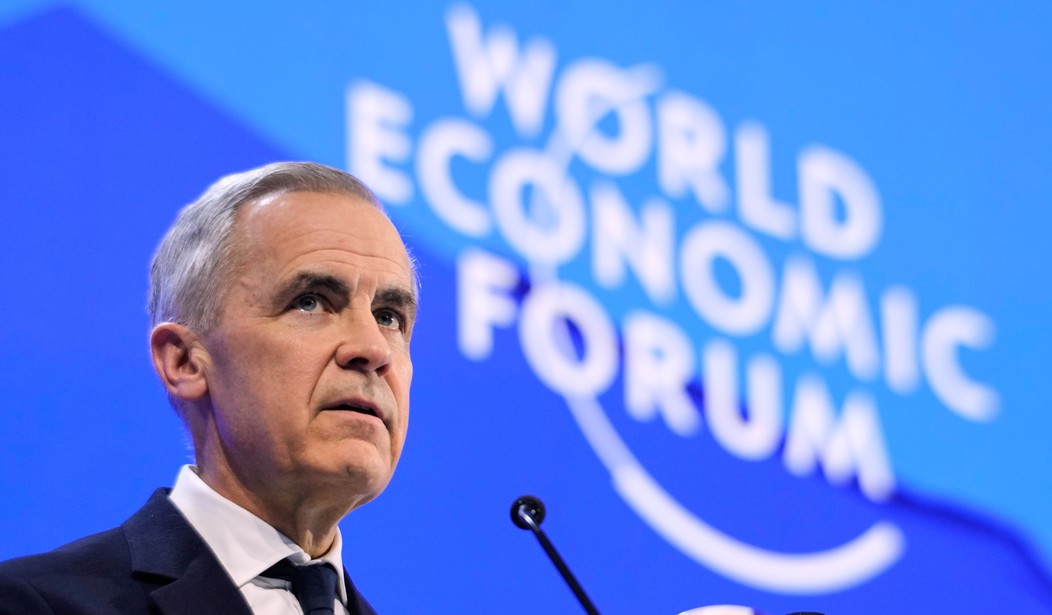
The Brookfield Corporation is a Canadian multinational 'alternative' investment management company. Before he was selected and then elected as Syrupean prime minister, Mark Carney served in multiple capacities at the firm. Those job titles, along with his investments, compensation, and contacts, have been a source of constant friction, ethics-wise, since he became prime minister.
Since he entered politics, Prime Minister Mark Carney has been accused of actual or perceived conflicts of interests, mainly regarding his connection to Brookfield Corporation. Before running for leader of the Liberal party in 2025, Carney was, first, vice-chair and head of ESG and impact investing and, later, board chair at Brookfield Asset Management. As such, he received shares, options and performance pay as part of his compensation package.
Now, as prime minister, he is making decisions that will impact these assets to the tune of, potentially, tens of millions of dollars. Brookfield’s investments are related to several key areas of public policy — including energy, environment, industry, taxation and infrastructure — in all of which Carney’s portfolio may put him in a conflict of interest.
What exactly is a conflict of interest? According to the Department of Justice, “A public office holder is in a conflict of interest when he or she exercises an official power, duty or function that provides an opportunity to further his or her private interests or those of his or her relatives or friends or to improperly further another person’s private interests.”
Having a real or even perceived conflict of interest over one’s head reduces a leader’s effectiveness whether in government or corporate life. If the head of a country’s government is thought to be serving his needs rather than those of his country and its citizens, such corruption is a clear threat to democracy — as is becoming all too clear in the United States during the second Trump administration. For a public corporation, reputation is a critical intangible asset to be fiercely protected. To quote Brookfield’s own Code of Business Conduct and Ethics, “Our reputation is everything and we should act responsibly in dealings with our securityholders, customers, clients, investors, suppliers, other stakeholders and competitors.”
There always seems to be a question of whether 'Carney is doing this for Canada or for a Brookfield buddy' hanging over nearly every major financial move he makes on behalf of the Canadian government. Some of it is inevitable, because Brookfield's fingers are in so many woke Syrupean pies.
Other times, it's that it just plain looks bad.
That has been the case lately, as more and more questions about Carney's hard stance against anything related to dealing with the United States collide with his visceral hatred of Elon Musk, the realities of satellite networks, and Canadian underwriting of homegrown competitors.
In a kind of gobbledygook answer to Ezra Klein for the NY Times in September, Carney gives his reasons for moving away from Starlink...
Ezra Klein
How do you balance tech dependencies given things like compute and Starlink?
Mark Carney
Starlink we will diversify away from, no question. Telesat LEO constellation, [will be launched in] Q1 2028, and that is an example where, at not the same scale as Starlink, but from a defense perspective — and certainly pooled with other partners, Europeans, Koreans potentially — you get to scale, and you cut that dependency, which has in certain circumstances been turned on and off in a way that was not sovereign to the actors in the conflict. And so again, that’s something you can’t unsee, and so it drives it on that. That’s on the space element....
And look, I don’t want to leave the impression that our entire strategy is diversifying away from the U.S. But what we’re aware of is, if we are not more diversified, if we don’t have broader and deeper partners elsewhere, we can be held up, and we don’t want to be in that position.
And the way we look at what we’re doing right now is it’s a robust strategy, because if the U.S. goes back towards the previous trajectory and its view of openness and its view of the relationship with Canada, etc., then we’re going to be a better partner with these other partnerships. If it doesn’t, if it stays on the current trajectory, we will have had to have done this. So we had the motivation to do it, and what I find, if you have access to everybody around the world, is that more and more countries are thinking in the same terms. So the conversations are, and what’s falling on from it are quite tangible.
...one of which is the entirely bogus controversy over Starlink in Ukraine.
🇨🇦🇺🇦 Canadian company Telesat plans to provide Ukraine with an alternative to Starlink by starting to create its own low-orbit satellite network, Lightspeed, which will start operating in early 2028. Canada does not hide that the reason for abandoning Starlink was the decision of the US government to temporarily limit Ukraine's use of the Starshield system, which disrupted the country's defense operations and left Ukrainians even more vulnerable to continuous Russian attacks. It has also forced US allies, who are increasingly at odds with the Donald Trump administration, to rethink their dependence on American technology.
— Savchenko Volodymyr (@SavchenkoReview) October 25, 2026
Canada does not hide that the reason for abandoning Starlink was the decision of the US government to temporarily limit Ukraine's use of the Starshield system, which disrupted the country's defense operations and left Ukrainians even more vulnerable to continuous Russian attacks.
It has also forced US allies, who are increasingly at odds with the Donald Trump administration, to rethink their dependence on American technology.
Yes, Ukraine has Starshield. The US contacted SpaceX to design Starshield with higher speed and better encryption. Starshield is the civilian satellite system, that Ukraine uses along with StarLink: and it WAS speed reduced because Ukraine was using StarLink in an offensive…
— Maddy Botma ⚔️ 🇮🇱 (@Hedzer15) October 26, 2026
...: and it WAS speed reduced because Ukraine was using StarLink in an offensive manner, which is against its TOS.
He calls what they're doing a 'robust strategy,' but that's hardly what people in Canada are calling it at the moment. What is being called for in many quarters is an investigation of Carney's connections to Telesat's CEO Dan Goldberg, whose company is Carney's 'robust' national answer to Starlink.
Goldberg and Carney are very chummy, and it's a documented fact.
HOLY CRAP 👀 TELESAT CEO attended St. Patrick’s Day reception in March 2026 with Mark Carney 👀 Then in May 2026 a lobbying report shows an interaction with Telesat & John Hannaford, Carney’s personal rep to the EU, where they discussed new satellite programs 👀 the timing is VERY suspicious
— Melissa 🇨🇦 (@MelissaLMRogers) November 8, 2026
It's also a documented fact that the Canadian satellite company, whose vaunted Lightspeed network has no low Earth orbit (LEO) satellites yet, is being propped up by $4.5 billion - that's 'billion' with a 'B' - in CANADIAN government loans, contracts, and guarantees.
Canada's Arctic matters, and so does how we pay for protecting it. Telesat has received $4.5B in federal loans and contracts. I'm asking for an open process: table the contract and let the Ethics Commissioner review it. What would you ask the PM? Tell me in the comments👇 https://t.co/mai3mr5pza
— Jeff Kibble CML (@JeffKibbleCML) November 18, 2026
The question remains: How much of taxpayer money is tied to Telesat? Quite a bit.
Ottawa has made a multibillion-dollar commitment to Telesat's Lightspeed satellite network, but not all that money comes in the form of loans. In September 2024, the federal government agreed to lend Telesat $2.14 billion, with Quebec providing another $400 million. As part of the deal, Ottawa also secured warrants that could give it a 10% ownership stake in Lightspeed.
The federal government separately committed $600 million over 10 years to purchase satellite capacity for rural internet service. Plus, Telesat secured an initial $2.3-billion federal defence contract, in August 2026, to provide satellite communications in the Arctic. Together, those agreements represent roughly $5.4 billion in government loans and contracts, although not all the money has been paid out.
...which is related to government pensions. This has people very concerned, as the satellite company with no Lightspeed LEO satellites is teetering on the edge of defaulting on a massive loan payment.
Ottawa-based Telesat (TSX:TSAT) has been championed by Prime Minister Mark Carney as Canada's homegrown alternative to Elon Musk's Starlink, a division of SpaceX (NASDAQ:SPCX). The federal government has backed the satellite operator with billions in loans and contracts, while one of its largest shareholders is the pension investment fund responsible for managing retirement assets for federal public servants, Canadian Armed Forces members and RCMP officers.
But Telesat's financial future is increasingly uncertain. On Dec. 6, a significant portion of the company's debt comes due — and Telesat has warned it may not have enough cash to repay what it owes.
That raises a troubling question for Canadians: If Telesat can't meet its financial obligations, who stands to lose? The answer depends on whether you're a taxpayer, a pension plan member or an investor who bought into the promise of a Canadian satellite powerhouse.
For right now, lucky Canadian taxpayers will fill in the void should that happen.
...The Public Sector Pension Investment Board (PSP Investments) is a Crown corporation that invests contributions for the pension plans of the federal public service, Canadian Armed Forces, RCMP and Reserve Force. As of March 31, 2026, PSP manages CA$320.6 billion in net assets; it's owned a part of Telesat since 2007, and held about 36.7% of the company when Telesat went public.
PSP Investments manages and invests for defined pension plans, so the plan members receive retirement income based on their salary and years of service, not on how PSP's investments perform. As a result, Ottawa carries the funding risk alone and has a legal obligation to pay member benefits.
For plan members, a bad Telesat bet wouldn't shrink a retiree's cheque; instead, if PSP's returns fall short over time, taxpayers backfill the gap.
The other glaring issue is billions down the drain to 'move away' from Starlink and strike a fatal blow at the evil Elon empire?
Canada’s plans to reduce its reliance on Starlink are being tied to the development of Telesat Lightspeed, but the alternative satellite network is still years away from full service.
The only way - if Telesat Lightspeed even survives the winter - to put that first LEO in orbit?
A FALCON 9
They've already got their tickets to ride - 15 of them.
Mark Carney said Canada needs to "diversify away" from Elon Musk’s Starlink. Meanwhile, taxpayer-backed Telesat booked 15 rocket launches with SpaceX to get off the ground. The U.S. Ambassador @USAmbCanada met with Telesat and laid out the bizarre disconnect 👇 https://t.co/wpjowbFB7M
— The Elevate Report (@elevatereport) October 24, 2026
D'oh!
That should show him.
You bet people are asking questions about Carney's bro-circles.
...Jivani is calling for Ethics Commissioner Konrad von Finckenstein to determine whether a conflict of interest screen should be applied and to order it if necessary.
It also asks the commissioner to confirm whether Carney recused himself from decisions related to Telesat since March 14, 2025, and investigate whether Carney's participation in matters involving Telesat, including promoting it, warrant further examination.
"Given the long-standing friendship, Telesat's reliance on federal loans, contracts and capacity commitments worth several billion dollars and the decisions still to come, including the defence contract options, a reasonable person would expect at the very least an ethics screen to be established for the prime minister," said Jivani in the letter.
Conservatives wanting to shine a light on Brookfield backroom deals, Carney’s conflict with Telesat….. Liberal paid for legacy- is Poilievre’s job in trouble right now? You can’t hate the media in Canada enough. https://t.co/DOIbdYB8Lk
— Kevin Pacitti 🇨🇦🇮🇹🇬🇧 (@kpac_15) November 19, 2026
For his part, Carney's invoked something called a 'conflict screen.' I think that translates from Syrupean to American as 'duck and cover.'..
#CORRUPTION: 🚨Conflict Of Interest🚨 PM Mark Carney Invokes Conflict Screen After Already Awarding His Friend’s Company Telesat a $2.3 Billion Taxpayer-Funded Contract — Still Won’t Say If He Discussed It With Ministers or Staff. 🇨🇦💸
— 401_da_sarpanch (@401_da_sarpanch) November 14, 2026
...Still Won’t Say If He Discussed It With Ministers or Staff.
...because he's not talking right now.
You can’t make this stuff up. Doug Ford cancels $100 million deal with Starlink and pays huge penalty. Mark Carney, gives $2.3 Billion to his buddy at Telesat to provide internet for Northern Canada. Telesat hires Space X to launch Telesat satellites to cover Northern Canada. https://t.co/457IY3Yfg3
— Nick Leaf (@Derricktgoat) August 6, 2026
I probably wouldn't be, either.
Editor's Note: Do you enjoy HotAir's conservative reporting exposing the radical left and woke media? Support our work so we can keep bringing you the truth.
Join HotAir VIP and use promo code FIGHT to receive 60% off your membership.

Join the Conversation
VIP members get the ability to comment on articles.