



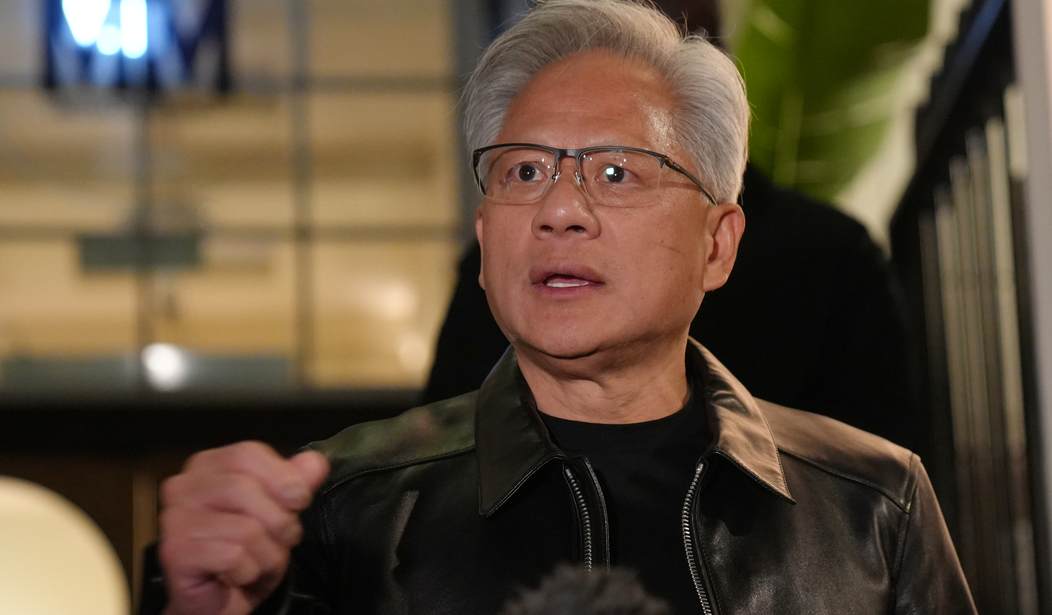
We all know the basic outlines of this by now. Jensen Huang, the CEO of NVIDIA, was having an affair with Alice Huang who may have been a Chinese spy.
Even apart from the question of her secret connections to the CCP, Alice was the CEO of Megaspeed, a company that bought billions in NVIDIA chips and set up a data center in Singapore. The suggestion was that center itself was being used by China, but the exact connection was always a bit vague.
Wednesday night, the NY Times published a story filling in some of the gaps. In particular, the paper discovered the identity of Megaspeed's main client, i.e. the Chinese company funding all of those new data centers and chip purchases.
Megaspeed’s customer and financial backer turned out to be Alibaba, the Chinese internet giant, according to three people familiar with the relationship. Alibaba is a colossus, with a wide range of businesses. It also co-founded an A.I. lab with strong ties to China’s military, where researchers have worked on tasks such as automating cyberattacks and simulating war games...
The web of relationships between Megaspeed, Alibaba and Nvidia exposes a supply chain that often circumvents efforts by the United States to keep those chips out of China’s reach. The fact that Alibaba has access to the Nvidia chips and is only one step removed from the military-linked A.I. lab is exactly what intelligence officials in Washington have long feared. The technology could help China develop more sophisticated weapons, carry out cyberattacks and integrate A.I. into the battlefield.
The facility, called Zhejiang Lab, has another important link to Nvidia. Its current director, Wang Jian, was Alibaba’s chief technology officer and has had a long friendship with Nvidia’s Mr. Huang.
Wang Jian, the director of this lab, was quoted by the South China Morning Post back in March, saying China had no problem keeping up in the AI race. He said it was for the good of the world, of course.
Speaking to the South China Morning Post on Wednesday on the sidelines of China’s annual legislative “two sessions” meetings in Beijing, Wang said the world remained far from the goal of turning AI into an “international public product” available to all.
Chinese President Xi Jinping first coined the phrase in a message to the World Smart Industry Expo in Chongqing in September, 2025.
Wang, a member of the CPPCC, stressed the importance of ensuring that both nations and individuals could benefit from AI capabilities.
When asked whether China had a responsibility to pursue that goal, Wang said the country was not only “definitely responsible” but also “the only country in the world that can still contribute to global technological advancement while committing to its ideals”.
He added that at a time when nations were increasingly acting in their own interests – with the US a typical example – China had the “resources and responsibility” to make AI equally accessible to everyone.
The CPPCC is the National Committee of the Chinese People's Political Consultative Conference. It's basically an advisory body for the CCP. He's also an adviser to the People’s Liberation Army’s National University of Defense Technology. So Wang is very connected to the government and the military. And he runs Zhejiang Lab for the benefit of both.
Zhejiang Lab is the epitome of recent Chinese government efforts to blend civilian and military science. Some of its researchers probe the origin of radio bursts from distant galaxies. Others partner with counterparts in the Chinese military. One area of focus was combining A.I. with hacking techniques, according to a job posting. Other topics of research included remote sensing, automated cyberdefense and vulnerability identification, and information campaigns.
A postdoctoral researcher who listed the lab as her affiliation co-wrote a paper with scientists at a Chinese air force academy that described how to use computer simulations to war-game how to destroy or force away a foreign aircraft carrier group that had come to support an island’s bid for independence.
Gee, I wonder what island that could be and whose foreign aircraft they are worried about?
To be clear, the NY Times doesn't claim that chips from Megaspeed actually wound up being transferred to the lab in China, though they say that chips did sometimes get smuggled in. But that almost doesn't matter. A major Chinese company with direct connections to the government was using the chips.
First, Alibaba would pledge to be a customer of a regional company, like Megaspeed. Then Megaspeed would use that agreement to raise money from investors to buy Nvidia chips, said the people. After securing the chips, Megaspeed struck more deals with companies like YTL that built data centers to operate the chips. Sometimes, the people said, chips bound for the data center were smuggled into China.
Once the facilities were up and running in recent years, Alibaba and its customers could access the Nvidia chips remotely. From the Malaysian data center, fiber optic cables send data to an internet connection hub in Singapore, which then links to China through undersea cables.
The Trump administration announced Monday that it was closing the loophole which allows China to do this.
The Trump administration said on Monday that it was moving forward with a new rule that would clamp down on China’s ability to access advanced A.I. chips through the use of data centers outside China’s borders.
The rule aims to close what many in Washington see as a loophole allowing China to sidestep a ban that prevents Chinese firms from buying the most advanced A.I. chips made by companies like Nvidia. Chinese firms have continued to legally access the chips by renting them from data centers in Southeast Asia and elsewhere...
The new rule is intended to make it harder for Chinese firms to remotely access the chips. It will require overseas data centers to obtain a government license before supplying “significant volumes of computing power” to firms with headquarters in a small group of high-risk countries, a list that includes China, Russia and Iran.
We should have done this years ago. It makes no sense to have export controls on chips sold to China and then allow China to basically rent the same chips so long as the data centers are set up outside their borders.
Editor's Note: Do you enjoy HotAir's conservative reporting that takes on the radical Left and woke media? Support our work so that we can continue to bring you the truth.
Join HotAir VIP and use promo code FIGHT to receive 60% off your membership.



Join the Conversation
VIP members get the ability to comment on articles.