I can't say I remember all of my high school chemistry and physics education, but I do remember the concept about water boiling. Under normal atmospheric pressure, 212 degrees is the magic temperature for it to begin bubbling off into steam in earnest. But if you can pressurize the container holding the water, doubling its surroundings in atmospheric pressure, you get an additional 36 degrees of heat before boiling begins. That's why cars and trucks for a very long time have had pressurized cooling systems for engines.
Don't worry, I'm not going to geek out on science for the rest of this column. I bring it up in order show that cars and water have a very symbiotic relationship, provided that they're used in the right way. And when they're not, as is happening with increasing frequency inside Iran, we're about to see what happens when pressure reaches its critical point.
An important sequence of events took place in the Middle East in the last week, and much of it was very predictable based upon economic conditions deteriorating rapidly inside Iran that we covered last week.
Without any revenue, gasoline, grain, or weapons flowing into the Islamic Republic, and nothing to generate revenue leaving, the IRGC could not stand still and starve along with 93 million Iranians. The status quo of the blockade with the addition of further sanctions rolled out in Operation Economic Outcast was not sustainable. They had to lash out in order to change the equation. The last straw for the regime? De-mining the Strait of Hormuz.
As President Trump is fond of saying, Iran's Navy is gone. What they had left was speedboats with machine guns tied to them. Most of those are gone now, too. But late last week, the IRGC began scrambling together a ragtag group of naval volunteers into whatever they could find that would float, and fashion a few more mines to begin the process of closing the Strait anew. There were reports that the Iranians wanted to deploy rockets with mines as payloads and drop them into the Strait, as absurd as that sounds. Of course, Centcom had a pretty good idea they would try something, and unlike Iran, our Navy and Air Force have the ability to watch them.
On Sunday, targets on Larak Island, one of the channel islands in the Strait of Hormuz, the same island the IRGC envisioned would be the proverbial toll booth collecting fees from tankers and freighters, were destroyed. And according to several open source reports in Israel and around the region, it was a direct hit. How do we know? The Iranians immediately launched nine missiles in response at...Jordan.
The Islamic Republic’s massive ballistic missile response tonight may indicate the U.S. strike on Larak Island was far more devastating than initially acknowledged.
— The Iran Watcher (@TheIranWatcher) August 30, 2026
Channel 14, citing sources, says the strike killed dozens of IRGC personnel and wounded nearly 100 others. Those… pic.twitter.com/LiqUclS6wN
Eight of the nine missiles were intercepted and destroyed, and one was far enough off course it was not a threat to anything except scorpions.
President Trump expected Iran to pop off, and in keeping with his motto to hit ten times as hard if Iran went kinetic, two waves of strikes hit targets up and down the southern coast of Iran.
MAP: A second wave of U.S. strikes has been reported across Iran.
— Open Source Intel (@Osint613) September 1, 2026
Reported locations include Bandar Abbas, Qeshm Island, Jiroft Airport, Asaluyeh and Chabahar.
In Hormozgan province, the Kuhestak telecommunications center in Sirik County was reportedly leveled. pic.twitter.com/rpEiL0wWuW
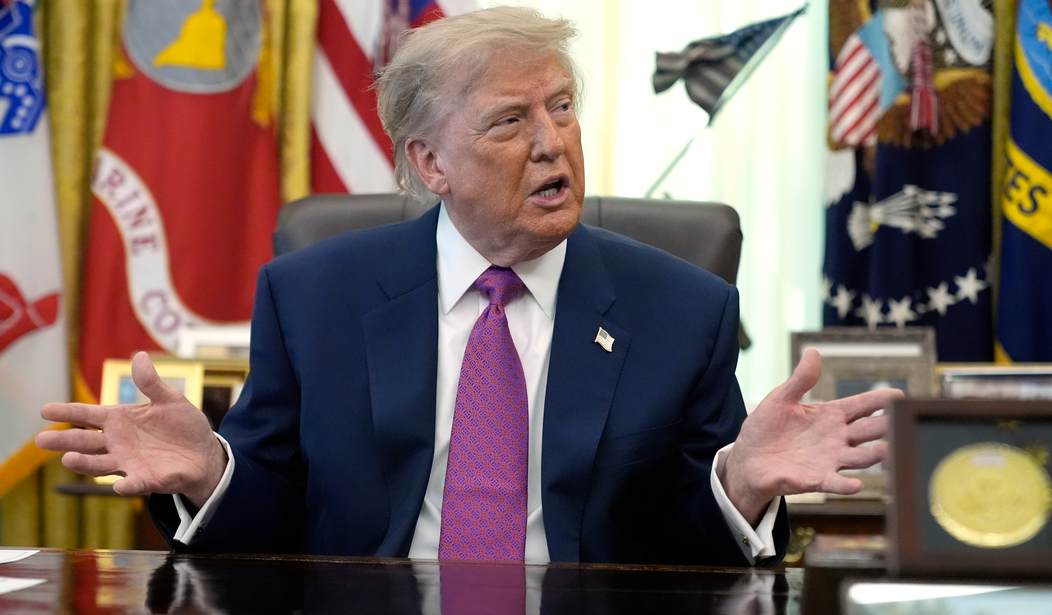
The President, in his response to Iran, said there is no more deal on the table. Howie Mandel is not in the Oval Office with a bevy of young ladies with briefcases and a mysterious banker on the phone. His banker is Treasury Secretary Scott Bessent, and there is no more offer. There is either surrender or more pain and suffering. On social media, Trump gave this AI video as a warning to the Iranians not to escalate after this response (update – fixed).
NOW - Trump says "Kharg Island being blown to smithereens!!!" Posting, what appears to clearly be, an AI video of Kharg Island being blown to smithereens. pic.twitter.com/tmrQUe6LM4
— Disclose.tv (@disclosetv) August 31, 2026
He later told Fox News' Trey Yingst that if the regime launched again after this, he would flatten them.
🚨 NOW: Donald Trump announces he will "totally wipe out Iran AS A COUNTRY" if they keep retaliating against the US
— Eric Daugherty (@EricLDaugh) September 1, 2026
TRUMP: "I think an agreement with them isn't worth the PAPER it's written on. We gave them a lot of chances!" 👀
If Iran fires back: "They'll be hit much… pic.twitter.com/FlG21HSRJ2
Did Iran take their beating and stand down? Nah. They found 14 more rockets and fired...at Jordan again. Why Jordan? We have a military base there. We still do. Ten of thirteen rockets were once again intercepted and destroyed mid-air, and three were wide right of the uprights and wiped out more desert fauna. What about the 14th rocket, you ask? Well, it went up, and then came down on an Iranian house that was full of people conducting a wedding ceremony.
🚨🇮🇷 Breaking: Four people were killed and over 60 injured after an IRGC missile misfired at an Iranian wedding. pic.twitter.com/TeXqVpKTia
— C14 News | EN (@c14english) September 1, 2026
The regime blamed the tragedy on U.S. strikes while simultaneously admitting that a telecommunications tower was also struck. The tower and the house, by the way, were not near each other. This is what's left of the tower.
The Kuhestak telecommunications tower has been destroyed. https://t.co/XJ2xrgrO40 pic.twitter.com/H697ACmAPW
— Open Source Intel (@Osint613) September 1, 2026
President Trump, to pour salt in the wound, said the U.S. had been watching Iranians build this tower, which would help restore their radar system and track vessels in the Strait once again. We waited until they had basically rebuilt the thing — investing all the time, money, and energy, and then we blew it up.
It's sad bordering on the pathetic, but after everyone in the Middle East hearing about the menacing power of the vaunted Iranian Navy for decades, this literally is what constitutes the regime navy this week.
🚨 An embarrassing video shows the Islamic Republic sending Basij volunteers in fishing boats and cheap, low-tech speedboats into the Persian Gulf to confront American warships.
— The Iran Watcher (@TheIranWatcher) August 30, 2026
The volunteers wave Islamic Republic flags as they head toward the Strait of Hormuz in small…
As of last night, the promised intensified third round of strikes had not begun. They certainly could be imminent, as it would be in keeping with what President Trump said multiple times in the last few days. But perhaps something else may be on the horizon. We'll come back to that in a bit.
I mentioned about cars, water, and pressure, and how Iran is about to become one giant science experiment. Let's begin with water. As scarce as gasoline appears to be in populated areas, in the more rural regions, water is even harder to come by.
🚨 9 Months Without Drinking Water: “We Are Thirsty”
— Tara | تارا (@azizamtara) August 30, 2026
Residents of villages near Iran’s Rimdan border in Dashtiari County (Sistan and Baluchestan province) say they have faced severe drinking water shortages for months, with outages lasting up to 9 months.
Families must travel 8… pic.twitter.com/9jVFPNApls
Water deliveries have all but stopped since the war began, and you have to walk miles to get it.
🚨 IRAN: The villages on the outskirts of the big cities in southern Iran get their water tanks filled ONCE every 20 days.
— Savakzadeh (@Savakzadeh) August 27, 2026
The rest of the time they have to buy water, and it’s very expensive for the people who live in poverty in these villages.
This is the Islamic Republic. pic.twitter.com/yId9a2BUVu
Forget about plumbing and irrigation. Water showing up just under once a month for entire villages? How long is that supposed to be sustainable?
In the cities, for now, at least, there is enough water. At least enough that it's increasingly being used to dilute gasoline in order to make the limited rations to petrol stations last longer.
It has not even been five days since Scott Bessent’s economic warfare plan against the Islamic Republic regime began, and the regime is already facing problems with its gasoline supply. The video you are watching shows one of the gas stations in Iran, where gasoline mixed with… pic.twitter.com/ik390POMcf
— Mehdi Mirghaderi 👑🇮🇷 (@mobarez_nastooh) August 28, 2026
Another account from Iran’s deepening crisis, this time in Rafsanjan: a driver says he filled 20 liters at a gas station — but claims only 5 liters were fuel and 15 liters were water. ⛽ His car stopped working, and a large amount of water reportedly came out when the tank was… https://t.co/DEujQDdoF9 pic.twitter.com/Qd1TWqoTz2
— DDF NEWS (@ddfmarketing1) August 26, 2026
Diluting gas with water was a one-off event last week, or so we were told by the regime. One station got a load of bad gasoline, and it was all just an innocent mix-up, if you'll pardon the pun. This week, though, there are multiple reports of gasoline being more water than gas.
5/ with water & sold to customers. Numerous drivers say the contaminated fuel has damaged their vehicles, leaving them facing expensive repairs on top of everything else. Meanwhile, reports indicate a heavy security presence across major cities, particularly #Tehran. ⬇️#Iran https://t.co/QzGa9xBzVY
— AAA (@AAA147564) August 27, 2026
Water in the radiator and cooling system? You bet. Water in the windshield wiper tank? Absolutely. Water in the gas tank? Not if you want to make it home from the station. And to add insult to injury, Iranians are having to wait hours on end for a chance to play Russian Roulette at the gas pump.
For some, they lie on their horns in frustration while they wait. They can't go anywhere, They're stuck, they're hot, they're angry, and so they honk.
یک شهروند با ارسال ویدیویی به ایران اینترنشنال گفت رانندگان در یک جایگاه سوخت در فردیس کرج، در اعتراض به کمبود بنزین و معطلی برای دریافت آن، بوقهای خودروها را به صدا درآوردند. pic.twitter.com/Kwy2BHytNY
— ايران اينترنشنال (@IranIntl) August 27, 2026
What in previous weeks were lines for gas in the outskirts of the cities, Tehran proper is now gridlocked by gas lines.
🚨
— ✡︎𝐋𝐢𝐯𝐞𝐈𝐫𝐚𝐧𝐍𝐞𝐰𝐬🇮🇷🇮🇱 (@IranNewsAgency0) August 27, 2026
تهران در محاصره صفهای بنزین؛ بحران سوخت در پایتخت تشدید شد
تصاویر منتشرشده از نقاط مختلف تهران، صفهای طولانی خودروها مقابل جایگاههای سوخت را نشان میدهد. در کشوری که بر یکی از بزرگترین ذخایر نفت و گاز جهان نشسته است، مردم پایتخت برای دسترسی به بنزین ساعتها در صف میمانند؛… pic.twitter.com/MXIJUeYPTL
Mashhad city, northeastern Iran
— Open Source Intel (@Osint613) September 1, 2026
The economic situation is getting dire.
The fuel shortages are deepening.
The regime fears its people will rise up again. pic.twitter.com/bYqEatwCIy
Night or day, it's the same thing — daily life in Iran is now measured in increments between trips for fuel.
Cars queued for kilometers at the Pak Gohar petrol station in Saravan on Monday as drivers waited to receive their rationed petrol, the Baluch outlet Haalvsh reported. Residents arrived in the early hours of the morning but waited for hours because of the length of the queue,… pic.twitter.com/cnDdBZqmz0
— Iran International English (@IranIntl_En) August 31, 2026
You might be channeling your inner environmentalist, saying this is an opportunity for Iranians to give up their cars and rely more on public transportation...like buses.
Videos from Iran show long lines of city buses at fuel stations amid reports of gasoline and diesel shortages. Officials blame higher consumption and end-of-summer travel, while reports also point to distribution disruptions that could affect public transport. pic.twitter.com/XduOjn5p8O
— IranWire (@IranWireEnglish) August 31, 2026
Buses need fuel, too, and diesel isn't any easier to come by than gasoline in Iran. And before you tell me they should have invested in Kamala Harris' magic yellow electric buses, Iran doesn't have the fuel to run the power plants full time, so blackouts happen often enough you wouldn't be able to keep electric vehicles charged even if they had them.
Last week, I gave you a glimpse of an Iranian auto dealer that couldn't deliver on new car orders after years of delays due to the war and not being able to import anything. No cars, no refunds, and no promises of any future deliveries make for a lot of one-star Yelp reviews in Farsi. But here's a new wrinkle to Iran's car problems.
SAIPA is another auto manufacturer in Iran. And apparently, they have cars to sell. At least according to this video, they have one to sell. But before you think you're leaving the lot in luxury while all the other Iranian peons are parking their piles of junk on the side of the road with the manifold laying in the street after watered down gas hit the engine block, check out these cool features that are a dream come true for do-it-yourselfers.
Iranian dealership ordered a brand new car from “SAIPA”
— Savakzadeh (@Savakzadeh) September 1, 2026
SAIPA is a car manufacturer founded in 1966, and is today controlled by the Islamic Republic.
This is how they are ripping the Iranian nation off. This is the what people in Iran get for 20,000,000,000 rial. 👇🏼 pic.twitter.com/5uS51MtzxD
The Iranian economy is in freefall.
Iran's economy minister admitted ~100 trillion tomans borrowed directly from the central bank in the past 3 months.
— Wall Street Mav (@WallStreetMav) September 1, 2026
The Iranian monetary base up 61.5%. Inflation is near 90%, food is up over 130%.
Iran can print their currency, but they cannot print gasoline and food.… https://t.co/k8VWXFCmLd
Their main port looks like a California beach during the COVID lockdown.
Iran’s biggest commercial port is effectively empty as the Islamic Republic’s maritime crisis strangles its own trade.
— The Iran Watcher (@TheIranWatcher) August 29, 2026
Shahid Rajaee Port historically handles roughly 80–85% of Iran’s container traffic, more than half of its maritime cargo and around 75–81 million tons of goods… https://t.co/n0BDxsGzvT
Why does it look like a ghost town? No business for seven weeks.
For the first time on record, #Iran has gone about seven weeks without shipping meaningful crude exports through the Strait of Hormuz, as a U.S. naval blockade succeeds where years of sanctions failed by cutting off one of Tehran's main sources of foreign-currency earnings. But…
— Jason Brodsky (@JasonMBrodsky) September 1, 2026
The Capital Mall in Tehran, usually a bustling hive of commerce due to it being air conditioned, is devoid of customers. No one has money to shop, and merchants don't have very much to sell.
🔴Footage shows the severe financial situation in Iran.
— Savakzadeh (@Savakzadeh) September 1, 2026
The ‘Capital Mall’ in Tehran appears vacant, though it’s ranked among the city’s most active centers.
It’s clear that the Islamic Republic took power, simply to oppress Iranians, destroy Iran, and to destroy the world. pic.twitter.com/6dFsllj8Ar
Those that do have money also have bills to pay, and this is what it takes to pay those bills -- large satchels to hold all the worthless currency.
Iran’s economy is collapsing. 📉 The video shows a man arriving at a business with a large bag packed with bundles of cash — around one billion — simply to make a payment. The currency has lost so much value that huge amounts of cash are now carried in bags. For many Iranians,… https://t.co/66dFx0TaoU pic.twitter.com/ZBvw14bGtA
— DDF NEWS (@ddfmarketing1) August 25, 2026
Now add to all of this Scott Bessent handing the regime in freefall an anvil from the G20.
For those who believe Trump, Bessent, and Co. will never get the CCP to cooperate against Iran, think again.
At best, even if China buys the 30 million barrels that left Iran through the Strait before Trump's blockade came down on them like Thor's hammer, that might be worth a couple billion. But they wouldn't be paid in dollars. They'd paid in yuan, and that's if China accepted the oil. And there are no places left in Iran's world where they will be able to trade that yuan into currency they can use. Yuan in Iran is as worthless as their own rial.
And as for the grift money the IRGC has squirreled away from the Iranian people for the last 47 years, Bessent knows exactly where it is. And to borrow a phrase from President George W. Bush, it's about to be disintermediated.
So what happens when water and gas are in short supply, and Iranians have no mobility, jobs, income, or future? Pressure. Lots and lots of pressure.
For some Iranians, this is now home.
🚨 Iran’s Economic Collapse Forces Families Under Bridges
— Shield of Truth (@ShieldOfTruth_) August 26, 2026
A Country Sitting on Trillions in Oil and Gas Wealth, Yet Ordinary People Are Struggling to Afford Food, Water and a Home. pic.twitter.com/RpYV3b5BgX
For many others, seething anger and radicalization against the regime builds. Women who once cowered if authorities caught too much of them showing in public are pushing back hard.
A female IRGC morality officer boards the metro and starts giving hijab warnings.
— The Iranian (@JustAnIranianIr) September 1, 2026
The women don’t stay quiet.
They speak up together: “Leave us alone. Get out. Go outside.”
Then they shout it as one and throw her off the train.
This is what feminism looks like in Iran.… pic.twitter.com/f1SSDlBVFO
Iranian youth led a color revolution against the regime in January. Many of them were in college and yearned for freedom and true democracy, and then the masses were gunned down by the tens of thousands. Now, a different sort of protesting is going on, and it's born of frustration, hopelessness, hunger, and yes, anger.
Police officers fired at young job seekers protesting what they described as “injustice and favoritism” in hiring at the Lishtar refinery in Gachsaran, southwestern Iran, on Monday, a video received by Iran International shows. pic.twitter.com/2WVWU8Kakj
— Iran International English (@IranIntl_En) September 1, 2026
Even members of the IRGC and Basij forces are making videos saying how untenable life is for people that work for the regime.
🚨 An Iranian police officer says the economic situation has become unbearable even for the security forces the Islamic Republic depends on to keep itself in power.
— The Iran Watcher (@TheIranWatcher) August 30, 2026
In an extraordinary appeal, the officer says many Iranians assume police and security personnel live comfortably… https://t.co/8a0ZVlLYtM pic.twitter.com/I7Gm0V3FGb
🚨 The Islamic Republic’s own security forces are struggling financially, exposing deep grievances within its ranks.
— The Iran Watcher (@TheIranWatcher) August 28, 2026
Even loyal security personnel are taking their grievances public, with videos exposing growing discontent from within the Islamic Republic’s own ranks.
This… https://t.co/HXmtn8P1Jc pic.twitter.com/ZAYLw5FJp0
And in Mashhad a couple nights ago, at a planned pro-regime rally put on by Basij forces, some Iranian finally reached his own boiling point and took his car (with enough actual gasoline to power it), and plowed through the crowd.
Reports from Mashhad, Iran, say a vehicle drove into a pro IRGC gathering in the Eghbal Lahouri area, with a very large number of casualties reported. pic.twitter.com/O9ywqI1bhn
— Open Source Intel (@Osint613) September 1, 2026
The anti-regime X account @TheIranWatcher reports the casualties were gruesome.
A car has plowed directly into a pro-IRGC gathering in Mashhad, with multiple Basij members reportedly killed and dozens injured.
The vehicle struck one of the Islamic Republic’s nightly pro-regime gatherings on Eqbal Lahori Boulevard, where government supporters and Basij members had assembled.
Videos circulating from the scene show people on the ground, scattered flags and debris, and a heavily damaged vehicle as bystanders rush around the area.
Opposition accounts are claiming at least four Basij members were killed and dozens injured, while regime-affiliated accounts acknowledge deaths and injuries but claim the driver was drunk.
The circumstances remain unclear, including whether the driver deliberately targeted the gathering. The driver has reportedly been detained.
These nightly gatherings have become a regular show of support for the Islamic Republic in Mashhad and other cities since Khamenei’s death, making tonight’s incident particularly significant.
There is no doubt that pressure is building on the regime both externally from the military and economic forces being arrayed against them, and internally from an increasingly angry and radical populace. What's next?
To pick up where we left off chronicling the timeline of kinetic activity, President Trump warned Iran coldly and firmly. They attempted to lay mines again, and immediately got disabused of the idea by a wave of air strikes. They lashed out unsuccessfully at our base in Jordan. The President told them that Iran would be hit hard again, and they were, but also with the warning that they'd better not escalate or else there'd not be much left of Iran afterwards. Iran ignored that warning, launching another round of missiles, again unsuccessfully, at Jordan. What will Trump do in response? I can see one of three plausible scenarios.
1) Centcom's commander, Brad Cooper, has reportedly given the President a list of targets to take out in the next wave, should he choose to ratchet up military pressure once again. What is worth noting is that while the rockets and air strikes were flying, 17 million barrels of non-Iranian oil traversed the Strait of Hormuz unmolested yesterday. Add that to the seven to nine million barrels moving by way of pipeline, that is more oil leaving the Persian Gulf than before the war began.
2) Trump takes out a refinery or two to intensify the critical fuel shortage in the country. This would undoubtedly cause more pain amongst the people of Iran, but would also hasten the regime's demise by increasing pressure on them by growing an already angry mob.
3) The President could choose door number three, which is something he began to signal via social media last night.
— Rapid Response 47 (@RapidResponse47) September 2, 2026
For months, Trump has been reticent in calling for Iranians to take their country back from the weakened regime, saying it's hard for them to when we're bombing them and with the IRGC and Basij having machine guns. Could the President be signaling people inside Iran that now is the time? We know Israel already has connections inside Iran with the people most likely to power up the next revolution. Could the 'flattening the regime' Trump promised be from under the feet of Iranians who have finally had enough?
The smart money would be on Option 1. Option 2 would be an attention-getter to be sure, but the wrong people would be hurt first — Iranian people. What Trump seems to have mastered of late is how to apply pressure directly to the regime itself more than taking action that would invariably hurt civilians first. That's the beauty in Secretary Bessent's Operation Economic Outcast. It is designed to hurt the regime before any secondary effects would hit the general population.
But if it's option 3, especially with a little goalie work by the Americans and Israelis to keep the ball in play, as it were, the next few weeks and months might be very pivotal indeed as we reach levels of pressure the regime can no longer contain.
Editor's Note: We now have the room to run outside commentary by some of our favorite and most provocative thinkers on the Right. That only happens because of the support of our readers, who ensure that we have the resources to keep providing an independent platform and independent voices in a sea of Protection Racket Media domination.
Help us maintain that fight! Join HotAir VIP and use promo code FIGHT to get 60% off your membership.







Join the conversation as a VIP Member