How desperate has the IRGC become in the chokehold of the American siege? The slow-rolling economic collapse has them preparing for another round of attacks, but perhaps not for the reasons one would think.
Donald Trump has spoken about the potential for returning to a more aggressive kinetic phase in order to push the IRGC into submission. As a result, the Wall Street Journal reports today, the Iranian regime has begun fortifying defenses, especially at its nuclear-weapons research sites, as well as bolstering missile capacity to the extent possible. Mainly, though, the IRGC has begun to sell a new war campaign to an increasingly angry populace:
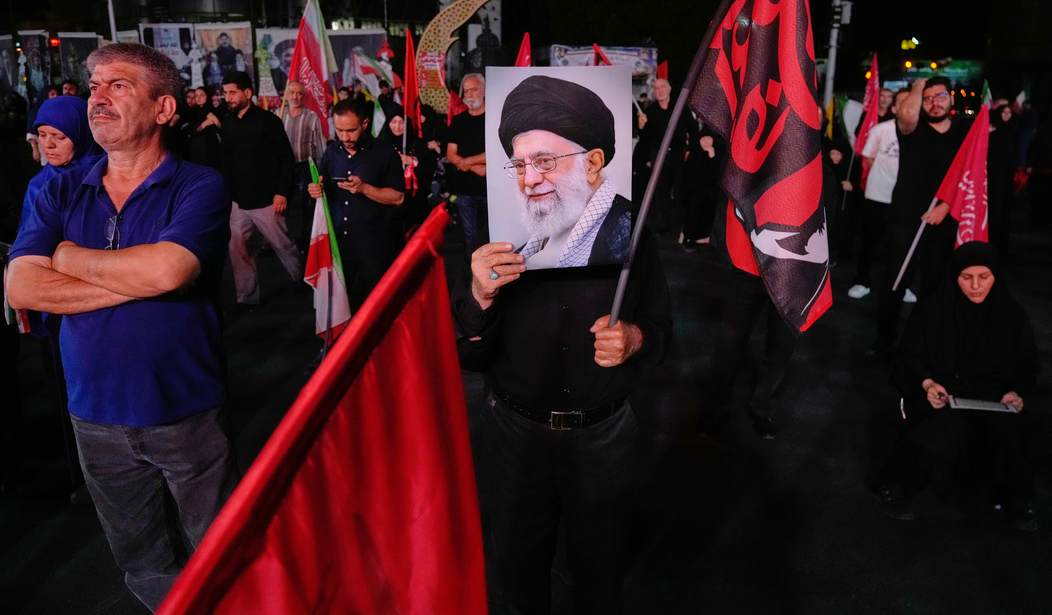
Iran is fortifying its defenses, rallying loyalists and threatening a wider, harsher response against the U.S. and its Gulf allies as it prepares for potential American attacks after the midterms and seeks to deter them.
Iranian officials have warned publicly and in private conversations with regional officials that the Islamic Republic will respond with further escalation across the Middle East if the U.S. launches new strikes.
Satellite images show Iran is strengthening sensitive locations, including nuclear sites and border areas, to make them more resilient to attacks. The government is also preparing Iranians for renewed war, sending paramilitary forces to read war stories to kindergartners, advertising training in firing shoulder-mounted antiaircraft missiles and holding rallies.
Iran has little ability to defend against attacks from advanced U.S. jets, high-altitude bombers or cruise missiles, giving it an incentive to try to deter such attacks with threats. The belligerent tone also serves as a distraction from the deepening economic misery Iranians are experiencing as the U.S. toughens sanctions and pressures airlines not to fly to the country, tightening the blockade.
That is the real purpose of this campaign. It's also why the IRGC hopes to bait Trump into a new round of attacks. This is basically a psy-op, only one played on Iranians more than the 'Great Satan.'
By now, the IRGC understands that the midterm situation is no longer changeable. Trump can't meaningfully change the political impact of the war on the elections. Voters have already begun casting ballots in most states anyway, and the economic situation won't change dramatically enough to matter before the voting ends in three weeks. The only potential impact would be if Trump returned to full-scale operations against Iran, and that would almost certainly become a drag on Republicans. That's why Trump has chosen to wait until after the first week of November to reassess the situation.
In the meantime, though, the blockade and economic siege continue, and that's the biggest risk to the regime. Trump has shown remarkable strategic patience for the last few months in forcing the IRGC to run on fumes, literally in terms of refined product for vehicles and figuratively in terms of credibility. The Iranian rial dropped to its lowest-ever readings against the US dollar and the euro last week, and it came at the same time that its oil revenue from the black market cratered:
Iran's currency, the rial, surpassed IRR2.69mn to the dollar on October 5, hitting its lowest-ever rate against the US currency. This is while its terminals loaded no crude in September and its oil minister abruptly quit the night before, forcing his subordinate to take his place. The pressure on the Pezeshkian administration is truly mounting; is something about to break in Tehran?
The short answer is no, and assuming Tehran will cave in this situation shows a misunderstanding of the Islamic Republic's mindset. The longer answer is that the three things that have kept the economy running - oil revenue, a manageable currency and a steady hand on the oil ministry- are all failing at the same time, and the date by which the last cushion runs out is now close.
Let's start with oil exports, or lack thereof. Iran loaded no oil at its export terminals last month, the first time since the 1979 revolution, according to expatriate-based Homayoun Falakshahi, head of crude oil analysis at Kpler, on October 3.
Kpler's data showed no Iranian crude has crossed the US naval blockade line since July 14, and that loadings fell from 893,000 barrels per day in July to 156,000 b/d by August 17. According to Falakshahi, output is at about 1.8mn b/d, roughly enough for domestic consumption and about half the pre-war level. Gulf rivals have moved on without Iran, with their exports reaching 19.5mn b/d in the last week of September, above pre-war levels, Kpler data said. This does not bode well for Tehran's coffers, but 'grey exports' are still rebadged as Iraqi, according to some sources.
There's more at the link, including some trickles of cash still coming in, which relates to oil shipped while the embargo was suspended in the early summer. Even that will dry up soon, and it has become apparent that no one misses the Iranian output except China, and even Xi Jinping isn't doing much to rescue the IRGC. The regime can't pay its people and it can't keep the Iranian economy going for much longer. The initial run on the rial touched off days of popular uprisings, which the IRGC had to put down by murdering tens of thousands of Iranians in the streets. Their Basij and low-ranking IRGC foot soldiers might not stick around for another set of orders to massacre people, especially if they're starving in the streets along with the demonstrators.
That's why the IRGC needs the 'Great Satan' more than anything else at the moment. It's the one unifying message they have left. Trump is rendering it useless with his strategic patience, however, and so the IRGC is doing its best to get the bombs dropping again. It might be the only way they can cling to power in the long term.
Editor's Note: Thanks to President Trump and War Secretary Pete Hegseth's leadership, the warrior ethos is coming back to America's military.
Help us continue to report on Trump and Hegseth's successes as they make our military great again. Join HotAir VIP and use promo code FIGHT to receive 60% off your membership.






Join the conversation as a VIP Member