



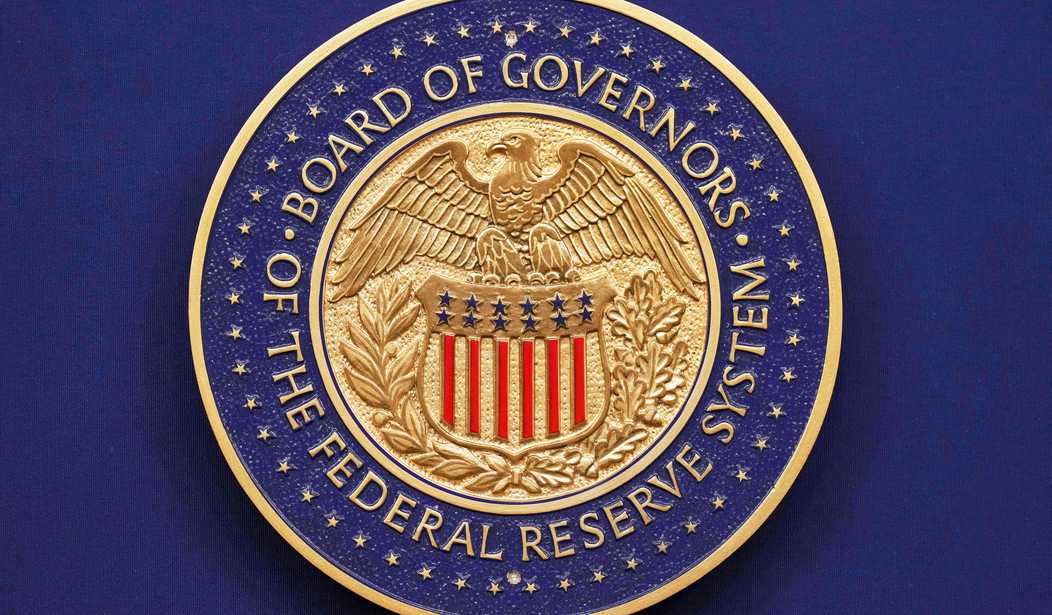
Depending upon where you get your news, you will get two different versions of what the Federal Reserve's decision to keep interest rates steady actually means.
Both have some truth, but the pessimistic reads leave out the Fed's diagnosis: the underlying economy is very strong, except for one massive problem: inflation is too high.
The more mainstream view is that inflation is the real story, and it emphasizes that two Fed Board of Governors members wanted to raise interest rates to bring it back under control.
At a news conference, Fed Chairman Kevin Warsh said market-based measures of expected inflation had moved lower even though energy prices have remained elevated since the September increase, which he took as a sign the Fed’s approach was working. “I feel good about those signposts,” he said.
Warsh sidestepped questions about what would lead the Fed to raise rates again. He touted the recent strength of the economy, which he said had broadened beyond AI-related investment, and suggested officials would have a better understanding of economic and financial-market developments at their next meeting. “The period right in front of us is information rich,” he said.
Warsh rejected the argument, popular among some analysts, that rate increases can’t reach the AI boom because the companies driving it are both flush with cash and in a winner-take-all race to beat rivals.
“Interest rates get in the cracks,” he said. “Interest rates affect, directly or indirectly, almost everything.” Since the Fed’s September increase, he said, investors have become more discriminating.
The Fed’s interest-rate decision was widely expected, as were dissents.
Hammack has dissented before in favor of tighter policy, most recently in July. She has argued the Fed should make smaller adjustments now to avoid the prospect of bigger—and potentially more destabilizing—rate increases later.
But the dissent from Cook was notable because it was her first in more than four years on the policy-setting committee. Two other officials who voted with Hammack in favor of raising rates at the July meeting sided with the majority on Wednesday to hold steady.
The more optimistic version focuses on everything else the Fed's analysis said: that the economy is actually, you know, kinda roaring at the moment. And it's probably the case that elevated inflation is mostly due to supply shocks not driven by other fundamentals.
Breaking: The Fed held rates steady, but two officials dissented in favor of an increase. A December hike remains widely expected. https://t.co/X9B09r3a4R
— The Wall Street Journal (@WSJ) October 28, 2026
There's no doubt that inflation is a problem, and it has been persistent for years, and is nowhere near the 2 percent goal. But economic growth is really quite good, as is productivity.
The economy is "pointing in the right direction," not running too hot, and the Fed's goal "isn't to throw sand in the gears".
First-half GDP was revised up to 2.4 percent from 1.8 percent, Q3 looks likely above 3 percent on healthy consumer spending, business investment is rising at a double,digit pace, and financial conditions have "tightened a bit" since September — "policy is working." His best line: the productivity improvement is real, and "most of that change in productivity precedes everything we're talking about superintelligence" — the gains predate AI. Markets shrugged happily: S&P and Dow both slightly green on the statement.
Of course, what markets really like is rate cuts, and those don't seem to be in the cards.
Still, if you are Trump, you like hearing phrases like "Economic activity is expanding at a strong pace" and "Domestic spending has been resilient, Productivity growth is strong, and capital investment is robust. Job gains have kept pace with the workforce, and the unemployment rate has changed little."
There's a political twist: Trump doesn't have great relationships with dissenters, and cynics argue that the rate-hike argument was influenced by that.
🚨 UPDATE: Biden's DEI Federal Reserve appointee Lisa Cook was ONE out of only TWO fed officials who voted to RAISE interest rates (12 total votes) The SAME Lisa Cook being investigated for MORTGAGE FRAUD. She's willing to make Americans SUFFER just to "get" Trump for calling out her alleged mortgage fraud. Democrats are horrible people.
— Nick Sortor (@nicksortor) October 28, 2026
Far be it from me to link Trump's hostility to an interest rate decision. I am certain that politics had nothing to do with anything as important as playing with America's economy.
On a serious note, inflation hawks are right to worry about persistent inflation; but if inflation is mainly the result of the Iran War and, still, we hope, mostly temporary, raising rates wouldn't be the right call.
In any case, a rate hike would not be good news for Trump, but this decision will probably have little impact on the election next week.
Editor’s Note: Every single day, here at HotAir, we stand up and FIGHT, FIGHT, FIGHT against the radical Left and deliver the conservative reporting our readers deserve.
Help us continue to tell the truth about the Trump administration and its successes. Join HotAir VIP and use promo code FIGHT to receive 60% off your membership.
Join the Conversation
VIP members get the ability to comment on articles.