



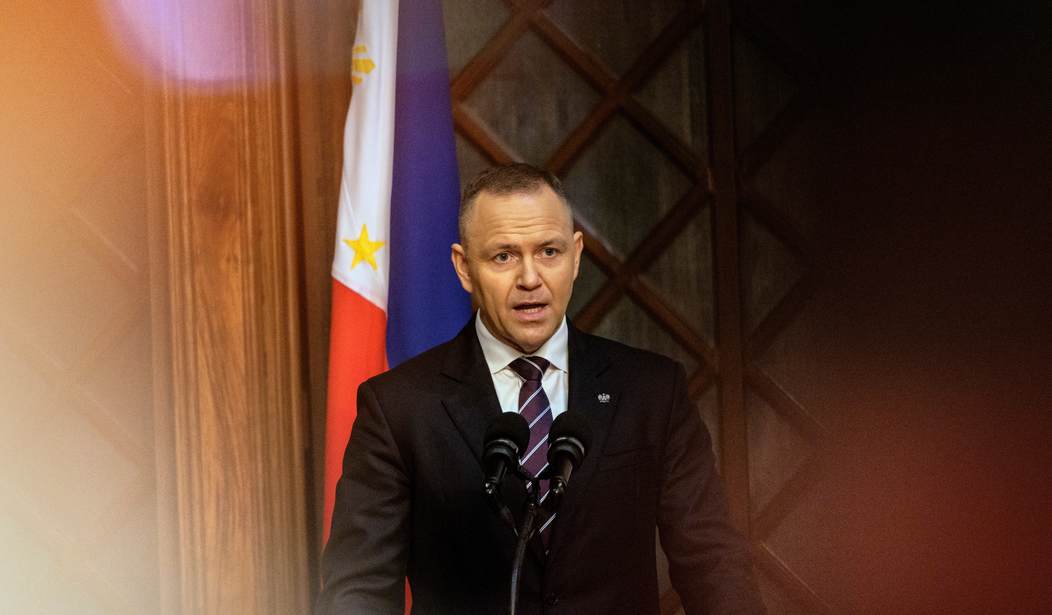
In January of last year, one of the very first major collisions occurred between the nascent presidency of Karol Nawrocki, a former professional boxer and nationalist, and Poland's serving prime minister and the European Union's urbane man on the ground, Donald Tusk. The clash occurred when a long-running dispute over Poland's implementation of the EU's required Digital Services Act, which had been long delayed thanks to a new government and wrangling in the Parliament...
...As with other EU regulations, the core elements of the DSA, including the designation of the Digital Services Coordinator, enforcement powers, and cooperation with the European Commission, had to be reflected in national law and were not optional. The DSA itself was not question as its implementation was a legal necessity. The controversy emerged when the government decided to go beyond strict DSA implementation and use the same legislative act to introduce additional national rules on content moderation and blocking content deemed illegal.
These supplementary provisions – proposed in subsequent drafts – triggered a backlash: “Polish government wants to censor the internet!”, read the headlines.
...The Polish government’s intention in going beyond the strict implementation of the DSA was quite clear. Two years after the regulation came into force, commercial platforms are still full of illegal content – scams, child sexual abuse material (CSAM), AI generated abusive images, and more. “Why not try to solve this problem too, while we are amending national rules for online platforms?” thought somebody in the Ministry of Digital Affairs. Killing two birds with one stone is tempting but, this time, it did not go well.
In autumn 2024, the government proposed that decisions made by online platforms on content moderation decisions – namely to block or not to block content – should be reviewed by the President of the Office of Electronic Communications (the OEC), an administrative body. The procedure was deemed to be fast, accessible, and easy, yet it lacked the necessary measures to protect free speech.
Panoptykon initiated a nationwide debate on the risk of online censorship, prompting the government to revise its position. Ultimately, a number of safeguards were added to the draft law, significantly reducing the risk to freedom of expression.
...was at last presented to the new president for his signature.
To the infuriated frustration of Donald Tusk and especially his overlords in Brussels, Nawrocki vetoed the bill.
...President Karol Nawrocki, who as Head of State has the constitutional power to veto legislation adopted by Parliament, justified his decision by emphasising what he described as the danger of censorship. While vetoing the act, he explicitly stated that the DSA itself was generally a good regulation, arguing instead that the government had unnecessarily “spoiled” its implementation by adding a national procedure he labelled as censorship.
Despite the safeguards introduced during parliamentary work, the President argued that “the freedom of speech will be subject to arbitrary decisions made by a clerk supervised by the Prime Minister”. Nawrocki also opposed the idea of using public money to support trusted flaggers, arguing (wrongly) they will act censors of the “wrongthinking”, rather than recognising them as entities reporting illegal content under the DSA framework.
In fact, the website I got this really terrific explanation of all the machinations behind reworking an already dystopian piece of EU censorship legislation is absolutely seething by the end of the article at Nawrocki's moxie for putting the kibosh on it. They cannot see what they laid out as an unreasonable infringement of freedoms, or the enormous potential for abuse by state actors within it.
That's how lost they all are in this FOR THE CHILDREN fantasy they've cooked up.
Thank goodness, for the sake of the Polish people, their president was on their side.
As we've seen during the recent uproar over Tusk's attempt to install his own elected judges while the president was out of the country, tensions are still enormously high a year later for any number of reasons.
On 9 November, an unhinged gunman drove through a square in the historic city center of Krakow, firing at pedestrians from his vehicle.
The shock of it all and the heroics of the two local police officers who stopped his rampage, even as they were grievously wounded themselves, horrified a nation that rarely ever experiences such wanton violence.
The Tusk government immediately blamed 'far-right ideology' for the heinous events, but was forced to climb down nearly as quickly.
The very next day, Prime Minister Tusk was on the air in an address, demanding for the right the government to censor speech online in the name of preventing the 'abuse of freedom' of speech.
@visegrad24 He's upset because he said the shooter was "far right" and it took the Internet all of 2minutes to prove he was lying. The solution. Restrict people's freedoms on the Internet. Stop people from exposing his lies.
— Krueger (@Mr1beard) November 10, 2026
Like the kind that exposed his administration's reflexive lies, blaming a right-wing extremist for the murderous rampage.
Of course Tusk wants those voices under his iron control.
One thing that gave everyone a moment to catch their breath was the celebrations of Polish Independence Day on 11 November.
Poland is today celebrating the 108th anniversary of regaining its independence. In a few hours, hundreds of thousands of conservatives, nationalists and patriots will be filling the streets of Warsaw for the Independence Day March, the world’s largest annual conservative event https://t.co/ZQQmmgE4Jn
— Visegrád 24 (@visegrad24) November 11, 2026
The peaceful, massive marches were uniformly characterized across Europe as 'far-right' gatherings and demonstrations.
🚨🇵🇱🌍 POLAND CELEBRATES 108 YEARS OF INDEPENDENCE — BUT SOME EUROPEAN MEDIA HAVE PORTRAYED ITS MASSIVE PATRIOTIC MARCH AS “FAR-RIGHT,” “EXTREMIST” AND EVEN “NAZI”! Today, November 11, millions of Poles celebrate their country’s return to independence in 1918, after 123 years of partition by Russia, Prussia and Austria. Yet international coverage of Warsaw’s annual Independence March has repeatedly sparked controversy over how Poland’s national celebrations are portrayed. 🇳🇴 NORWAY — NRK (2025): The public broadcaster labelled the event a “NAZI MARCH.” Following complaints from Polish communities and diplomatic intervention, NRK acknowledged its mistake and apologised. 🇬🇧 BRITAIN — REUTERS (2024): Headlined its report “Far-right Independence Day march in Warsaw draws thousands.” 🇬🇧 BRITAIN — THE GUARDIAN (2025): Described the gathering as a “controversial Poland independence march.” 🇫🇷 FRANCE — AFP (2026): Presented this year’s march as a nationalist gathering taking place amid mounting political tensions. 🇩🇪 GERMANY — dpa / n-tv (2026): Focused on right-wing mobilisation, opposition to Prime Minister Donald Tusk and Poland’s political divisions. 🇩🇪 GERMANY — FRANKFURTER ALLGEMEINE ZEITUNG: Examined extremist participation but also acknowledged that recent marches have been largely peaceful. 🇫🇮 FINLAND — YLE (2017): Characterised the march as a celebration associated with the far right. 🇵🇱 POLAND — TVN24 (2025): Highlighted extremist banners, controversial slogans and the participation of British far-right activist Tommy Robinson. Meanwhile, Polish public broadcasters TVP Info and TVP Polonia have also covered the holiday’s historical significance, military ceremonies and celebrations throughout the country. The Warsaw march has nationalist organisers and has attracted extremist groups in previous years. Those facts deserve reporting. But they do not define every participant — and certainly not Poland’s entire Independence Day. Across Poland, families, veterans, soldiers and ordinary citizens commemorate the generations who fought for their homeland. 🇵🇱 POLAND WAS ERASED FROM EUROPE’S POLITICAL MAP FOR 123 YEARS. IN 1918, IT RETURNED AS AN INDEPENDENT STATE. 108 YEARS LATER, POLAND REMEMBERS. ❤️ HAPPY INDEPENDENCE DAY, POLAND! DO INTERNATIONAL MEDIA GIVE ENOUGH ATTENTION TO THE HISTORY BEHIND THIS NATIONAL CELEBRATION — OR DOES POLITICAL CONTROVERSY DOMINATE THEIR COVERAGE?
— Slavic Networks (@SlavicNetworks) November 11, 2026
...Today, November 11, millions of Poles celebrate their country’s return to independence in 1918, after 123 years of partition by Russia, Prussia and Austria.
Yet international coverage of Warsaw’s annual Independence March has repeatedly sparked controversy over how Poland’s national celebrations are portrayed.
🇳🇴 NORWAY — NRK (2025): The public broadcaster labelled the event a “NAZI MARCH.” Following complaints from Polish communities and diplomatic intervention, NRK acknowledged its mistake and apologised.
🇬🇧 BRITAIN — REUTERS (2024): Headlined its report “Far-right Independence Day march in Warsaw draws thousands.”
🇬🇧 BRITAIN — THE GUARDIAN (2025): Described the gathering as a “controversial Poland independence march.”
🇫🇷 FRANCE — AFP (2026): Presented this year’s march as a nationalist gathering taking place amid mounting political tensions.
🇩🇪 GERMANY — dpa / n-tv (2026): Focused on right-wing mobilisation, opposition to Prime Minister Donald Tusk and Poland’s political divisions.
🇩🇪 GERMANY — FRANKFURTER ALLGEMEINE ZEITUNG: Examined extremist participation but also acknowledged that recent marches have been largely peaceful.
🇫🇮 FINLAND — YLE (2017): Characterised the march as a celebration associated with the far right.
🇵🇱 POLAND — TVN24 (2025): Highlighted extremist banners, controversial slogans and the participation of British far-right activist Tommy Robinson.
Meanwhile, Polish public broadcasters TVP Info and TVP Polonia have also covered the holiday’s historical significance, military ceremonies and celebrations throughout the country.
The Warsaw march has nationalist organisers and has attracted extremist groups in previous years. Those facts deserve reporting. But they do not define every participant — and certainly not Poland’s entire Independence Day.
Across Poland, families, veterans, soldiers and ordinary citizens commemorate the generations who fought for their homeland.
🇵🇱 POLAND WAS ERASED FROM EUROPE’S POLITICAL MAP FOR 123 YEARS. IN 1918, IT RETURNED AS AN INDEPENDENT STATE.
108 YEARS LATER, POLAND REMEMBERS.
❤️ HAPPY INDEPENDENCE DAY, POLAND!
This past Friday, Nawrocki vetoed the EU's internet censorship bill again, arguing that the Tusk legislature had ensured the DSA gave the Polish government 'excessive powers over online speech.'
🚨BREAKING: 🇵🇱 POLISH PRESIDENT KAROL NAWROCKI VETOES EU INTERNET LAW: “THE GOVERNMENT WANTS AN OFFICIAL TO DECIDE WHAT POLES CAN SAY ONLINE!” WARSAW, POLAND — NOVEMBER 13, 2026 Polish President KAROL NAWROCKI has signed six new laws but refused to approve a seventh — legislation implementing the European Union’s Digital Services Act (DSA). The DSA is an EU law intended to make online platforms tackle illegal content and improve accountability. But Nawrocki argues that Poland’s government, led by Prime Minister DONALD TUSK, went further than necessary by giving officials excessive powers over online speech. ⚖️ WHAT IS THE CONTROVERSY? According to Nawrocki, the proposed Polish law could allow authorities to block entire websites or platforms over individual illegal comments, without sufficient independent judicial safeguards. He warned that this could create a “censorship official” with too much influence over what Polish citizens can read and publish. The president insists that online crimes must be prosecuted, but that protecting citizens must not become an excuse to restrict freedom of expression. 🇵🇱 SIX OTHER LAWS WERE SIGNED, covering patriotic education, public-event security, Polish film production, pharmacy regulations, VAT modernisation and protection of land reserved for Poland’s planned major transport hub. Nawrocki says he has now signed 298 bills and vetoed 48 during his presidency. The dispute raises a fundamental question: Who should decide what is illegal online — independent courts or government-appointed officials? The veto concerns Poland’s national implementation legislation, not the EU Digital Services Act itself, which remains in force.
— Slavic Networks (@SlavicNetworks) November 13, 2026
...Polish President KAROL NAWROCKI has signed six new laws but refused to approve a seventh — legislation implementing the European Union’s Digital Services Act (DSA).
The DSA is an EU law intended to make online platforms tackle illegal content and improve accountability.
But Nawrocki argues that Poland’s government, led by Prime Minister DONALD TUSK, went further than necessary by giving officials excessive powers over online speech.
⚖️ WHAT IS THE CONTROVERSY?
According to Nawrocki, the proposed Polish law could allow authorities to block entire websites or platforms over individual illegal comments, without sufficient independent judicial safeguards.
He warned that this could create a “censorship official” with too much influence over what Polish citizens can read and publish.
The president insists that online crimes must be prosecuted, but that protecting citizens must not become an excuse to restrict freedom of expression.
🇵🇱 SIX OTHER LAWS WERE SIGNED, covering patriotic education, public-event security, Polish film production, pharmacy regulations, VAT modernisation and protection of land reserved for Poland’s planned major transport hub.
Nawrocki says he has now signed 298 bills and vetoed 48 during his presidency.
The dispute raises a fundamental question: Who should decide what is illegal online — independent courts or government-appointed officials?...
Bureaucrats do not get to decide what Poles say online.
Karol Nawrocki ZAWETOWAŁ ustawę implementującą DSA: „Obowiązują już przepisy karne służące zwalczaniu takich przestępstw. Artykuł 54 Konstytucji gwarantuje wolność wyrażania poglądów. Konstytucyjna wolność słowa nie jest przeszkodą w skutecznym działaniu państwa” https://t.co/WkQlrSfy2F
— chrzanik (@chrzanikx) November 13, 2026
Karol Nawrocki VETOED the law implementing the DSA:
“Criminal law provisions to combat such crimes are already in force. Article 54 of the Constitution guarantees freedom of expression. Constitutional freedom of speech is not an obstacle to effective action by the state”
On the 10th, the unelected empress of Europe and president of the European Commission, Ursula von der Leyen, received less than a warm welcome in Bulgaria.
She skittered out of town like a scalded dog.
🇧🇬 Residents of Bulgaria are protesting against the arrival of European Commission President Ursula von der Leyen in the country. Opponents of her visit shouted "You are not welcome here," and threw eggs and tomatoes. Von der Leyen's motorcade, accompanied by police, passed by the protesters and arrived at the Naval Academy named after N.Ya. Vaptsarov. She spent a total of three hours in Bulgaria instead of the planned 24.
— Ignorance, the root and stem of all evil (@ivan_8848) November 10, 2026
...Von der Leyen's motorcade, accompanied by police, passed by the protesters and arrived at the Naval Academy named after N.Ya. Vaptsarov. She spent a total of three hours in Bulgaria instead of the planned 24.
Today, safely back in Brussels, she was making nice to Poland, waxing poetic about their economy, knowing she did everything she could, between fines and withheld funds, to destroy it.
EU's Von der Leyen: Across the countries that joined our Union in 2004, real wages have doubled. After the fall of communism, Poland and Belarus had more or less similar levels of prosperity. But as we know, they took very different paths. Poland chose democracy and European integration. Belarus went in another direction. Today, Poland's GDP per person is almost three times that of Belarus.
— Clash Report (@clashreport) November 16, 2026
Poland chose democracy and European integration. Belarus went in another direction.
Today, Poland's GDP per person is almost three times that of Belarus.
But it was that much wishful bluster, too, because Poland hasn't 'chosen' European integration and is now moving ever further from Brussels.
They may be entirely too polite to throw eggs at her, but the Poles and their president are blowing raspberries at the collective that is leaving their mark.
The Brahmins are nervous that others may soon learn to pucker up and follow them out the door.
It won't be much of a Borg cube if just Britain, France, and Germany are left.
They might be forced to let the Syrupeans in after all.
Editor's Note: The Democrat Party has been infected by socialism, and it's spreading FAST. Democrats are claiming there's nothing to worry about, but we know the truth.
Help us continue to shine a light on the socialist takeover by joining HotAir VIP. Use promo code FIGHT to get 60% off your VIP membership.

Join the Conversation
VIP members get the ability to comment on articles.