Treasury Secretary Scott Bessent, the driving force behind President Trump's economic sanctions and isolation strategy against the Iranian regime, appeared on Fox News over the weekend. His update was a whole lot different than the competing online propaganda barrages and American media misreporting offered of late.
X was full of pro-IRGC accounts repeating regime claims that three different non-Iranian tankers in the Strait of Hormuz have been destroyed. One, they claim, hit a mine and erupted in a fireball, and two others were set ablaze by drone strikes the regime claims they can do at will. Secretary Bessent, however, calmly stated actual reality.
Why such a discrepancy? Because the regime's only play right now, and I mean their only play, is to lie about instability and control of the Strait as loudly as humanly possible, and encourage their proxy in Yemen, the Houthis, to blow up anything they can to spike oil prices up before the midterms elections. That strategy is not working. West Texas is now in the $80's again, and Brent is dropping once more.
Secretary of State Marco Rubio last Wednesday reminded the press that the Iranians simply do not control oil flow in Hormuz, and the daily scoreboard shows it.
🚨 BREAKING: Sec. Marco Rubio declares to the world that the Strait of Hormuz is "OPEN" and oil flows are nearly ENTIRELY RETURNED to pre-war levels "The Iranian economy is about to reach a country few countries in the world have been...it's all the fault of the RADICAL SHIA CLERICS! THEY have put the poor people of Iran in the situation they're in. Every dollar they get isn't spent on the Iran people...it's spent on HEZBOLLAH. HAMAS. HOUTHIS...should've spent their money on their people!" 💯 Iranian inflation is off the charts. This is the first week Iran has NO OIL on the water For months now, the blockade has been strangling them and it's WORKING JUST AS PLANNED by President Trump Iran cooked themselves. Surrender!
— Eric Daugherty (@EricLDaugh) October 7, 2026
China, Iran's former largest customer for crude, has sourced oil elsewhere.
China’s independent refiners are turning to Iraqi crude to replace dwindling Iranian supplies as a US blockade chokes Tehran’s exports, forcing some of Iran’s biggest oil customers to seek barrels elsewhere. https://t.co/hdyu46q0w4 https://t.co/s6nfojA5fy
— Iran International English (@IranIntl_En) October 7, 2026
Iran's shadow fleet of tankers, most of which are empty of oil, are unwelcome in most ports due to concerns about getting caught up in expanding U.S. secondary sanctions as part of Operation Economic Outcast, and unable to return to Iranian ports. One Venezuelan-flagged tanker tried Door Number Three and was immediately disabused of the idea...permanently.
🚨 NOW: A U.S. fighter jet just DISABLED a cargo ship trying to run President Trump's naval blockade on Iran F AROUND FIND OUT. CENTCOM says the Panama-flagged M/V Ocean Molica, also known as the "Arika Sun," ignored repeated warnings in the Gulf of Oman after leaving an Iranian port So our jet put a precision munition right into its stern. It knocked out the ship's propulsion and didn't harm a single crew member. Since the blockade resumed on July 14, 135 ships have been turned around, 4 have been disabled, and 10 IRGC shadow fleet tankers have been DESTROYED. This is what peace through strength looks like. Iran and anyone helping it have been WARNED! 🇺🇸 https://t.co/VC6nKx4AOS
— Eric Daugherty (@EricLDaugh) October 11, 2026
Miad Maleki of the Foundation for the Defense of Democracies has more about the 17 ships designated, pardon the pun, Regatta Non Grata.
Fresh action by @USTreasury targeting a significant number of Iran’s oil and petrochemicals shadow fleet: 17 tankers and 17 front companies. Six of these tankers alone moved over 2.8 million barrels of Iranian crude, fuel oil, methanol and bitumen since December 2025, including a 200,000-barrel methanol shipment in June and 1.5 million barrels of crude in August of this year. The vessels fly 12 flags: Panama, Comoros, Cameroon, Vanuatu, Bahamas, Mongolia, Palau, Zanzibar, Sierra Leone, Hong Kong, San Marino and Gambia. The owners all sanctioned today: 10 companies in the Marshall Islands, 3 in Hong Kong, 2 in China, 1 in the British Virgin Islands, 1 registered in the United Kingdom but based in China. That UK-registered firm, Saint Abundant International, owns the KING CHAIN, which has hauled several million barrels of Iranian methanol to China since 2023.
— Miad Maleki (@miadmaleki) October 8, 2026
Now that the Iranian shadow fleet is empty and economically adrift, Sri Lanka has no use for it anymore.
️Sri Lankan government: We have no plan to help 19 Iranian ships anchored in international waters near the country and facing shortages of water, food and fuel https://t.co/CMqinVsScP
— Open Source Intel (@Osint613) October 9, 2026
At least three tankers that did still have Iranian crude on them were seized by the United States. They're now on their way here.
More can be done, but the US has been confiscating tankers sanctioned by @USTreasury. For example, US forces boarded 3 Iran-laden supertankers in the Indian Ocean; sanctioned vessels: Tifani (April 21), Majestic X (April 23, China-bound) and Lenore, ex-Davina (June 5, off Sri Lanka). All 3 are now crossing the Atlantic toward the US with nearly 6 million barrels, roughly $600 million. @DOJNatSec has a forfeiture case against Majestic X. However, here's a problem that the MoU caused. The MoU authorized the sale and delivery of Iranian crude from June 21 until it was revoked July 7, with a wind-down to July 17. The 30 to 35 million barrels loaded then and later sold from Asian floating storage left under a US license, which makes them hard to seize as contraband.
— Miad Maleki (@miadmaleki) October 9, 2026
The isolation strategy deployed by President Trump and Secretary Bessent has even turned the biggest two-timing nation in the region against Iran. Qatar has seen enough and it no longer wishes to double deal with the regime.
Qatar is the latest regional country to turn against the Islamic Republic after years of failed engagement and escalating attacks. Former Qatari Prime Minister Hamad bin Jassim Al Thani now calls the Islamic Republic the “main enemy” of the Persian Gulf states and warns that the threat facing the GCC is existential. The regional shift is becoming unmistakable: 1️⃣ Qatar spent years maintaining relations with the regime, mediating with the United States and promoting dialogue. The Islamic Republic repaid that engagement by targeting Qatar with roughly 270 missiles and drones. 2️⃣ The regime struck all six GCC countries during the war. Nearly 7,000 missiles and drones targeted GCC states and Jordan, hitting civilian neighbourhoods, airports, ports, commercial aircraft, energy facilities and other critical infrastructure. 3️⃣ Iranian-backed Houthis have continued attacking Saudi Arabia. One strike on King Khalid International Airport killed 12 people and wounded 309, forcing countries across the region to treat the threat as a collective security crisis. 4️⃣ Pakistan helped mediate with Trump and prevent a wider war. It has since strengthened its defence commitments to Saudi Arabia, deployed forces to the kingdom and warned the Islamic Republic to rein in the Houthis. 5️⃣ Countries that once prioritized engagement are concluding that dialogue alone offers no protection. Qatar now says Saudi security is inseparable from its own and is demanding practical regional unity. The scale and direction of these attacks destroyed the regime’s claim that its war was confined to Israel and the United States. Much of its firepower was directed at neighbouring countries that had spent years avoiding confrontation. The region has also learned that neutrality provides no immunity. Diplomatic relations did not protect Qatar, economic ties did not protect the UAE and mediation did not stop the regime from striking civilian airports, commercial aviation, ports and energy infrastructure across the Persian Gulf. The distinction between the regime and its proxies has also collapsed. Whether the missile comes directly from Iran or through the Houthis, the target remains the same: civilian lives, energy exports, international shipping and the security of neighbouring countries. Saudi Arabia has therefore become the centre of a broader defensive alignment. An attack on its airports, cities or oil infrastructure is increasingly treated as a threat to the entire GCC and to regional partners such as Pakistan. The Islamic Republic tried to intimidate its neighbours into submission. It is instead turning former mediators into adversaries and uniting the region against itself.
— The Iran Watcher (@TheIranWatcher) October 11, 2026
Bessent also talked about how he was taking away the cryptocurrency option for members of the regime. He's also destroying the land/rail route option as well.
Trump is working with Turkey and Pakistan to complete the land blockade of the Islamic Republic by shutting its last major overland trade routes. Treasury Secretary Scott Bessent says the United States is targeting the regime’s overland trade routes while pursuing the seizure of roughly $1 billion in Iranian cryptocurrency assets. The pressure is closing in from every direction: 1️⃣ Before the war, more than 80% of Iran’s trade moved by sea. The American blockade forced the regime to depend on slower and far less capable land corridors. 2️⃣ Pakistan became the eastern escape route, opening six transit corridors connecting Karachi, Port Qasim and Gwadar to Iranian border crossings. These routes helped move stranded cargo around the maritime blockade. 3️⃣ Turkey remains the regime’s main western gateway toward Europe and an important source of manufactured goods. Iranian trucks are already facing severe congestion, long delays and spoiled cargo at the border. 4️⃣ Neither corridor can replace maritime trade. Ships carry thousands of containers at once, while roads and railways remain constrained by weak infrastructure, border queues and limited capacity. 5️⃣ The United States holds far greater economic leverage. Turkey conducts roughly $35–45 billion in annual trade with the United States, compared with around $5–8 billion with Iran. The United States is also Pakistan’s largest export market, while formal Pakistan–Iran trade remains only a few billion dollars. 6️⃣ The historical reversal is striking. Iran, Pakistan and Turkey were once partners in CENTO and later built regional economic institutions together. They are now being drawn into the campaign isolating the Islamic Republic. Closing these corridors would squeeze the regime from both sides. Oil revenue is already being strangled at sea, while machinery, industrial parts, medicine and consumer goods increasingly depend on congested land crossings. The cryptocurrency seizure adds another layer. The regime is running out of ways to move goods or conceal money without encountering American pressure. Pakistan and Turkey may preserve limited trade for their own interests, but neither has an economic reason to sacrifice its far more valuable access to the United States and the global financial system to rescue the Islamic Republic. The regime’s remaining escape routes are no longer lifelines. They are pressure points the United States is now moving to close.
— The Iran Watcher (@TheIranWatcher) October 11, 2026
And that's just part of the isolation and economic front. Pre-staging for kinetic action, which Trump keeps insisting could be moved from the back burner to the front after the midterms, is underway.
The United States is rebuilding the aerial refuelling network required for a renewed high-intensity air campaign against the Islamic Republic. Seventeen USAF tankers have returned to Europe in the last 48–72 hours, while three more have moved from the American West Coast to the East Coast in preparation to cross the Atlantic. The movement is significant for four reasons: 1️⃣ Tankers are the backbone of sustained air operations. KC-135s and KC-46s allow fighters, bombers and surveillance aircraft to fly longer missions toward Iran and remain over the Persian Gulf for extended periods. 2️⃣ Europe is a major staging hub for operations against the regime. Aircraft positioned there can support long-range missions or rapidly move closer to the battlefield without immediately enlarging the visible American footprint in the Middle East. 3️⃣ At the war’s peak, roughly 220–232 tankers were positioned across Europe and the Middle East. That number fell to around 161 by late September as aircraft returned for maintenance and operations slowed. The latest movement begins reversing that drawdown while the Middle East retains a core force of roughly 100 tankers. 4️⃣ Fighters and surveillance aircraft never fully left. Restoring tanker capacity gives the United States the logistical depth to rapidly increase sorties against IRGC command centres, missile and drone stockpiles, energy infrastructure and other strategic targets. The timing aligns with preparations for military options after the November 3 midterms. Trump has held back from another major campaign before the vote, but the machinery required for one afterward is being rebuilt now. Moving tankers does not itself launch a war. It shortens the time between a presidential order and sustained strikes, while signalling that the United States is preparing for more than a symbolic attack. The Islamic Republic may have received a temporary pause. The returning tankers show that America is ensuring the regime cannot mistake that pause for safety.
— The Iran Watcher (@TheIranWatcher) October 11, 2026
The second exchange with the Treasury Secretary focused more on the squeeze inside Iran, not just what we're doing to their primary source of income.
We're not the only ones noticing that Iran's economy is collapsing. So is Israeli media.
Economic sanctions on Islamic Republic are working very well. Israeli Channel 14 ran a segment this week saying the economic crash has reached the IRGC. Not the top, not yet. But mid-level officers, looking for a second job so they can close the month. The reporter said people at the top of the IRGC are already telling each other the economy is not on the way to collapse, it has already collapsed. That matches what I have been hearing from inside Iran: Basij and IRGC men who are not getting paid, or getting paid so late it does not cover anything. Side jobs. Driving. Whatever they can pick up. Some are sending their wives out to work. For the men who spent years policing how a woman dresses, that is the part they cannot say out loud. They are seething. Scott Bessent’s pressure is the reason. Iran loaded no crude in September and the rial has roughly halved since the start of the year. Food has more than doubled. The oil minister quit. Rezaei, Secretary of the Supreme National Security, admitted the country is in one of the worst stretches it has had, and yet Islamic Republic still found money for Hezbollah, because it's draining IRGC incomes. When the mid-level officer has to go find a second job, the uniform is just a uniform, and it will not defend an Islamic Regime that thrives on end-times religious propaganda.
— Siaxares 🇮🇷 🇺🇸 (@siaxares) October 8, 2026
Right now, an hour of labor will pay for two rolls of Iranian toilet paper — 140 sheets, 2mm wide.
A roll of toilet paper in Tehran costs about 600,000 rials. They only have 140 sheets there, so one sheet costs about 4,000 rials; one rial buys a scrap less than 2 mm across. For an ordinary Iranian on the minimum wage, that roll is half an hour’s work. Now, for Iran’s banks, the historic collapse in Rial value is the business model. Top 17 Iranian banks reported about $2 billion of profit last year, and almost none of it came from actual banking. It came from marking up the foreign currency on their books after the rial fell. The rial’s collapse is their only meaningful source of profit.
— Miad Maleki (@miadmaleki) October 11, 2026
More Maleki:
Iran's currency, today at 2.73 million rials to the dollar, is technically a nonfunctioning currency and it no longer works as a store of value. Iran’s economy is showing clear signs of collapse:
• Record inflation of 89.8% year on year, with food prices more than doubling. High inflation on the edge of hyperinflation.
• A fragmented multiple-exchange-rate system: about 1.74 million rials at the official rate, 2.57 million at banks and more than 2.7 million in the parallel market.
• The economy can’t trade. It can’t earn enough foreign currency to pay for essential imports including industrial parts and catalyst.
• Central bank foreign-exchange interventions that keep failing to anchor expectations. • An employment-to-population ratio of only 37%.
• Energy supply shocks: rolling blackouts are shutting down industrial output. What the US and the international community are asking of this regime is simple: behave like a normal state.
The currency has fallen below 2.8 million to one dollar. How does the regime deal with that? By making it illegal to post conversion rates showing how much it's collapsed. That'll teach 'em.
Websites publishing foreign currency exchange rates will face police and judicial action, Iranian Police economic security chief Hossein Rahimi announced Monday. https://t.co/JWwsX07rrc
— Open Source Intel (@Osint613) October 5, 2026
An Iranian Artesh member, Iran's regular army, is not happy about how things are going.
The Islamic Republic’s own forces are speaking out about hunger, missing equipment and a war they fear they cannot survive. In a video posted today, a man wearing an Iranian Army uniform appeals directly to IRGC commander Ahmad Vahidi. He says soldiers are starving, lack proper gear and are living in hellish conditions. His message is blunt: come and see what they face, then sign a deal before another war begins. His face is blurred, so his identity cannot be confirmed from the video. His plea comes as the IRGC is also under severe pressure, including repeated attacks on its forces in Sistan and Baluchestan. The strain is no longer confined to one branch of the military or one front. The regime has long favoured the IRGC with money, power and access while the regular army receives less. Now economic collapse and prolonged conflict are putting pressure on both. Vahidi boasts of military strength, while a man in uniform is asking whether soldiers have enough food and equipment to fight. The Islamic Republic keeps threatening a wider war as the forces expected to fight it describe desperate conditions. https://t.co/RbbGUUv3Cp
— The Iran Watcher (@TheIranWatcher) October 9, 2026
When you measure how much a market run will cost you in quantities of wheelbarrows, that's when you know things are getting out of hand.
ریال پول بیاعتبار؛ یک فرغون اسکناس برای معامله #ریال https://t.co/9hTdiWzNPH
— DEJ | دژ (@DejReports) October 7, 2026
Secretary Bessent's last bite at the apple speculated on a few different avenues for what remains of the Iranian regime as we know it to cry 'Uncle' in Farsi.
The separatist fighting in the southeast is spreading week by week. It's no longer contained to Sistan and Baluchistan. Kerman is now starting to see action, and more regime bodies are turning up.
Iranian police major Mehdi Jamshidi was assassinated today in Kerman. The location is significant. The killing occurred outside Sistan and Baluchestan, where attacks have surged in recent weeks. This video shows him violently beating women, including elderly women.
— The Iran Watcher (@TheIranWatcher) October 8, 2026
Breaking Armed men have hit the central camp of Iranian security forces in Jalq, Saravan, Sistan and Baluchestan. Reports say explosions and heavy firing are still going on inside the camp, a key IRGC base. No official toll yet. Local sources point to the People’s Fighters Front (PFF), also called JMM (Jabheh Mubarizin Mardumi). The coalition was formed on 10 December 2025 under one command. Spokesperson is Mahmud Baloch. Political office head is Abdul Rahman Baloch. Member groups: • Jaish al Adl, founded 2012 by former Jundallah men, led by Salahuddin Farooqui until his death • Nasr Movement of Balochistan (Harakat e Nasr), founded 2006 • Pada Baloch Movement, founded 2017 • Mohammad Rasulullah Group, set up in the mid 1990s by Molabakhsh Derakhshan PFF has fought the IRGC and Iranian security forces in Saravan, Zahedan and Rask since June 2026. Iran has not confirmed the Jalq claim. Situation still developing.
— The Balochistan Diaries (TBD) (@BalochDiaries) October 7, 2026
Meanwhile, in Tehran schools, kids keep chanting and demonstrating for the return of Reza Pahlavi. Hardliners from the IRGC and Basij forces, ones brainwashed to believe in the cause and that the regime is ordained by the prophet to keep order, are getting rather exasperated that the same regime can't seem to crack down on a bunch of kids.
This is what Iranians have to deal with. A Basiji and IRGC thug is sitting in his car, watching schoolgirls chant Javid Shah (long live the king) in class, and he is losing it. The black board behind them has the slogan written on it. In the next clip the portraits of Khamenei are on the floor, torn up and in the last one students throw shoes at Khamenei's photo forcefully hung on walls of every classroom. His answer is to round the children up, take the phones, raid the education minister's office, and drag the principal into court. He asks where their honor is. He swears that if the judiciary does not move, the "revolutionary people" will make their lives a misery. He even says he now understands why the minister wanted classes in person. Online, the kids were harder to grab. That is the whole regime in one minute. Girls in a classroom said long live the king, and a grown man with a martyr pendant wants them arrested for it. They spent forty-seven years hanging those faces in every school in the country. The students are the ones taking them down. He can raid the minister's office. He cannot unteach a slogan a classroom already sang. #KingRezaPahlaviForIran
— Siaxares 🇮🇷 🇺🇸 (@siaxares) October 7, 2026
One of the elements that could bring about the fall of the regime sooner rather than later is whether the rest of the region's forming coalition against Iran's last proxy standing, the Houthis, successfully eradicates the terror group from Yemen or not. And on that front, there is a lot going on you're simply not hearing about.
The topline story that did make news was back-to-back missile strikes from the Houthis on Saudi Arabia's Riyadh Airport. The second one that hit Terminal 4 yesterday was especially devastating.
Saudi TV airing very brutal footage of the attack on the Riyadh airport. Many people are visibly in pilgrim attire — meaning the Houthis just maimed and killed a bunch of Muslims in pilgrimage. Imagery likely to be met with rage across the Middle East. https://t.co/zIkI4tPh1i
— Kareem Rifai 🌐 (@KareemRifai) October 11, 2026
Most of those killed were Muslim pilgrims heading to the holy cities. But one American was killed, and also included was one Pakistani. Iran and the Houthis had already made Pakistan's naughty list a couple weeks ago when they attempted to hit both Mecca and Medina with strikes. That triggered the Mecca Defense Pact, ushering in both Pakistani and Turk military assets. Syria is now signaling they want to take part in finishing off the Houthis before this spreads further.
The Atlantic ran a piece yesterday wondering whether the Saudis or anyone in the region had the will to see a campaign against the Houthis through. If anyone in American media were to look at the fighting that transpired over the last week, that piece wouldn't have been run, because the question would have been answered in the affirmative.
Since Operation Dawn of Yemen commenced on the Red Sea coast near the al-Mandab Strait on October 5, there have been a lot of battles all over the war-torn country south of the Kingdom, and Houthi casualties have been mounting up. According to Al Jazeera, since the fifth, Yemeni coalition forces have conducted 9,604 strikes on Houthi targets, neutralizing over 7,500 men and boys being forced to play soldier, and disabling or destroying over a thousand vehicles and/or launch sites. It's a war of attrition, and the Houthis have been on the losing side of the math game all week.
The first missile attack on Riyadh was intercepted, and the site from which it launched was destroyed almost immediately.
The Saudi-led coalition says it destroyed the Houthi ballistic missile launcher used in the attack on Riyadh. The launcher was struck in Sanaa as preparations were underway for another imminent attack on Saudi Arabia, according to the coalition. #Yemen https://t.co/PoLj8os1Ot
— Ali Al-Sakani | علي السكني (@Alsakaniali) October 7, 2026
After losing control of the Red Sea Coast and the al-Mandab Strait last Monday, Houthis tried to regroup and take some of their strongholds back. They failed.
Pro-govt Southern Giants Brigades say they seized Houthi military vehicles used in an attempted assault on their positions in Dhubab last night. #Yemen https://t.co/uXHReqSzRC
— Ali Al-Sakani | علي السكني (@Alsakaniali) October 7, 2026
Fighting along the coast continues, and there certainly still are Houthis around, but day by day, their ranks keep falling or surrendering, including commanders like this guy.
#Breaking: Senior Houthi field commander Ammar Da‘ah, who led the group’s western coast axis, has been killed. A native of Bani Muadh in Saada’s Sahhar district, his death marks a major loss for the Houthis. #Yemen https://t.co/YPuNxDUUpt
— Ali Al-Sakani | علي السكني (@Alsakaniali) October 8, 2026
Remember a few weeks ago all those videos of Saudi anti-tank laser-guided missiles, the Breakers, that were up in the mountainous region of Taiz picking off Houthi targets? They're now on the Red Sea Coast assisting in mop up work.
Pro-govt Southern Giants Brigades say they knocked out five Houthi armoured vehicles during an attempted push toward Dhubab airport on #Yemen’s western coast. https://t.co/k1ydEOKZhe
— Ali Al-Sakani | علي السكني (@Alsakaniali) October 10, 2026
For the month the Houthis controlled the Red Sea Coast of Yemen, hundreds, maybe thousands of mines were laid.
Iran-backed Houthis have recently laid thousands of mines along multiple fronts, particularly around Bab al-Mandab, #Marib and Al-Jawf, in an effort to slow advancing government forces, according to a military source. #Yemen https://t.co/nbGxvHgthn
— Ali Al-Sakani | علي السكني (@Alsakaniali) October 9, 2026
Five weeks later, a lot of them have been dug up and/or swept.
Pro-govt forces are continuing to remove large numbers of landmines laid by Iran-backed Houthis along #Yemen’s western coast. More than a million mines reportedly planted by the Houthis could endanger Yemenis for generations. https://t.co/0PbTIITrKU
— Ali Al-Sakani | علي السكني (@Alsakaniali) October 10, 2026
Up in the mountains near Taiz, the fighting is quite fierce with villages changing hands between good guys and bad guys in the same day.
Mere hours after accounts affiliated with the Houthi movement announced the capture of Al Misrakh, it appears that the town is once more under the control of the 🇾🇪 Yemeni Armed Forces, or is, at the very least, contested. A video shot by a member of the 🇾🇪 Yemeni Armed Forces showcases dozens of armed personnel at the compound housing the local Security Directorate and the Zakat duties office.
— alivia (@tzalivia) October 9, 2026
New footage released by #Yemen’s military spokesperson shows strikes on Houthi military targets. https://t.co/h0SMhItk0h
— Ali Al-Sakani | علي السكني (@Alsakaniali) October 11, 2026
Communications infrastructure in the mountains around Houthi-controlled Sana'a continued.
Warplanes continue to strike Houthi telecommunications networks across several governorates, including Abyan, Al-Bayda, Amran, Sana’a, Saada, Ibb, and Hudeidah. #Yemen https://t.co/AK2mpzihlE
— Ali Al-Sakani | علي السكني (@Alsakaniali) October 11, 2026
And especially after the strike at Riyadh airport, strikes are getting a lot closer to Sana'a and with increased frequency.
After the Houthis’ latest horrific terror attacks on Saudi Arabia, Coalition and Yemeni warplanes are reportedly striking Houthi weapons depots and tunnel sites in Bani Hashish and Nahm, east and northeast of Sana’a. I fear the next 36 hours could bring a major escalation? My thoughts are with the civilians in Sana’a, trapped under Houthi rule. If you have a genuine opportunity to leave the areas at risk, please don’t take your safety for granted. The Houthis chose escalation. Ordinary Yemenis should not have to pay the price for their leaders’ recklessness! Yemen deserves liberation. Saudi Arabia deserves security. And the Yemeni people deserve a future free from Iran-backed militias! 🇾🇪🇸🇦 Yemen will rise.
— 𝐌𝐢𝐜𝐡𝐚𝐞𝐥 𝐀𝐫𝐢𝐳𝐚𝐧𝐭𝐢 (@ColdBrief) October 10, 2026
One Houthi missile launcher, presumably destined to hit Saudi Arabia, misfired and began eating itself on the ground. The added benefit? At night, the heat signature of this thing melting down on the ground makes for an easy target from the air.
Circulating footage reportedly shows a Houthi ballistic missile malfunctioning minutes after launch in Nihm, east of Sanaa, according to residents. #Yemen https://t.co/vUvAt5iosc
— Ali Al-Sakani | علي السكني (@Alsakaniali) October 7, 2026
In Marib, northeast of Sana'a, more things Houthis valued were blown up yesterday afternoon.
Third Military Region used drones to strike Houthi personnel and military vehicles across multiple fronts in #Marib. #Yemen https://t.co/l7f8DaXrhi
— Ali Al-Sakani | علي السكني (@Alsakaniali) October 11, 2026
This is just a sample of what the Houthis have lost. Even according to their own media apparatus, they've announced the martyring of hundreds upon hundreds of soldiers, some as young as 13-years-old. They still retain a sizeable fighting force, and as the saying goes, quantity is a quality all its own. But the Saudis are in this fight now, and it's not just with air assets and Breaker missiles.
08OCT26 | This is the first time I have seen the Saudi-manufactured @SAMILand_sa JAIS armored personnel carrier in Yemen, and it appears to be deployed on the West Coast front. https://t.co/K5EsH8b7lf
— Basha باشا (@BashaReport) October 8, 2026
They Saudis apparently have a few RV's they've taken to the beach for a little R&R.
The battle for Yemen is still the biggest leading indicator for how the overall war with Iran is going. Iran is beyond desperate for the Houthis to cause calamity to oil exports in the Middle East. Their own bluster in Hormuz about how many ships they're destroying, which is bereft of truth or fact, is not doing the job of shooting Brent crude to $200. Their customers in India and China have lined up oil deals with other countries in the region, and oil continues to flow out of Hormuz and through the East-West pipeline at or near pre-war levels. Russia just sold Iran out to make a deal with Donald Trump exporting diesel. Pakistan, Turkey, the United Arab Emirates, and now Qatar, have all joined forces against them. Every proxy Iran once controlled is dead, dying, or switching allegiances.
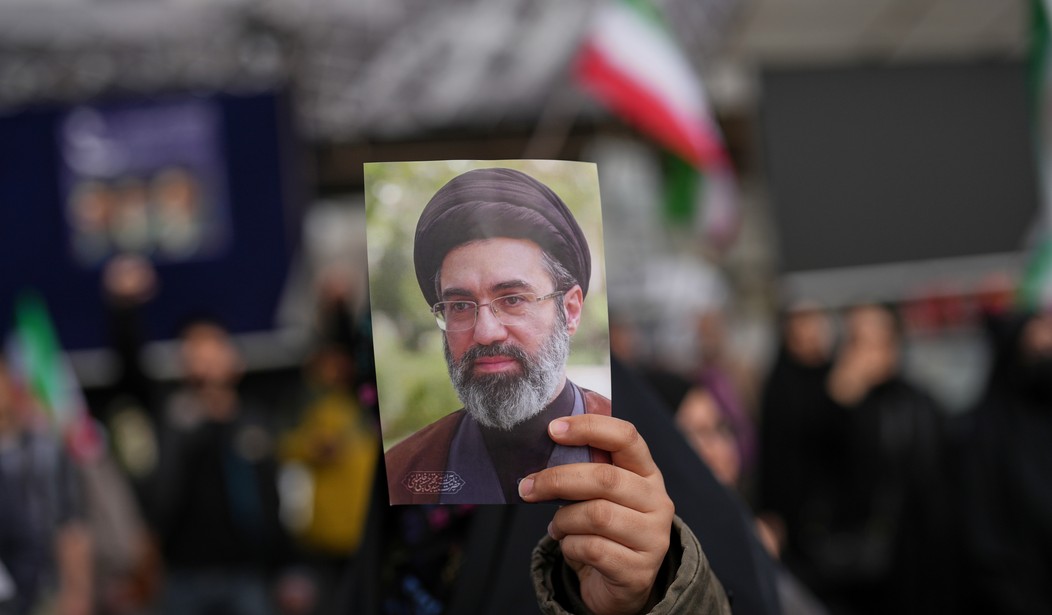
How do you know it's going bad for the regime? They trotted out a Cardboard Mojtaba lookalike and paraded him around Tehran for a mini-rally.
The Islamic Republic is now planting men who look enough like Mojtaba among night crowds, hoping a few blurry videos will turn “sightings” into a national fact. They want you think the cardboard rat is said to have stood there for half an hour before vanishing again. No clear face for more than a second. No voice. Just witnesses who need the story. This is not Saddam’s Iraq. He ran doubles for years because the only cameras were his own and 2003 satellites could not pick a face out of a street. The Americans still pulled him out of a hole. Today every phone records, facial recognition exists, and the same regime that has to AI-edit its own photos of Mojtaba thinks a handful of near-matches will hold. It does not. Every claimed appearance is yesterday, somewhere else, and always without proof. He skipped his father’s funeral while the brothers stood by the coffins. A living ruler does not need a network of lookalikes to create the rumor that he exists. They are out of legitimacy and out of ideas, so they are manufacturing ghosts. The cardboard cutout was at least honest. This is just the last performance of a system that knows the man is not there. Mojtaba is dead and Islamic Republic will soon join him.
— Siaxares 🇮🇷 🇺🇸 (@siaxares) October 11, 2026
After months without any proof of life of any kind, the regime pulls a Talarico, drops this guy on a street in Tehran with no security detail, and only a few dozen people rally around him?
Perhaps we should have asked the Lindner Center of Hope if that's where he's been hiding.
Editor’s Note: The 2026 Midterms will determine the fate of President Trump’s America First agenda. Republicans must maintain control of both chambers of Congress.
Help HotAir continue to report on the Democrats’ radicalism and inform voters as our nation faces a crossroads. Join HotAir VIP and use promo code FIGHT to receive 60% off your membership.








Join the conversation as a VIP Member