








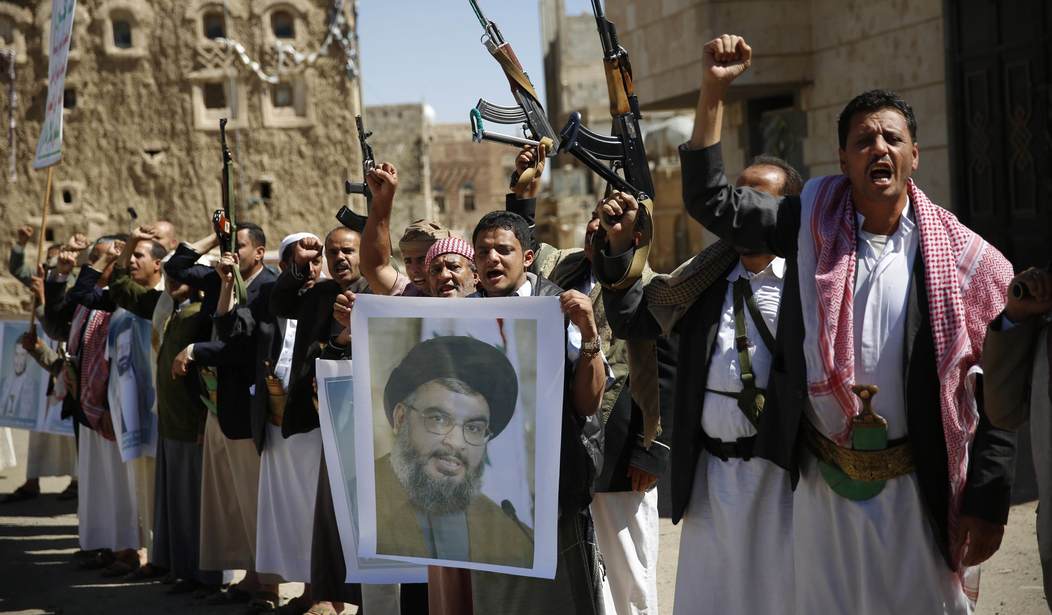
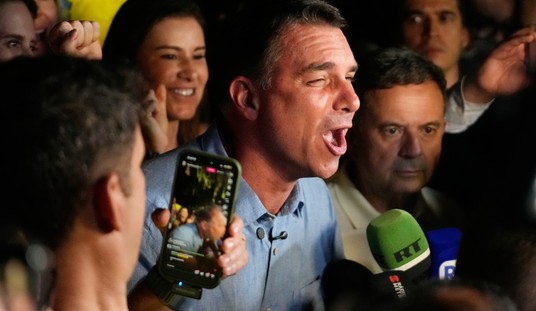
The closer to the November midterms we get, the more the safeties come off the negative ads being run in the country's most contested campaigns. Whether it's James Talarico promising to take both sides of the trans youth/men playing in women's sports issue just days apart, or Abdul El-Sayed, after months of claiming football has its roots in slavery, now says he's always been a big fan.
The greater Middle East has always generated spin from dozens of factions manipulating events into sympathy for their cause. Last week, the disinformation, rumor mill, and literal ghost stories told make it especially hard to separate fact from fiction. But there are plenty of factual developments on all fronts, including some taking shape very recently, that deserve covering. The fiercest fighting, and from a strategic standpoint the most important battle underway in the overall war with Iran, is being waged in the mountainous region of Yemen called Taiz.
The highland tribal region in the southwest part of Yemen looks down from its western edge at the Red Sea coastal strip next to the al-Mandab Strait. But its eastern edge overlooks a vital supply line to the Yemeni forces that have been clawing back parts of their country from the Iran-back Houthis.
For 14 years, the Iran terror proxy has controlled the capital city of Sana'a, and while the city is contested every few months, nothing recently has threatened to dislodge them from power. The Yemen government has been operating out of a secondary capital, Aden, on the southern coast. Much of the kinetic action we've featured in recent columns has been in between the two cities and to the west.
For much of September, Taiz served as a killing ground for Houthis. Yemeni forces, aided by Saudi air strikes and tribal fighters like the Giant Brigades loyal to the Yemen government, were tipping the scales against the Houthis in a daily war of attrition. All that changed late last week, and the fighting has intensified, with signs the escalation will draw in additional ground forces from both Saudi Arabia and Pakistan.
Early last week, it was business as usual. Houthis, both in personnel and equipment, were methodically sighted and destroyed by laser-guided anti-tank missiles from Saudi Arabia called Breakers. This is from the western side of Taiz overlooking Kahboub towards the al-Mandab Strait.
Another Houthi military vehicle hit on the Kahboub front, near Bab al-Mandab. #Yemen https://t.co/h3IySS2wrw
— Ali Al-Sakani | علي السكني (@Alsakaniali) September 29, 2026
The Yemeni Army has been pretty consistent releasing greatest hits packages of strike videos against Houthi targets.
Further scenes of Yemeni military strikes on Houthi vehicles and positions over the past 24 hours. #Yemen https://t.co/Is5d3X1h5y
— Ali Al-Sakani | علي السكني (@Alsakaniali) September 29, 2026
By Wednesday, the number of strikes for the week was stunning.
#Yemen's military says govt forces carried out 468 strikes against Houthi forces and military equipment across several fronts over the past 24 hours. https://t.co/HopTQtdcxl
— Ali Al-Sakani | علي السكني (@Alsakaniali) September 30, 2026
And on Wednesday night, a Houthi munitions depot on the Red Sea coast in Mohka was hit.
Bullseye. A direct strike on an ammunition depot in Mocha district, Taiz, triggers a large secondary explosion. https://t.co/ExGozPGEfv
— Basha باشا (@BashaReport) September 30, 2026
And it's not just the Yemenis hitting targets from the air. The Saudis have been relentless of late.
The Saudi Arabian air forces have once again published videos showing attacks against the forces of “Ansar Allah” (Houthis) in various areas of Yemen. https://t.co/Qxzjoo5Grz
— AGAM28🇺🇲 (@carlomer80) September 29, 2026
Meanwhile, in governates north of Houthi HQ in Sana'a, air strikes were beginning to take their toll.
New Three strikes hit Houthi arms depots in Al-Jabal Al-Aswad mountain, Sufyan district, Amran Governorate north of #Yemen. https://t.co/B0RmfERiSB
— Ali Al-Sakani | علي السكني (@Alsakaniali) September 29, 2026
Multiple explosions heard from Jaba Dhayn military base following airstrikes in Amran this afternoon. #Yemen https://t.co/OAbhtx0Y4W
— Ali Al-Sakani | علي السكني (@Alsakaniali) September 30, 2026
#Breaking A new wave of airstrikes hit sites across Amran Governorate, targeting Houth-linked communications towers in Qarn al-Ajam mountain, Raidah, and Harf Sufyan districts, while two strikes hit a missile launch platform in Al-Hajir, Al-Ashah district. #Yemen https://t.co/puFZuOZLyN
— Ali Al-Sakani | علي السكني (@Alsakaniali) September 30, 2026
In the eastern part of Sada'a, north of Sana'a near the Saudi border, more targeted removal of Houthis in the wild.
#Yemen’s govt military spokesman released footage showing drones tracking and striking Houthi trucks carrying quantities of ammunition, incl anti-tank guided missiles and artillery shells, in eastern Saada, Houthi stronghold. He said weapons stockpiles were also destroyed in the strikes.
— Ali Al-Sakani | علي السكني (@Alsakaniali) September 30, 2026
Included in this specific set of strikes were Houthi communications towers.
Houthi sites in Saada governorate, northern #Yemen, came under renewed airstrikes today, with communications infrastructure among the targets. https://t.co/Q8f5ID8v9G
— Ali Al-Sakani | علي السكني (@Alsakaniali) October 1, 2026
Why is this important? With the Houthis on the losing end to their north as well as south, and with their Saudi neighbors above them restarting the East-West pipeline up to 5.5 million barrels a day, the Red Sea was back in the oil export business without Houthis able to spend much time harassing them.
3 VLCCs and 4 Suezmax crude tankers spotted YESTERDAY loading up oil in Saudi Arabia 🇸🇦 Red Sea Terminals 👇That´s 10 million barrels. Confirms reports East-West Pipeline is working again despite Houthi 🏴☠️ "blockade" at a throughput rate of around 3.5 million barrels/day. https://t.co/9QQNZVNsL6
— Tom Bike (@tom_bike) September 28, 2026
By Wednesday night, Houthis leadership had seen enough and ordered a blitz. Take Taiz at all cost, seal off the supply route feeding Aden, and attack the back-up Yemen capital with drones or anything else that flies and finish this.
#Taiz tonight Heavy fighting underway as Houthis launch a new attack on govt forces in an attempt to break through front lines. #Yemen https://t.co/dAn8QgOTqC
— Ali Al-Sakani | علي السكني (@Alsakaniali) October 1, 2026
By Thursday, the Houthis had indeed taken ground that would pinch off Aden. The Giant Brigades and Yemeni forces suffered more losses than they had in weeks.
By Thursday, Iran media said it was all over, that the Houthis had won the Battle of Taiz.
Iranian state media claims Houthi forces now hold the strategic heights in Taiz province, citing new battlefield images. https://t.co/T61J72ghUH
— Open Source Intel (@Osint613) October 1, 2026
It looked real bleak, real quick when daylight broke over the mountains of Yemen. It is no coincidence that on Thursday night into Friday, Saudi Arabia had to scramble defensive measures to shoot down Houthi missiles over Khamis Mushait.
NOW: Saudi Air defences shot down three Houthi ballistic missiles above Khamis Mushait tonight. Source: Saudi Coalition spokesman
— Open Source Intel (@Osint613) October 2, 2026
And to the south, Aden was under attack.
Air defences shot down Houthi suicide drones over #Aden before they reached civilian neighbourhoods, according to the spokesman for Yemeni government forces. #Yemen
— Ali Al-Sakani | علي السكني (@Alsakaniali) October 2, 2026
The real question, however, is could the Houthis hold the ground they just took? I'm pleased to report the answer is no. By late Thursday, the counteroffensive began in earnest. What helped spark the ferocity of the counterattack? A Houthi attack earlier in the week hit a sensitive spot in one of the holy sites of Medina. Big mistake by the Houthis.
A Saudi-led coalition investigation found that a Houthi drone struck a power distribution station in Medina on Tuesday, damaging equipment at a facility that supplies the Prophet’s Mosque, the coalition fighting the Houthis said Thursday. The attack drew condemnation from Arab states and regional organizations. The UAE called it a “flagrant violation” of Saudi sovereignty and expressed full solidarity with Riyadh, while Jordan described it as a threat to Saudi security and territorial integrity. The Persian Gulf Cooperation Council said the strike had “crossed all red lines” because it targeted infrastructure serving one of Islam’s holiest sites.
— Iran International English (@IranIntl_En) October 1, 2026
The fight to push the Houthis back happened in small fights like this...
Footage circulating from Al-Aqroud front in #Taiz shows residents and local fighters pushing back against Houthi forces and setting ambushes. #Yemen https://t.co/AbDUw7WMoj
— Ali Al-Sakani | علي السكني (@Alsakaniali) October 2, 2026
and were supported by Yemeni air strikes, with American and Israeli help with targeting.
A precision drone strike by 1st Nation Shield Forces hit a pickup carrying Houthi fighters in Ghayl Bani Omar on the #Taiz front yesterday. #Yemen https://t.co/g2QhJ6YQVv
— Ali Al-Sakani | علي السكني (@Alsakaniali) October 2, 2026
#Taiz update Govt troops are reportedly regaining ground following today’s Houthi advances, recapturing Dar al-Rahah and fighting at Al-Farouq School on the Bani Omar front. Further advances are reported in Jabal Habashi, alongside the capture of 30 fleeing Houthi fighters in Bani Shaybah while fleeing the Bani Omar battles, according to field sources. Meanwhile, air raids are targeting Houthi concentrations and positions in Al-Kadhah, Bani Omar and Bani Bakari, amid reports of dozens killed in ground fighting and air raids. #Yemen
— Ali Al-Sakani | علي السكني (@Alsakaniali) October 1, 2026
EXCLUSIVE | Video released to @BashaReport shows a Yemeni military quadcopter scoring a direct hit on a Houthi technical in Bani Omar, Al-Shamayatayn District, Taiz, #Yemen. https://t.co/OhZlaLJ9rQ https://t.co/octFLbC2iO
— Basha باشا (@BashaReport) October 1, 2026
And the counteroffensive was not limited to the Taiz region. Sana'a has a supply line of its own, and that runs to the west until it hits a port on the Red Sea called Hodeidah...which received a few warning shots by the Saudis.
Saudi airstrikes and shelling hit Yemen’s Hodeidah, Saada and Al-Jawf since early morning.
— Josep Goded (@josepgoded) October 4, 2026
The port itself was spared, for now. But on Thursday, for the first time in months, Sana'a came under direct attack.
NOW: The Royal Saudi Air Force is currently carrying out airstrikes in Sanaa, Yemen. Sanaa is the Houthi’s main stronghold in Yemen. Contributed by: @BeamTracker_ https://t.co/NWICCLs9lU
— Open Source Intel (@Osint613) October 1, 2026
Al-Nahdayn military base seen burning after powerful airstrikes in Sana’a tonight. #Yemen https://t.co/mlAhJ4xHyE
— Ali Al-Sakani | علي السكني (@Alsakaniali) October 1, 2026
Sana'a today. #Yemen https://t.co/5DrePOf0Cw
— Ali Al-Sakani | علي السكني (@Alsakaniali) October 3, 2026
Over 9 strikes hit various targets in Sana'a, including Al-Nahdain, Attan and Al-Hafa military bases as Yemeni armed forces spokesperson announces operations against what he describes as key, legitimate military targets in the capital. #Yemen https://t.co/wHuVSai0UD
— Ali Al-Sakani | علي السكني (@Alsakaniali) October 3, 2026
The Houthis in Taiz are throwing all they have to retake the ground they had Thursday but lost.
Over 9 strikes hit various targets in Sana'a, including Al-Nahdain, Attan and Al-Hafa military bases as Yemeni armed forces spokesperson announces operations against what he describes as key, legitimate military targets in the capital. #Yemen https://t.co/wHuVSai0UD
— Ali Al-Sakani | علي السكني (@Alsakaniali) October 3, 2026
But perversely, at the same time the fighting increased, the Houthis attempted a psyops battle for the "hearts and minds" of Taiz locals.
Why the sudden shift in #Houthi tone towards Taiz? Obviously fierce resistance! After weeks of threats and militant rhetoric, many key Houthi social media influencers have abruptly shifted to a hearts-and-minds campaign, stressing how much they “love” and “care about” the people of Taiz. [aha sure you do] That change suggests the Houthis have run into a wall of local resistance. They are now working overtime to portray those resisting them as Islah, Salafis or militants, while accusing their opponents of sectarianism, discrimination and regionalism. But the basic reality on the ground is much simpler. People are defending their communities and their land. There are no Saudis, Israelis or Americans fighting in rural Taiz. There are no southerners to blame. Whatever label is applied to them, those resisting the Houthi advance are largely local Yemenis defending their home areas. At the end of the day, it was Houthi forces from outside these communities, alongside regional loyalists, who moved into these areas by force seeking to capture and rule them, not the other way around.
— Basha باشا (@BashaReport) October 2, 2026
The bottom line? Fighting remains intense in Taiz today.
#Yemen’s military spokesperson says govt forces launched 71 precision strikes against Houthi fighters and reinforcements across #Taiz, destroying transport and support vehicles and rendering the targeted units unable to keep fighting. Meanwhile, fierce clashes continue on several fronts as the Houthis intensify attacks in Bani Omar and Sama.
— Ali Al-Sakani | علي السكني (@Alsakaniali) October 3, 2026
The Yemeni government told everyone in harm's way to duck, because it's going to get real kinetic, real quick.
PLC chairman Al-Alimi urges Yemenis in Houthi-controlled areas to stay away from military sites, troop concentrations and Houthi supply routes. Al-Alimi: We have directed the armed forces, security services and all military formations to begin carrying out their assigned missions under the approved plans until the country is freed from the grip of the terrorist militia. #Yemen
— Ali Al-Sakani | علي السكني (@Alsakaniali) October 4, 2026
He also said the cavalry is coming, and it might be an additional 140,000 ground forces.
Saudi Arabia is planning an major ground offensive against the Houthis to attempt to retake territory lost in recent months -Reuters More than 100,000 Yemeni troops could participate, aided by the Saudi Air Force.
— OSINTtechnical (@Osinttechnical) October 2, 2026
Remember the big mistake made by the Houthis targeting a power substation in Medina? Say hello to 40,000 Pakistanis coming to help put a fence around the Houthis.
Pakistan is moving closer to directly confronting the Iran-backed Houthis, deploying 30,000 to 40,000 troops inside Saudi Arabia as the war escalates. This is not yet a Pakistani invasion of Yemen. The troops are holding Saudi borders and helping intercept Houthi missiles and drones. Their purpose is to protect Saudi territory, oil infrastructure and the Islamic holy sites while Saudi Arabia prepares a major offensive. The ground war would be fought by Yemeni forces under Saudi command, backed by Saudi airstrikes. More than 100,000 Yemeni troops could be mobilized to retake Bab el-Mandeb or attack across several fronts. Pakistan is already enabling that campaign. It sent four cargo aircraft carrying air-defence systems, artillery, drones and anti-drone equipment into Aden. Pakistani military advisers are working with Saudi counterparts supporting Yemeni forces. Turkey has supplied drones, France is reinforcing Yanbu and the United States is providing intelligence and military advice. The Houthis are no longer facing fractured Yemeni forces and Saudi aircraft alone. A wider military architecture is forming against them. Pakistan once tried to rescue the Islamic Republic diplomatically by brokering the Islamabad Memorandum with the United States. Now the same country has joined Saudi Arabia and Turkey in a collective-defence pact that treats an attack on one as an attack on all. Pakistan’s defence minister has declared that any enemy of Saudi Arabia is an enemy of Pakistan. Its military has described the commitment to defend Saudi Arabia and the holy sites as physical, unconditional and absolute. Pakistan has not decided to send combat troops into Yemen, but the operational line is already shifting. Its forces are intercepting Houthi attacks, protecting the Saudi rear and advising the forces preparing to advance. That is military involvement even without Pakistani infantry crossing the border. It also places tens of thousands of Pakistani troops directly in the line of Houthi missile and drone fire. Every successful interception and every Pakistani-supported operation increases the possibility of Pakistani casualties and retaliation. The distance between defending Saudi Arabia and entering the war is rapidly shrinking. A direct Pakistan–Islamic Republic confrontation is no longer unthinkable. The two countries share a volatile 900-kilometre border and exchanged strikes in January 2024. The Islamic Republic attacked targets inside Pakistan with missiles and drones, killing two children. Pakistan retaliated two days later with drones, rockets and stand-off weapons against targets inside Iran. At least nine people were killed. Both sides contained that crisis, but it demonstrated how quickly their relationship can move from diplomacy to cross-border warfare. Pakistan now supporting Saudi operations against the Islamic Republic’s most important remaining regional proxy creates another potential ignition point. If Houthi weapons kill Pakistani troops, strike the holy sites or are traced directly to the Islamic Revolutionary Guard Corps, Pakistan could retaliate against Houthi infrastructure, Iranian-linked networks or targets connected to the weapons pipeline. The Islamic Republic could answer through proxies, border pressure or further support for attacks on Saudi territory. For the Islamic Republic, the danger is political and strategic. Every Houthi missile that lands inside Saudi Arabia now risks activating a defence pact involving nuclear-armed Pakistan. The regime can deny controlling the Houthis, but Pakistan has already warned it to restrain them. The Islamic Republic built its proxy network to surround its enemies while avoiding direct consequences. Instead, its Houthi campaign has helped place tens of thousands of Pakistani troops behind Saudi Arabia, exposed those troops to Iranian-supplied weapons and pushed a former mediator toward the opposing military camp. The proxy was supposed to isolate Saudi Arabia. It is building the coalition that may eventually destroy it.
— The Iran Watcher (@TheIranWatcher) October 2, 2026
They will serve as Saudi Arabia border control for now, but if the fighting goes sideways, they could easily be drawn in from the north to help with the 100,000 Yemenis coming from the south to move on Sana'a.
At least the Houthis have the locals in the capital city on their side, right? Not exactly.
🔺عاجل جدا جدا: بعد القصف الجوي العنيف بعد ظهر اليوم على صنعاء واغتيال مجموعة من قيادات الحوثيين كانوا في إجتماع،سكان صنعاء يخرجون ويرددون:إرحل إرحل يا حوثي-لا حوثي بعد اليوم-والله من وراء القصد. https://t.co/TuYDKmjaqv
— محمد يعن الله (@mohammadya2) October 3, 2026
Trust me. They're telling the Houthis to get out. They know a multinational coalition is forming to help Yemen purge the terrorists from its midst. Help is on the way. What help do the Houthis have to offer their supporters? Nothing. Iran is no longer in a position to render material aid or assistance. In fact, the Houthis have become as alone in the world as the Iranian regime as of this week. Treasury Secretary Scott Bessent told Mike Allen of Axios that before this week ends, Iran runs out of sellable oil.
🚨 BREAKING: Treasury Secretary Scott Bessent stuns the world, announces "for the first time in history" IRAN will have NO OIL ON THE WATER this week THEY’RE COOKED 🔥 "They will have no revenues." Bessent says barrels shipped out of the Strait is "U.S. about 1.1 billion, Iran ZERO." He said last weekend that Iran would make its final oil deliveries to China within two weeks and then have "nothing" left to trade Bessent’s economic OBLITERATION campaign is WORKING https://t.co/gigkgWYBt0
— Eric Daugherty (@EricLDaugh) October 3, 2026
Iran's oil minister was, until a few days ago, Mohsen Paknejad. He just quit. If there's no oil over which to minister, seems kinda pointless to sit behind the desk and not draw a salary, I suppose.
Iran’s oil minister Mohsen Paknejad resigned Sunday, leaving acting minister Hamid Bovard with crude exports choked by a US blockade and scrutiny of intermediaries used to sell sanctioned oil, raising questions over what he can change. https://t.co/ATu60mkWGL https://t.co/CxdT17sL9M
— Iran International English (@IranIntl_En) October 5, 2026
No oil to sell also means Iran is no longer of any use to the Chinese.
In a major military blow, IRIB says China has cut off satellite imagery the Islamic Republic relied on to track U.S. forces, assess strike damage and plan attacks. That imagery is military intelligence. It can reveal aircraft, air defence systems, troop movements and changes at military bases. After an attack, fresh images help commanders determine what was hit, what survived and whether another strike is needed. Losing that feed leaves the Islamic Republic with weaker targeting and less visibility over the battlefield. The stakes are already clear. In May, the United States sanctioned three Chinese companies for providing satellite imagery that helped the Islamic Republic target U.S. forces. U.S. officials later linked Chinese imagery to the July 17 attack on Muwaffaq Salti Air Base in Jordan, which killed three American troops. IRIB’s own broadcast says China’s message was blunt: resolve your problem with the Americans first. China appears unwilling to endanger its relationship with the United States to preserve the Islamic Republic’s wartime capabilities. This could become far more dangerous for the regime than the loss of one intelligence feed. China is the Islamic Republic’s most important strategic partner, its main economic lifeline and the buyer of roughly 80 to 90 percent of Iran’s seaborne crude. The regime depends on Chinese intelligence, technology, trade, payments and diplomatic protection. China can replace Iranian oil. The Islamic Republic cannot replace China. Russia is sending a similar warning. It says its relationship with Iran is a strategic partnership, not a military alliance, and that Russian weapons are needed for Russia’s own war first. The Islamic Republic spent years claiming that China and Russia had broken its isolation. It is now learning that neither country will risk its own interests to rescue the regime. Losing Chinese satellite intelligence would leave the Islamic Republic increasingly blind against U.S. forces. A wider collapse in Chinese support would threaten its targeting capabilities, military rebuilding, oil revenue and access to foreign currency at the same time. The regime is losing its battlefield eyes while its economic lifeline weakens. For a system already under military and financial pressure, a serious rupture with China could be catastrophic.
— The Iran Watcher (@TheIranWatcher) October 3, 2026
Simply put, to Xi Jinping, the juice in Iran is no longer worth the squeeze. What about the Russians? They're turning their backs on Iran as well.
Russia has humiliated the Islamic Republic on IRIB, admitting that their supposed alliance offers Iran no military protection. Dmitry Medvedev, deputy chair of Russia’s Security Council, told the regime’s own television audience that Russia and Iran have a strategic partnership, “but not a military bloc.” He added that Russia is fighting its own war and that Russian weapons must serve Russian needs first. His message to Iranians was blunt: defend yourselves and understand Russia’s priorities. The Islamic Republic signed a 20-year Comprehensive Strategic Partnership with Russia on January 17, 2025, and presented it as the foundation of a powerful eastern alliance against the United States and Israel. The treaty never provided that protection. It includes intelligence sharing, military exercises, officer training and technical cooperation, but no mutual-defence clause. If Iran is attacked, Russia has no obligation to intervene. It only promises not to assist the attacker. North Korea received an actual mutual-defence commitment from Russia. The Islamic Republic, despite helping arm Russia’s war, did not. Iran supplied Shahed attack drones, artillery shells and production expertise. It then helped Russia establish domestic Shahed manufacturing under a contract valued at approximately $1.75 billion. Those weapons became central to Russia’s campaign in Ukraine. The regime expected reciprocity. Russian Su-35 fighters and S-400 air-defence systems were supposed to modernize Iran’s obsolete air force and close the holes in its airspace. They never arrived at the scale required to change the military balance. What Iran received was marginal by comparison: Yak-130 trainers, a small number of helicopters, rifles, armoured vehicles and years of promises. None of it created a modern air force or an air-defence network capable of stopping sustained American or Israeli strikes. When Iran came under attack, Russia issued statements and worked through the United Nations. Medvedev now describes that diplomacy as “direct help.” The Islamic Republic provided weapons that killed for Russia. Russia provided paperwork when Iran needed weapons. That is the true exchange rate of this partnership. Medvedev’s admission also damages deterrence. American and Israeli military planners no longer need to wonder whether attacking the Islamic Republic could trigger Russian intervention. Russia has now publicly declared that there is no military alliance and that its weapons are reserved for its own forces. Russia still wants Iranian oil projects, nuclear contracts and transport corridors. It benefits from access to Iranian ports, energy and geography. It also benefits from an isolated Islamic Republic that has few alternatives and must accept unequal terms. Russia is collecting from Iran, not protecting it. The timing is especially damaging because China is also pulling back. IRIB says China has stopped providing satellite imagery the Islamic Republic used to monitor U.S. forces, assess strike damage and plan attacks. China also told the regime to resolve its confrontation with the United States first. China was supposed to provide the economic lifeline while Russia supplied military protection. Instead, China is protecting its relationship with the United States, while Russia is protecting its weapons for its own war. The regime’s entire “Look East” doctrine is now collapsing in public. China buys roughly 80 to 90 percent of Iran’s seaborne crude but can replace those barrels elsewhere. Russia accepts Iranian military support but refuses any obligation to defend Iran. Both relationships are built around the Islamic Republic’s dependence, not Iranian strength. The regime gave Russia the drones that sustained its war and received no security guarantee, no decisive air-defence shield and no commitment to fight. The Islamic Republic armed Russia and called it an alliance. Russia has now gone on the regime’s own television to explain that Iran is on its own.
— The Iran Watcher (@TheIranWatcher) October 4, 2026
So on the 2026 Axis of Evil edition of Survivor, Iran has just been voted off the island, and the hits to Iran just keep coming. Pakistan is severing ties.
The Islamic Republic is losing Pakistan, a once-friendly neighbour that is now aligning against the regime and its Houthi proxy. Pakistan now says it will follow all applicable sanctions regimes against Iran. That is a clear retreat from its earlier refusal to recognize unilateral United States sanctions and its promises to expand trade with the Islamic Republic. The shift is particularly humiliating because Pakistan previously acted as the regime’s diplomatic lifeline. It brokered the June Islamabad Memorandum between the Islamic Republic and the United States, giving the regime an off-ramp from war and isolation. That agreement collapsed, and Pakistan is now moving closer to the states threatened by the Islamic Republic. The military shift is even more damaging. On August 7, Pakistan joined Saudi Arabia and Turkey in a collective-defence pact declaring that an attack on one will be treated as an attack on all. Pakistan has since condemned Houthi attacks on Saudi Arabia, warned the Islamic Republic to restrain its proxy and pledged to defend Saudi Arabia by “whatever means are available.” Its defence minister went further, declaring that any enemy of Saudi Arabia is an enemy of Pakistan. The latest attack on a power station supplying the Prophet’s Mosque in Medina has hardened that position. Pakistan called it a grave provocation and demanded that the attacks stop immediately. The Islamic Republic spent years using the Houthis to threaten Saudi Arabia while denying control whenever the consequences arrived. That deniability is no longer protecting it. Pakistan now places Saudi security and the protection of Islam’s holy cities above preserving its old relationship with the regime. Pakistan has not severed diplomatic relations, but the direction is unmistakable. A neighbour that once brokered an agreement for the Islamic Republic is now complying with sanctions, joining Saudi Arabia’s defence architecture and warning that it may confront the regime’s most important Arab proxy. The Islamic Republic’s proxy strategy is not expanding its influence. It is turning former partners into potential adversaries.
— The Iran Watcher (@TheIranWatcher) October 2, 2026
UAE and Turkey are being forced by U.S. economic sanctions to close off trade with Iran.
Iran is reaching the end of the road. Its biggest trading partner earlier this year had been the UAE, but that trade got shut down. That only leaves Turkey as a trading partner and US sanctions are now taking that trade down to zero. Total isolation... https://t.co/INXSZydARF https://t.co/9RqBBeXi8Q
— Robin Brooks (@robin_j_brooks) October 1, 2026
In the southeast of Iran, the Balochi separatists have waged a sustained campaign against the IRGC for weeks, bleeding off resources and personnel the regime no longer has in reserve.
The Baluch armed fighters (JMM) have released bodycam footage showing their members clashing with IRGC JMM has targeted several IRGC locations throughout Baluchistan in recent days Their spokesperson stated the aim is to open up a ground battle front against the regime in Iran https://t.co/tdhmyvJh0u
— Throwback Iran (@Tarikh_Eran) October 2, 2026
Iran has a morale problem in the IRGC and Basij ranks, being that they're mostly conscription forces now.
The Islamic Regime in Iran is facing increased problems with conscription. The combination of fear for U.S. airstrikes and the moral nightmare of potentially being drafted into the IRGC and issued an order to shoot at anti-regime protesters has created a situation in which the regime is now wrestling with mass draft evasion, desertion and mobilization failures. Reports from field intelligence and military monitoring groups, including the Institute for the Study of War (ISW), highlight that the Iranian Armed Forces General Staff's attempts to mobilize reserve forces have largely collapsed. Rather than reporting to conscription centers, many draft-age men have utilized the chaos of the conflict to secure forged documents or rely on human smuggling networks to help their families flee the country entirely. Conventional army (Artesh) units have seen widespread abandonment of bases. As standard conscription quotas continue to fail, the regime has turned to desperate measures to plug manpower deficits, security forces have resorted to deploying armed civilians, foreign militias and children at checkpoints. According to data verified in a United Kingdom Home Office country policy report, Iran’s background pool of draft evaders and long-term service deserters is estimated to be between 1,000,000 and 4,000,000 men. As standard conscription quotas failed to generate the necessary manpower to counter internal dissent and foreign conflicts, the regime lowered the minimum age for civilian and paramilitary recruitment down to 12 years old. The regime is also trying to curb the surge in desertions by threatening the death penalty. Under Iranian military laws, combatants who desert the frontline during "wartime conditions" are legally classified as mohareb ("waging war against God"). The Islamic regime fears that another prolonged air campaign by the U.S. will cause the problems with draft evasion and desertion to such that parts of the country will be left empty of military forces, encouraging armed resistance groups to start operating in rural areas and prepare hit and run attacks in the cities. The regime uses bold and bellicose rhetoric in public but knows deep down that they are more exposed than ever.
— Rayan Amiri (@RayanAmiri) September 18, 2026
Shop owners aren't getting paid.
🔴 “It’s been 25 days and they still haven’t transferred our 3 billion tomans,” an Iranian shopkeeper says, accusing the government’s food voucher program of leaving small businesses to absorb the costs. https://t.co/t5CpaHjh4T
— Iran News Wire (@IranNW) October 2, 2026
The protests in the streets are coming.
Iranians are coming back to the streets to overthrow the terrorist regime. It’s only a matter of time. We must be prepared with a plan to support them: Operation People’s Fury.
— Mark Dubowitz (@mdubowitz) October 3, 2026
And unlike January when the regime shut down the internet, Elon Musk's Starlink units are all over Iran. Even Norway stepped in to make sure enough of the devices reach civilian hands to keep the regime from committing another massacre in the dark, and the regime is not happy about it.
Iran summoned Norway’s ambassador in Tehran on Sunday to protest what it described as Oslo’s failure to prevent unauthorized Starlink operations inside the country, state broadcaster IRIB reported. Reza Hassaninejad, director general for international peace and security at Iran’s Foreign Ministry, criticized Norway for failing to fulfill what Tehran says are its obligations as the country responsible for registering the Starlink network with the International Telecommunication Union. “Under decisions by the ITU’s Radio Regulations Board in recent years, the Norwegian government is required to take the necessary measures to prevent unauthorized Starlink transmissions in Iranian territory,” Hassaninejad said. “Despite repeated follow-ups by the Islamic Republic of Iran, no effective action has been taken by Norway.” Hassaninejad also accused the United States and Israel of using Starlink systems for interventionist activities against Iran. https://t.co/eTanBnYmM5
— Iran International English (@IranIntl_En) October 4, 2026
What does the regime have left in their arsenal? Telling ghost stories about alleged sightings of Cardboard Mojtaba Khamenei, the purported Supreme Leader.
Iran is reporting that their Supreme Leader Mojtaba Khamenei was covertly at the demonstrations in Tehran for half an hour two nights ago https://t.co/5pCosjn4QH
— Ryan Rozbiani (@RyanRozbiani) October 1, 2026
This is the Joe Bidenification of Khamenei 2.0, and incredibly, even worse than what media and the Biden regency pulled on Americans for four years. Here's another fable peddled last week.
🔹مادر شهیده زهرا حداد عادل: رهبر انقلاب در هنگام تدفین رهبر شهید انقلاب حضور داشتند https://t.co/F44yzFOpWx
— انتخاب (@Entekhab_News) October 1, 2026
A buddy of mine graduated from my high school five years before me. His greatest prank? Joe Smie. By all accounts, Joe was an affable guy and a brilliant student. He was in the state's computer and recognized as a gifted student. He had a locker assigned to him, class schedules, and graduated with a 4.0 GPA. And even though his name was read at Commencement, and many people remember him shaking the hand of the principal while receiving his diploma, this is as real as Joe Smie gets. Until Khamenei actually makes an appearance somewhere and offers a DNA swab, he might as well be Ayatollah Smie.
Keep your eyes on Taiz. When the Houthis lose Taiz for good, Sana'a will be surrounded. We'll be past the Midterms, and nothing or no one will be left in the world to save the rump regime in Tehran. Soon.
Editor’s Note: Thanks to President Trump and his administration’s bold leadership, we are once again respected on the world stage, and our enemies are being put on notice.
Help us continue to report on the administration’s peace through strength foreign policy and its successes. Join HotAir VIP and use promo code FIGHT to receive 60% off your membership.


Join the Conversation
VIP members get the ability to comment on articles.