



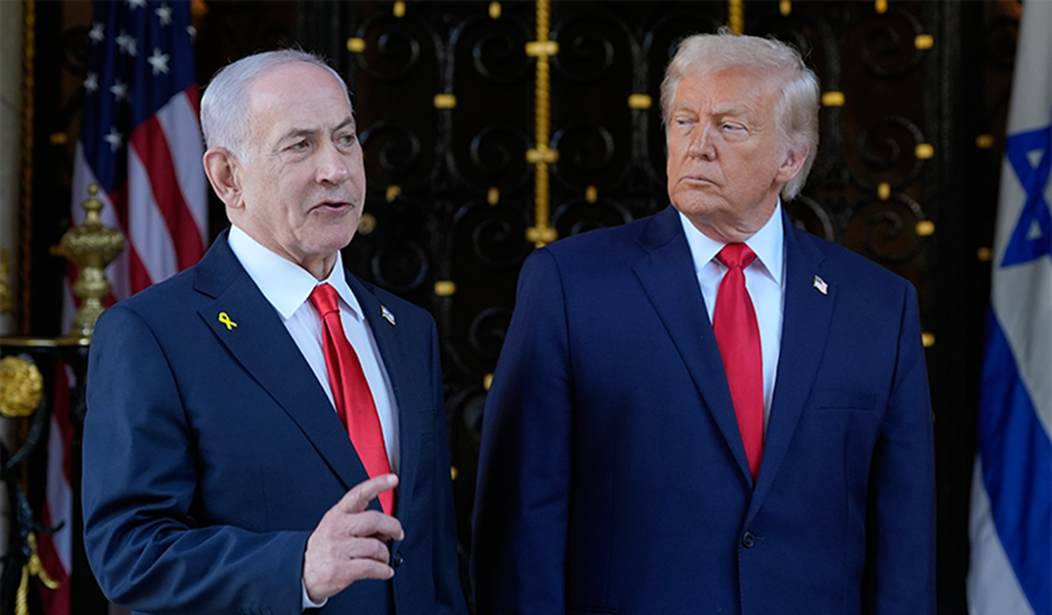
As usual, news of Benjamin Netanyahu's political death has been greatly exaggerated by the Protection Racket Media. The current Israeli prime minister has not yet survived his reelection campaign, but his coalition has won the most seats in the Knesset with more than eighty percent of the ballots now counted.
It's still short of a majority, however, and that leaves Netanyahu with some tough choices. And Bibi's not alone in that predicament:
With 84.5% of ballot boxes counted as of 12:34 p.m., partial results published by the Central Elections Committee give 54 seats to the bloc led by Prime Minister Benjamin Netanyahu and 49 seats to the bloc led by Yashar’s Gadi Eisenkot.
The Arab-led parties — the Joint List and Ra’am — drop to 17 seats. ...
The results are partial and will change as counting continues. Votes cast in double envelopes, including those of soldiers, are counted later.
Israel uses list elections, which means that the seats are allocated by percentage of the total vote over a 3.25% base threshold, and do not represent any particular district or constituency. The distribution will change marginally as the final 15% of in-person ballots are counted, followed by mail-in ballots.
Normally, this would require Israeli president Isaac Herzog to ask Netanyahu to form a government that can find support from enough other members of the Knesset (MKs) to gain a majority coalition. However, Eisenkot and his alliance may attempt to entice the newly bolstered Arab parties to join their opposition group. The Arab parties are now projected to win 17 seats, which would give Eisenkot 66 seats in the 120-member Knesset if these numbers hold.
That would put Herzog on the spot, Alex Winston writes at the Jerusalem Post. Despite the arithmetic in that equation, the math may not be mathing as one would expect:
Under Israeli law, the president must consult the Knesset factions before deciding who gets the task of forming a government.
Netanyahu will undoubtedly point to Likud's position as the largest individual party, while Eisenkot has an equally compelling argument in the game of parliamentary arithmetic, pointing to his larger bloc and the bigger chance of forming a government - particularly if the parties opposed to Netanyahu can agree on a common candidate.The question of how Eisenkot might assemble a coalition remains unanswered. Few of the parties have declared a willingness to sit with the Arab parties, who are projected to receive a record-high 18 mandates, except for Yair Golan’s Democrats.
None of the Arab parties will declare Hamas a terrorist group, nor will they stand for Israeli policies in either Gaza or the West Bank. While Israeli politics is famously fractious and far more to the Left than the US, those positions are far enough to the extreme that most other parties will not abide a coalition that includes the Arab parties. That may be even more true after the October 7 massacres; voters blame Netanyahu for ignoring the threat, but they are not going to back a government that has to let Hamas off the hook to boot Netanyahu out of office, either.
Unsurprisingly, Golan wants the other opposition parties to ignore all this and unite with the Arabs to kick Netanyahu out:
Democrats' chairman Yair Golan said that the bloc led by Prime Minister Netanyahu lost the 2026 Knesset election, as the opposition bloc reached 65 seats when the Arab parties are included.
"Netanyahu lost. I know how to count to 120. 65 is more than 55. That's how Israeli democracy works. Period," he said, calling for the inclusion of Arab parties in the government in the upcoming Knesset elections," he wrote Wednesday morning.
It's far from clear that Eisenkot, a former IDF chief of staff, will be willing to tie himself to Hamas-sympathizing parties just to boot Bibi, or that his coalition would survive if he tried. That's no mere marriage of convenience. The Arab parties would essentially have a veto power over any policies dealing with Gaza or the West Bank, as they could easily collapse an Eisenkot government through a vote of no confidence if he adopted any tough policies in the occupied territories. Golan only has nine seats at the moment in the next Knesset, too, which makes him weaker than even the Arab parties at the moment.
So what happens next? Honestly, the best odds are likely on another election. Israel has had to hold successive elections before, and the splits here are tight enough that it seems like the most likely outcome if no one budges. One has to wonder, though, whether Netanyahu could offer Eisenkot a way out with policy changes and some ministerial concessions to get Yashar into a "war" coalition under Netanyahu's continued leadership. That seems like a stretch, but with Eisenkot's only other options being a bended knee to the Arabs or another election, he might take what he can get for now, if Netanyahu makes him a good enough offer.
Netanyahu still has the initiative here, if not as much leverage. Don't write his political obituary yet.
Editor’s Note: Thanks to President Trump and his administration’s bold leadership, we are once again respected on the world stage, and our enemies are being put on notice.
Help us continue to report on the administration’s peace through strength foreign policy and its successes. Join HotAir VIP and use promo code FIGHT to receive 60% off your membership.
Join the Conversation
VIP members get the ability to comment on articles.