





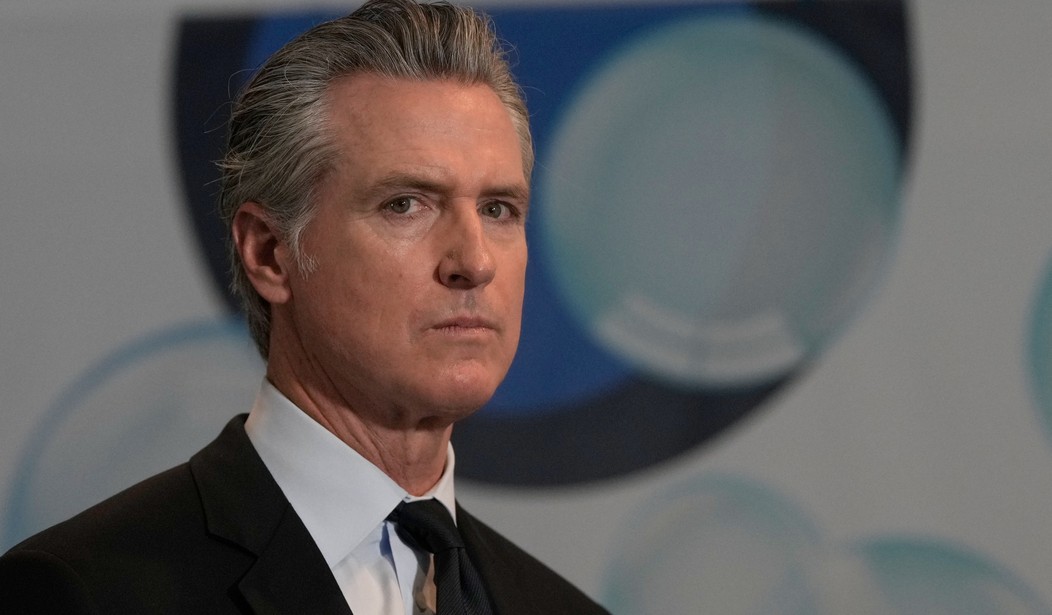
Gov. Newsom waited exactly two days from the last election to essentially announce he is running in the next one. Today, the governor eliminated the death penalty in California by commuting the sentences of every person on death row.
Gov. Gavin Newsom of California moved to spare the lives of all 548 prisoners on the state’s death row on Thursday in the largest mass commutation of death sentences in modern American history.
Mr. Newsom said he made the decision because he finds capital punishment morally objectionable. He reduced every death sentence to life in prison without parole, a sweeping move that will require a review by the state’s highest court in some cases and could draw legal challenges.
I sincerely hope this is challenged in court. The death penalty in California is handed out by the jury. What Newsom is doing here is essentially nullifying the decision of all of those juries at once because he has a moral issue with their decision. Newsom wrote a letter explaining his decision. Even the San Francisco Chronicle notes that this looks like a presidential campaign move.
“I firmly believe that state-sanctioned killing is incompatible with California’s values, undermines the foundations of our legal system, and diminishes each of us,” Newsom wrote. “This decision is among the most difficult of my career, not because I doubt its necessity for our state but because I know its announcement may surface excruciating memories for victims’ families.”
California has not executed anyone since 2006. Yet Newsom’s executive order is arguably one of the most consequential decisions of any governor in recent California history. It comes as Newsom openly explores a run for president, and amid a renewed national reckoning with the death penalty, following a botched execution in Tennessee...
Newsom acknowledged that the people whose sentences he commuted committed horrific crimes. He said he hoped the commutations would minimize their stature in the public consciousness.
“We can now let these offenders die in obscurity while we forever remember and honor their victims,” he wrote. “Faithfulness to our values is measured by how we act when it is most difficult to uphold them. For me this is one of those instances.”
There hasn't been an execution in California since 2006. Newsom put a moratorium in place in 2019:
In 2019, California Gov. Gavin Newsom called the state’s death penalty system a failure and issued an executive order halting executions. His order — and the sight of the lethal injection gurney and the gas chamber chair being driven away from San Quentin State Prison — left the impression that capital punishment in California was all but dead.
It is not: There are 546 men and 18 women who could still face execution in the state. While some states have gotten rid of the death penalty, and others carry out regular executions, California has ended up with a bloated, dysfunctional system that satisfies virtually nobody. A standoff between aggressive local prosecutors who keep pursuing death sentences and more liberal statewide leaders has led to two decades without an execution and a colossal backlog of appeals.
Amnesty International was pushing Newsom to do this on the way out the door. It seems the results of Tuesday's election helped him make up his mind. In fact, there is already an ad campaign planned to praise his decision and frame him as a progressive champion, just what the election results suggest he needs at this moment.
Mr. Newsom acted just two months before he will leave office and as he considers a run for president. The act could make him a more compelling candidate to liberal voters in a Democratic primary, but likely would open him to attacks in a general election.
Death penalty opponents have planned a national ad campaign praising him for the move. The minute-long commercial casts the governor’s decision as an act of courage and leadership inspired by the Rev. Dr. Martin Luther King Jr., Dolores Huerta and Robert F. Kennedy. It will air on dozens of news and political shows nationwide, said Dan Newman, a Democratic strategist who advises both Mr. Newsom and the anti-death penalty groups sponsoring the ad.
Mr. Newman said that the governor had been motivated by personal conviction. But the ad could also help Mr. Newsom in a 2028 presidential campaign...
Mr. Newsom acted after months of lobbying by death penalty opponents and counter arguments from prosecutors and victim advocates.
So this is definitely a win for Newsom politically, but it's a horrible decision for letting hundreds of murderers off from the justice the jury found they deserve. All of these people are murderers, some of them murdered children.
Those against Mr. Newsom’s move are expected to file a challenge arguing that he violated the law with a blanket commutation and that each case must be considered on individual merits.
They recently sent Mr. Newsom a seven-page letter, written by Anne Marie Schubert, a former Sacramento district attorney, that included photos of people killed by prisoners now on death row and detailed descriptions of their crimes. The cases included an 8-year-old boy who was severely abused for months before he died from torture in 2013 and another 8-year-old who disappeared while walking home from school in 1996.
California’s death row includes notorious killers such as Richard Allen Davis, who murdered Polly Klaas, a 12-year-old, after kidnapping her from her home in 1993. It also includes Cary Stayner, who killed four women near Yosemite in 1999, and the 1980s serial killer Charles Ng.
Schubert co-wrote an article for the LA Times about this last month.
In California, Newsom faces a different decision: whether to commute the death sentences of the state’s condemned prisoners. Each arose from an individual case, with distinct evidence, victims and legal history. Juries heard the evidence; judges imposed sentences subject to judicial review. Blanket commutation — occasionally exercised by outgoing governors, such as Illinois’ George Ryan in 2003 and North Carolina’s Roy Cooper in 2024 — substitutes an individual executive’s stance for those individual judgments.
California voters have repeatedly chosen to retain capital punishment. They rejected repeal in 2012 through Proposition 34 and again in 2016 through Proposition 62. In that same 2016 election, they approved Proposition 66 to reduce delays in death penalty appeals and carry out lawful sentences. Blanket commutation would replace the judgments of juries and judges with one governor’s opinion and disregard voters’ repeated decision to retain the death penalty for the most heinous crimes.
Consider 8-year-old Michael Lyons, who disappeared after school in Yuba City in 1996. Robert Boyd Rhoades sexually assaulted, tortured and murdered him. A jury returned a death verdict, affirmed by the California Supreme Court in 2019.
Or consider 12-year-old Polly Klaas, abducted at knifepoint from a slumber party in 1993 and murdered by Richard Allen Davis. A jury returned a death verdict; the trial judge declined to reduce the penalty, and the California Supreme Court affirmed. Blanket commutation would replace that judgment because the governor opposes the death penalty, rather than because he identified grounds for mercy particular to Polly’s case.
Clemency is a legitimate constitutional power. It can correct injustice or recognize circumstances warranting mercy. Credible claims of wrongful conviction and other grounds for relief deserve serious consideration. But the authority to grant clemency carries a responsibility to exercise it wisely and justly. That requires examining each case on its merits, not treating hundreds of distinct judgments alike. How do we explain otherwise to the families we asked to trust the system?
Here's the explanation: Newsom wants to be president. That's it. And to get there he's willing to spare the life of Richard Allen Davis. This is who Richard Allen Davis is:
Moments before a judge sentenced him to death Thursday for the murder of 12-year-old Polly Klaas, Richard Allen Davis stunned a crowded courtroom by accusing the dead girl’s father of molesting her...
The episode began when Davis was telling Judge Thomas C. Hastings that he could not have committed a lewd act on Polly--a charge he denied during the trial--because she had begged him before her death: “Don’t do me like my dad.”
“JUST DON’T DO ME LIKE MY DADDY.” 😫 These are some of the coldest words I’ve ever heard in a courtroom. Richard Allen Davis kidnapped and murdered 12-year-old Polly Klaas. Then, in open court, he claimed her own father had sexually abused her. On September 26, 1996, during his presentencing statement, Davis claimed those were Polly’s words before he murdered her, implying that her father, Marc Klaas, had sexually abused her. THE ACCUSATION WAS COMPLETELY UNSUBSTANTIATED. THERE WAS NO EVIDENCE TO SUPPORT IT. Hearing his daughter’s killer make that accusation, Marc Klaas ERUPTED, screaming obscenities at Davis before being taken out of the courtroom. Davis had kidnapped Polly from a sleepover in her California home in 1993. He was sentenced to death later that day.
— Lindsay 🇺🇸 (@TheLinzerShow) November 4, 2026
And just to make it clear, there's no doubt Davis murdered this 12-year-old girl. He led police to her body.
Davis was arrested two months after the kidnapping and led the police to Klaas' body, which he had buried in a shallow grave in Sonoma County, 50 miles north of Klaas' home, after he had strangled her to death.[8] Although Davis repeatedly denied to police that he raped Klaas, he faltered in this after he was pressed on this question, which the prosecution made a point of emphasizing to the jury at his trial. At one point, Davis said, "I don’t think so." He later said, "Not that I can remember."
Does Newsom really believe executing Davis is immoral? If so he's more of an idiot than I thought he was.
Gavin Newsome will never be President. Remember Polly Klass. On October 1, 1993,Polly Klass was abducted at knifepoint from her bedroom during a sleepover in Petaluma, California. Following a massive, 64-day nationwide search involving thousands of volunteers and the FBI, her body was recovered, and repeat sex offender Richard Allen Davis(Gov.Newsom of California just commuted his death sentence). Polly was brutally raped and strangled to death. Mark Klass has been an outspoken advocate for exploited and missing children. We will not forget!
— Dorian Rossi (@DorianRossvr) November 5, 2026
Editor’s Note: The American people overwhelmingly support President Trump’s law and order agenda.
Help us fight back against the Democrats and Soros-backed DAs that refuse to enforce our laws to hold criminals accountable. Join HotAir VIP and use promo code FIGHT to receive 60% off your membership.


Join the Conversation
VIP members get the ability to comment on articles.