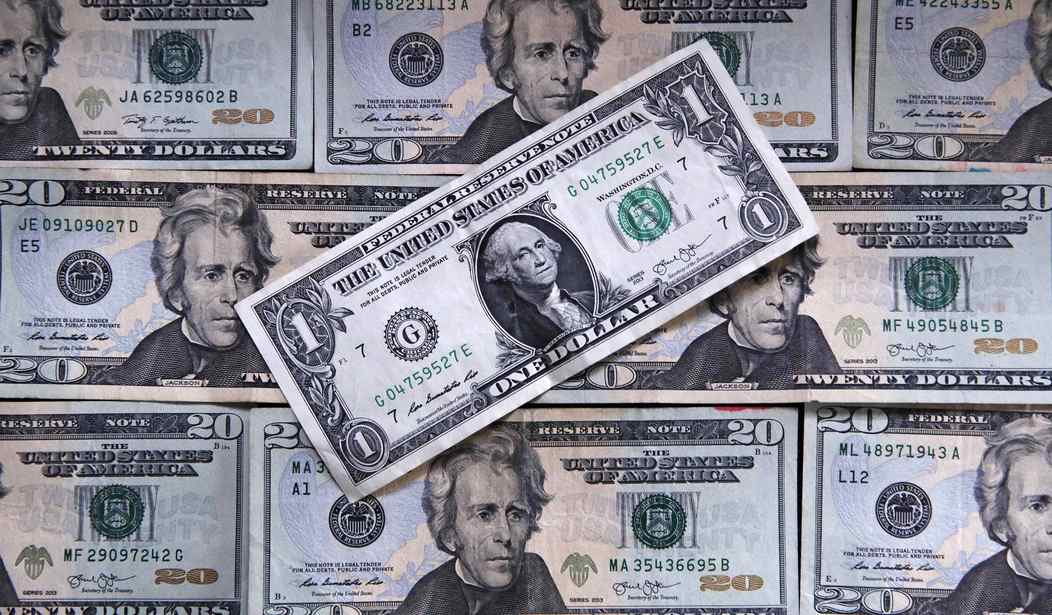
We've covered Universal Basic Income many times at Hot Air. This idea has been talked about pretty extensively for years and there have been pilot programs in a number of cities, all of them attempting to build a case for a larger rollout of the idea.
One of the things that drives me crazy about this topic is the way that it's usually covered by the left-leaning media. UBI is supposed to result in an improved life for people who receive it but the real world results have been mixed at best. Often, progressives do their best to cloud the issue by promoting the few positive outcomes that can be measured, such as personal happiness.
I think it should be taken as a given that giving people free money will make them happy. If that's the best UBI can do then it's probably not worth the money being spent on it.
The NY Times sent a couple of reporters out to track the lives of three individuals who were selected for a UBI program in California. They would receive $1,300 a month for one year. Though of course we have no idea if these outcomes have been cherry-picked in some way the results are interesting.
Ms. Weeks was homeless in 2023, living in a tent with her boyfriend at the time while struggling with drug addiction. “I was waiting for something to save me or kill me,” she said.
Then it came — she became pregnant with her son, Sky...
The first trip she made after receiving the initial payment was to Target, where she filled her cart with organic banana baby snacks ($2.69) for Sky, then 14 months old, and a push bike ($61.99) to take him around the neighborhood. She loaded up on diapers that were softer for his sensitive skin than the ones she normally got for free at a food bank.
Her sister and mother were living in a house owned by her grandfather in Tennessee. When the grandfather died, the house was foreclosed on and the mother and sister agreed to relocate to California to live with Weeks.
By April 2025, they were all living together in Ms. Weeks’s two-bedroom apartment...
“It feels like I’ve been given a head start,” Ms. Weeks said to her mother. Her ultimate goal was to be financially independent so she could give Sky opportunities that she never had.
But, in a recurring theme, she didn't wind up saving as much of the money as she'd hoped. Instead, she wound up spending some of it on her mother and sister who were also living on assistance (but not UBI). She wound up fighting with her mother over parenting issues and as the program was ending she relapsed.
With one month to go until the payments ended, Ms. Weeks briefly relapsed into drugs. In November, sitting on her bed next to Sky’s giraffe stuffed animal, she told her mother that she needed to drop out of community college to focus on her health.
But after the program ended, she got a slightly better job at a hotel, re-enrolled in community college and moved out into her own apartment. Her life seems to have improved somewhat though it's not clear how much of that is the result of the money and how much would have happened anyway.
Another person whose account is told in the story is KaMesha Staples, who was working as a drug-addiction counselor in California when she was selected for the same UBI pilot program.
When she received the first $1,000 payment that month, she set a goal: Get a higher-paying job in education, a field she was passionate about. That September, with her daughters back in school and extra cushion from the payments, she enrolled in community college...
In October 2024, Ms. Staples joined her community college’s “job club,” which helped her make a new résumé and a LinkedIn profile and practice mock interviews. She applied for jobs to be a coordinator or teaching assistant at nearby schools. She also applied for Vera to attend nearby charter schools for middle school.
Again, Staples was not able to save as much as she hoped to during the year she received the free money and she misjudged the end of the program by a month which caused her to miss a car payment. She started driving for DoorDash to make up some of the missing money. But things did improve.
Just as things seemed to worsen, Ms. Staples got an offer in August 2025 to be an after-school coordinator making $30 an hour, $5 more than her last job. The same week, Vera was accepted to a charter school...
“Less helpless is how I feel now,” she said.
In this case, Staples at least tried to use the year of extra money to set longer term goals which did ultimately pay off and help improve her situation even after the money was cut off. So it seems like this story makes the case for the value of a temporary UBI to people who are living near the edge of poverty. But again, we don't know how common this was.
Did everyone in the program have the same motivation to improve their situation and use the temporary help to boost themselves into a better life? We don't know. Were there people who didn't make plans and just spent the money foolishly? We don't know.
UBI, as the name suggests, is universal. So if only 25 percent of the recipients did something smart with the money that's a good outcome for them but a bad use of money overall. On the other hand, if 75 percent of them made an effort like this which had some payoff in the long term, that would make a much better case for extending this to people in a similar situation.
I also think the nature of these pilot programs, lasting a year, is very different from a permanent grant of money. Knowing you have one year to take advantage of this is very different from knowing you'll get it for life. I imagine the response would be very different as well. In other words, I'm not sure this experiment, even if you wanted to cite it as a success, tells us anything about the kind of UBI which is just a permanent entitlement.
Editor's Note: The Democrat Party has been infected by socialism, and it's spreading FAST. Democrats are claiming there's nothing to worry about, but we know the truth.
Help us continue to shine a light on the socialist takeover by joining HotAir VIP. Use promo code FIGHT to get 60% off your VIP membership.







Join the conversation as a VIP Member