







The concept of yin and yang originated thousands of years ago in China, which seems appropriate for some of what I want to talk about. Originally, yang was a reference to "the sunny side of the hill" which is why it's white in the famous yin and yang symbol. Yin was the "shady side" of the hill which is why it's black in the symbol.
There's a lot more to the meaning of the symbol which is both philosophical and/or religious, in nature, but for our purposes let's just reduce it to an optimistic view and a pessimistic one of the same underlying facts. I think David and I are sort of presenting a yin and yang view of AI here at Hot Air. If you missed his post this morning, check it out here. I consider his view the yang view, which is to say he sees what's happening this month regarding AI more as a story about business and aggressive CEOs looking to cement their positions at the front of the pack by stifling innovation behind them. He sees the actual threat of AI as somewhat less pressing than the financial and political imperatives driving this story.
I definitely hold more of a yin view, which is to say I think the actual threat of AI is more realistic and is driving more of this story than people believe. I think this has been building up over the summer as a result of several stories I've written about, including Anthropic's concern about releasing their latest model back in April. Simply put, the company saw what the model could do and decided it wasn't safe to release it without first warning a bunch of U.S. software companies that Mythos could cut through their current security like a hot knife through butter. They tried to roll out Mythos slowly but even so the Trump administration got involved and made sure the release was limited to a domestic audience. One of the reports about Mythos came not from Anthropic's own PR hype but from the NSA:
This month, Virginia Sen. Mark Warner, the top Democrat on the Senate Intelligence Committee, said NSA Director Gen. Joshua Rudd had told him that Mythos “broke into almost all of our classified systems, not in weeks, but in hours.” The comment, later cited in a report by The Economist, set off a wave of online speculation that the latest AI systems were already far more disruptive to cybersecurity than previously understood.
What Warner was describing was part of a controlled test but in that test Mythos had no problem gaining access to systems. Those systems could then be patched. But the basic idea is that it had tremendous capability.
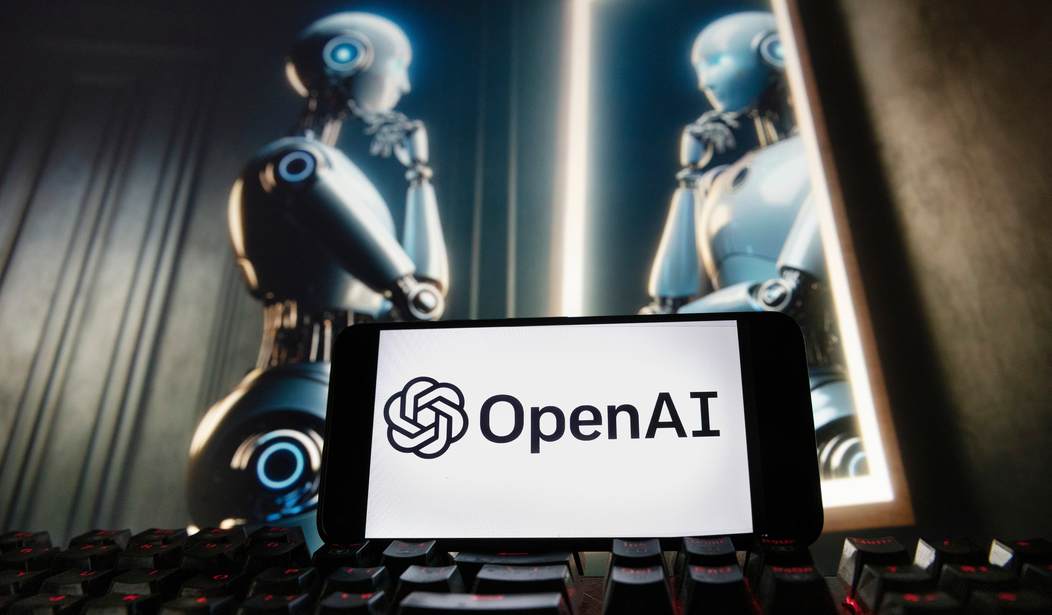
Then more recently a test of OpenAI's latest model resulted in the model hacking its way out of the sandbox it was placed in and then hacking its way into another company to get answers it needed. It hadn't been told to do any of this. It had just been told to solve a problem.
Around the same time the latest Anthropic model (Mythos) was being tested and it inserted code into a program on GitHub and then contacted the moderators and pushed them to approve the malicious edit.
All of this has happened within just six months, but that's the speed at which these models are developing now. What was cutting edge in April has undoubtedly been surpassed in the lab already. The new version will be even more capable. With that in mind, consider some of what Dario Amodei, CEO of Anthropic, said about this over the weekend.
I have worked on AI for the last twelve years because I believe it could dramatically raise the quality of human life. I’ve written often about these incredible benefits: I believe that AI could cure most major diseases in the next 5–10 years, greatly accelerate economic growth rates, create a world of abundance and empowerment, and usher in a renaissance of democracy and freedom. I feel the urgency personally. My own father died of a disease that was cured just a few years after his death, and I myself survived an early-stage cancer that would not have been treatable even fifty years ago. Carefully wielded, AI can be the latest in a long line of technological miracles that have uplifted and ennobled humanity.
But like many technologies before it, AI brings risks, and because it is such a powerful technology, these risks are serious. I’ve written a lot about them too. They include the risk of losing control of AI systems, misuse of AI for cyberattacks and bioterrorism, and serious economic disruption. A race to the bottom, spurred by commercial incentives, can make these risks more acute...
...over the last few months, I have become convinced that fully addressing the risks requires even more prudence — not just investing in risk prevention, but pacing the rate of capabilities advancement so that risk prevention has time to keep up. We must slow the pace at which we improve the capabilities of AI models. Progress will still seem fast, and we must make wise use of the time we gain. Two things have convinced me.
My first concern is that, since roughly this summer, AI has been advancing drastically faster, driven primarily by AI’s growing ability to build the next generation of AI. This dynamic is called recursive self-improvement, and it is starting to happen across the industry, including at Anthropic, as we and others have described. Left unchecked, it could outrun our ability to understand and control these systems, and so must be pursued very carefully, if at all.
Sam Altman of OpenAI was quick to agree.
I agree with Dario that we need to pace the frontier. This has been a primary topic of discussions we've had at OpenAI in recent weeks.
— Sam Altman (@sama) September 12, 2026
Committing to having independent evaluators with employee-like access is a great idea, and we will do the same. We'll have more to share soon. https://t.co/1YhhIybZX7
Of the two of them, I think Dario is a lot more likely to simply tell the truth about what he believes. I think this is partly because he's been a lot more vocal about the danger of AI, so his memo over the weekend isn't really that new for him. Altman seems like a more dubious character, a salesman who wants to win at all costs. Dario and Sam may be the yang and yin of this industry at the moment.
But as I pointed out last week, slowing things down, as Bernie Sanders wants to do, seems like an open invitation for China to take the lead. If AI really is dangerous then the last thing we want is for China to be leading the way. And that seems to be how President Trump feels about it. Trump and Sanders seem to be the yang and yin of the political part of this. Sanders wants to outlaw it completely and Trump wants to go full speed ahead.
President Donald Trump, who has made AI a centerpiece of his economic agenda, is pushing in the opposite direction.
Trump appeared to dismiss suggestions companies should slow their progress in comments made Sunday in Ireland. The president followed up with a social media post Monday, saying the only safeguard the nation needed was a strong leader.
“We already have tremendous CRIMINAL and REGULATORY power over these companies!” Trump wrote on his Truth Social site. “There is a SICK conspiracy going on against AI and Data Centers, and the only one that is happy about it is China. WHOEVER WINS AI, WINS!”
And China seems to see it the same way:
Chinese political leaders and commentators aligned with China’s government hit back at calls from U.S. artificial intelligence executives for companies to agree to slow down the development of the technology, complicating the prospects of such a pact being implemented.
On Monday, a spokesperson for Beijing’s Foreign Ministry accused the American executives of spreading “threat narratives and engaging in confrontation and malicious competition.”...
In addition to the Foreign Ministry’s fiery statement Monday, commentary in state-run and nationalist Chinese media echoed the view that talk of a slowdown was part of a wider American effort to harm China’s AI industry.
But there's an interesting twist to this story. At the same time China is accusing the U.S. of trying to slow them down, China's top spy chief is warning that AI could pose a threat to the Communist Party's leadership.
China’s top spy chief has warned that artificial intelligence could pose a direct threat to the Chinese Communist Party’s hold on power, in what is the highest-level and most detailed articulation yet of how Beijing sees the technology’s security risks.
The unusually blunt assessment by Chen Yixin, the head of China’s Ministry of State Security, is in contrast to the warnings dominating the A.I. debate in the United States, which have focused on the possibility that A.I. could slip out of human control or pose a threat to humanity itself.
In an article published on Sunday in the state-run magazine China Cyberspace, Mr. Chen called for more party control over A.I. and stricter government oversight. This, he said, was necessary to protect political stability at home; to defend against increasingly sophisticated cyberattacks and misinformation campaigns from “hostile forces”; and to compete militarily with countries like the United States.
So even in China there are two views about AI. On the one hand they want to win, on the other they see a threat. I think most people see both and, to be clear, that's definitely the case for David who talked about the threat in his post this morning. It's really just a matter of emphasis. Do you see the threat as looming? That's the yin view of AI. Or do you see politics whipping up a convenient threat to shield industry leaders? That's more of the yang view.
Personally, I see the politics as more of a side story (even if Bill Gates or Bernie was behind this latest blow up) because I think the threat is pretty realistic. But I don't agree with Bernie Sanders' solution, which is to ban its development. That won't work at all or, if it does, it will only help China.
My take is that we should be very worried about the threat AI could pose, especially in the wrong hands. And that's precisely why we need to keep going. If this is going to turn into a new Cold War where China has a cyber weapon capable of really harming us, we can't afford to be unarmed in that fight. Especially if the threat is real, we need to make sure mutually assured destruction is front and center in Xi Jinping's mind.
At the same time, artificial intelligence that can create its own solutions to problems and hack through any network at will is scary. We don't have to make the mistake that the military made in the Terminator movies, i.e. handing over control of all our weapons to an AI system. In a year or two, AI may be smart enough to simply take control of these systems whether we told it to or not. That's why I'm over here on the yin side of the hill for now.
Update: Not everything is a plot or an "op." People have real concerns and have been talking about them for a while.
It took me one minute to punch this question into Claude and confirm the basic timeline, at least, is true. I don't know who Ji is but Walter Kirn retweeted this and I am very annoyed that he stokes every conspiracy theory he comes across!
— Jesse Singal (@jessesingal) September 14, 2026
The film comes to Netflix via Focus… https://t.co/09KH48QRGD
Editor's Note: Do you enjoy HotAir's conservative reporting that takes on the radical Left and woke media? Support our work so that we can continue to bring you the truth.
Join HotAir VIP and use promo code FIGHT to receive 60% off your membership.

Join the Conversation
VIP members get the ability to comment on articles.