








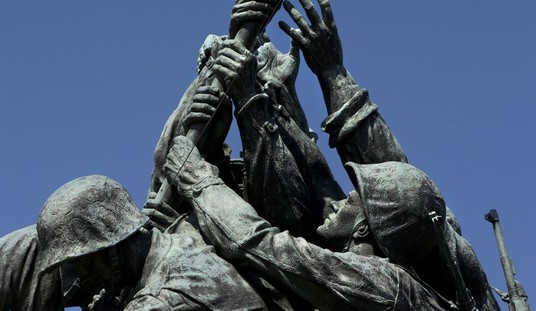
Back when far-left activists were throwing chains and ropes around historical statues and pulling them to the ground in cities around the country, I had a pretty simple take. Locals should have a say in what monuments go up or stay up in their own cities and towns. And if that meant that some monuments came down in certain very progressive areas, that's okay with me. Let the majority rule.
However, there is a process for expressing your feelings about things like public monuments. If you want them taken down, go to the city and petition to be heard. Make your case for why it's time for something new. But what you cannot and should not be able to do is just shortcut the political process and get your way with a rope. Vandalism and property destruction are still crimes even if your target is unpopular.
Part of the appeal of my approach is that a) it's legal and b) it would likely weed out some of the real extremists who are convinced Abraham Lincoln's statue needs to go. There might be a large enough group of knuckleheads who believe that to pull a statue down, but you'll have a hard time convincing enough normie citizens to remove Lincoln through the regular process.
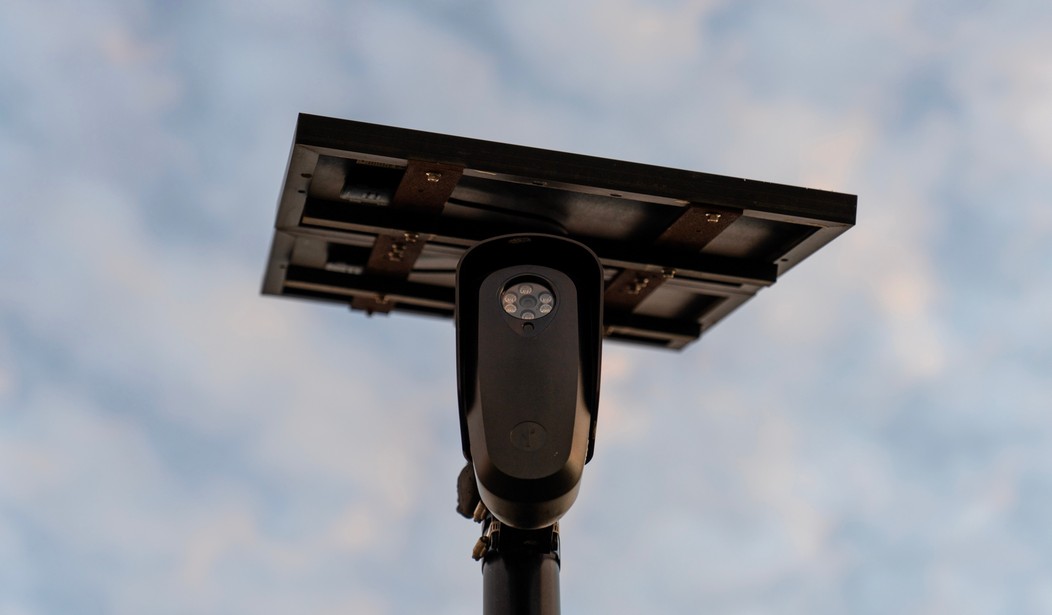
And that brings me to Flock cameras. These are cameras being set up around the country to automatically keep track of the license plates, makes, models and colors of cars passing by on the street. The cameras create a real-time database which can be searched by police if they are, for instance, trying to locate a particular vehicle fleeing a crime scene.
This week, Flock Safety, the Atlanta-based maker of the cameras, held its annual conference amid intense backlash.
According to the company, more than 5,000 law enforcement agencies use its technology. More broadly, there are more than 130,000 AI-powered automated license plate readers on American streets, according to DeFlock, an advocacy group that tracks the cameras.
Police leaders say Flock cameras help them locate stolen vehicles and missing people, and a recent preliminary study suggests that Flock cameras can deter car theft.
They've also been used in high profile cases.
The cameras have been used to solve some serious crimes. In 2025, their ability to recognize cars by make and model helped the police in Providence, R.I., track down the Brown University shooter, who had switched out his license plates.
On the other hand, the cameras have also been misused.
There have been dozens of cases of police officers either charged with or accused of using the plate readers to track girlfriends, exes, even people they’re interested in. The false sense of certainty the new tech provides has also led the police to make boneheaded errors, arresting or drawing weapons on verifiably innocent people. But these one-off abuses are less of an issue than what the Flock cameras seem to represent to their opponents: a meaningful step toward the creation of a high-tech police state.
There's a genuine argument to be had here on both sides, but opponents of the cameras are increasingly just running wild. In counties around the country, people aren't protesting the cameras they are just tearing them down and vandalizing them.
According to an NPR review of local news reports, Flock cameras have been vandalized in at least 36 states.
People have stolen the cameras, sawed them down, crashed into them with cars, covered them in paint and stickers, and shot at them.
Social media is filled with tongue-in-cheek how-to videos, instructing viewers on things like how to discreetly saw through a metal pole.
The comments on Facebook posts from local news stations about the vandalism are rife with snark: "Not all heroes wear capes," one commenter wrote.
"These are people being amped up to go do something. And I don't think they're being given the level of information they should that they're also committing a felony," Langley says.
Obviously people have strong feelings about these cameras with some seeing them as a useful tool to reduce crime and others seeing them as a government invasion of privacy that can be abused. Regardless which side of that you come down on, there is a political system for presenting your views and getting them heard. Vandalism is not part of that process. Vandalism is an attempt to bypass that process and effectively substitute your views for those of the entire community. It's an Antifa response to a legitimate public policy question.
Recently a guy made his opposition to Flock cameras known by dressing up as Darth Vader at a city council meeting.
Darth Vader made an unexpected appearance at San Diego City Hall this week to weigh in on the city’s use of Flock surveillance cameras.
— SFGATE (@SFGate) August 21, 2026
With breathing that was loud and jagged, not to mention signature, Vader took the floor during a meeting of the city’s Public Safety and… pic.twitter.com/Q5JVSycePm
Sort of clever, but even if I don't agree with him he's at least using the public process to make his point. That's how this should go, not people spray painting or chopping down cameras.
For its part, Flock says that only cities have access to the camera data and that data is only supposed to be kept for 30 days before it is overwritten. Recently the company cut that to 7 days because of the backlash.
My opinion is that I'm probably fine with this if it can be used responsibly to deter crime and catch violent criminals. However, there's no doubt this could be abused and already has been in some cases.
Here's a recent NBC News story about the cameras and the vandalism in response.
Editor’s Note: The American people overwhelmingly support President Trump’s law and order agenda.
Help us fight back against the Democrats and Soros-backed DAs that refuse to enforce our laws to hold criminals accountable. Join HotAir VIP and use promo code FIGHT to receive 60% off your membership.


Join the Conversation
VIP members get the ability to comment on articles.