










Seattle's businesses are giving up and leaving the city.
We're not just talking about small, marginal businesses that can't survive a rough patch; even the largest businesses in the region are bugging out. The city is too unsafe, too expensive to operate in, and nobody likes having to avoid stepping in human feces and navigating "urban campers" on their way to work or coming back from lunch at a nice restaurant.
Seattle offers free rent to fill empty storefronts, weighs race and sex in selecting businesses "Is the business Woman and/or Black, Indigenous, or Person of Color (BIPOC) owned, and/or does the project serve women/BIPOC communities?” https://t.co/zp49sTwCWz
— Ari Hoffman (@thehoffather) November 3, 2026
It's impossible to overstate how far and how fast Seattle has declined, and it's no secret what has caused it. It's not just Nike and Starbucks that are bugging out — iconic Seattle businesses — even Goodwill, which hardly relies on a clientele with soft sensibilities, can't do business in the city.
Nike, The North Face, Saks OFF 5TH, Vans, Lululemon and Hard Rock Cafe have closed downtown locations. Ross Dress for Less also announced its downtown closure earlier this year. Whole Foods shuttered its Capitol Hill store, while Amazon closed its Amazon Fresh grocery store on Pike Street.
The losses extend across Seattle’s neighborhoods. Target also made the decision to close its Ballard and University District stores in October 2023, citing theft, organized retail crime, and safety concerns.
In August 2024, The Post Millennial reported that Evergreen Goodwill was closing its South Lake Union and University District stores. In a statement obtained by The Ari Hoffman Show on Talk Radio 570 KVI, the nonprofit cited property damage, break-ins, safety concerns and rising expenses.
Starbucks has also closed prominent Seattle locations, including near tourist spots like Pike Place Market, its Capitol Hill Reserve Roastery and, in August, one of its few remaining downtown stores.
If you go to your local Starbucks, you can buy a Pike Place blend of coffee, named after its formerly famous Pike Place location. It is now closed. Even Amazon is bugging out.
Seattle program offers six months of free rent to fill empty storefronts: https://t.co/NxyuDO6ngu
— KOMO News (@komonews) October 30, 2026
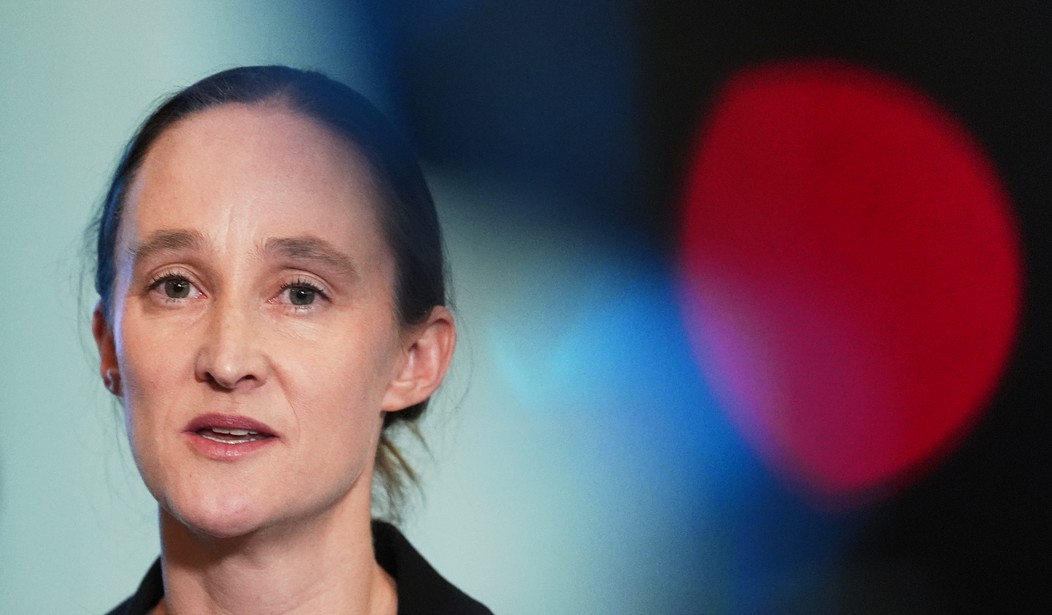
But fear not. Katie Wilson, who famously laughed about these businesses exiting, waving "bye-bye" as her tax base collapsed, knows how to fix the problem: free rent distributed through DEI grants.
Sure, that'll fix the problem.
Seattle is offering entrepreneurs six months of free rent and cash stipends to fill vacant storefronts after years of business closures, with applicants evaluated partly on whether their businesses are owned by women or racial minorities.
The city’s Seattle Restored program offers selected businesses temporary rent-free space, a $2,500 stipend, general liability insurance, and internet service. Its application scoring criteria explicitly ask: “Equity: Is the business Woman and/or Black, Indigenous, or Person of Color (BIPOC) owned, and/or does the project serve women/BIPOC communities?”
Applicants are also evaluated on community impact, readiness, and experience. A community advisory panel and program staff score applications, with higher-scoring applicants advancing to interviews.
The recruitment effort is prioritizing Belltown, Pioneer Square, the Chinatown-International District and the downtown retail core—areas where Seattle is trying to restore commercial activity following years of prominent departures.
No doubt there is a huge hunger for feminist bookstores and dashikis woven in Chinese sweatshops. Who needs Nike, Starbucks, Microsoft, or Amazon when you can have a BIPOC transgender "woman" run...what, exactly? It doesn't sound like having a business plan is high up on the list of priorities.
This is about equity, and who needs a real tax base when you can help people ascend the intersectional ladder.
Worse, anyone who knows how business location strategies work knows that anchor tenants who bring in crowds are vital to the entire retail sector. You'd better have a unique, desirable product to draw people to a dead downtown. Tourists might take a trip to visit Nike's anchor store or have a cup of Pike Place coffee, but they aren't taking a special trip to patronize a DEI store.
The converse, however, is possible: if you are visiting the Nike store, you might just visit the small shop down the street. This fact is so obvious that any adult should understand it, but socialists have less common sense than 5-year-olds.
The city has also lost office activity as employers shift operations elsewhere. Warner Bros. Discovery moved its local operation to a smaller Bellevue office, while Amazon has moved teams to Bellevue and Redmond. Starbucks has shifted selected teams to Nashville, and Amazon has moved most of its operations to nearby Bellevue.
Free rent is also not Seattle’s first financial intervention. The city has offered grants to reimburse merchants for broken windows and other storefront damage, including when thieves drive a stolen vehicle into a business.
One owner said boarding up the entrance alone cost between $4,000 and $5,000, with replacement glass costing more. A city spokesperson suggested applying for a repair grant, which at the time covered up to $2,000.
Seattle’s Storefront Repair Fund now offers reimbursements of up to $5,000 per incident for as many as three separate incidents per calendar year. Eligible repairs include broken windows, doors, locks, gates, fences, and signs. Stolen merchandise is not covered.
The city has also funded artwork in vacant commercial spaces. Seattle Restored launched in December 2021, offering participating artists and entrepreneurs $2,500 each and temporary storefront space at no cost. The initial effort targeted 25 storefronts using federal American Rescue Plan funding. In July 2022, the city announced an expansion targeting another 45 spaces.
Meanwhile, an October 26 survey from the Seattle Metropolitan Chamber of Commerce and Downtown Seattle Association found that 47 percent of respondents, 92 of the 197 answering the question, had seriously considered moving operations, jobs or investment out of Seattle during the previous 12 months.
Public safety, taxes, and fees were respondents’ most frequently identified challenges, at 64 percent each. Homelessness and behavioral health conditions followed at 61 percent.
I can't imagine the city needing a storefront repair fund to soften the blow of regular civil disturbances, and the biggest problems businesses cite are all the result of socialist policies.
But Seattle's socialist mayor looks around and concludes that what ails Seattle is that it is insufficiently socialist and that it doesn't have enough feminist bookstores.
As I mentioned before, a few cities, such as New York or London, can sustain themselves even when the policies are hideous. A financial center with centuries of built-up social and economic capital can show a lot of resilience. Hideous policies can hurt these cities badly, but it takes Detroit-level mismanagement to destroy them.
Seattle is not such a city. It is in a lovely area, but businesses can move only a few miles away and do much better. So they do.
It is remarkable to me that somebody like Katie Wilson could get elected mayor. She is quite transparently stupid and has the charisma of a sophomore deep into her women's studies phase of college. Yet she now runs one of America's great cities.
At least Zohran Mamdani is genuinely good-looking and charming, which partly explains his appeal, and he talks a good game.
Wilson? All she had was being a socialist, and she won. It's scary to me that Americans can be this stupid.
But there it is.
Editor's Note: The Democrat Party has been infected by socialism, and it's spreading FAST. Democrats are claiming there's nothing to worry about, but we know the truth.
Help us continue to shine a light on the socialist takeover by joining HotAir VIP. Use promo code FIGHT to get 60% off your VIP membership.

Join the Conversation
VIP members get the ability to comment on articles.