







I've been trying to streamline and clarify my thinking about the class divide in Western politics and how it is one of the great driving forces in contemporary life.
When people think "class," they tend to think in material terms. Who has access to the most physical resources (money, mostly), and what social strata you were born into, again largely defined by the economic class your family belongs to.
Obviously, economic class is an important variable for all of us and affects how we think and vote, but by "class" I am not thinking of that variable at all. What I mean is more "social strata" as a function of social power and prestige.
A Harvard student, for instance, may have barely a penny to his name as he struggles through college, but he inhabits a social stratum with significantly higher prestige and potential power than an electrician just starting out and making a pretty good living. Generally speaking, when somebody asks, "What do you do?" they are really asking what social class you belong to, as often as not. If you answer, "I run a plumbing business," while the guy next to you says, "I write for The Atlantic," many circles will consider the latter higher status, even though the former is worth $15 million and the latter is scraping by.
The social circles in which the writer is higher status are, of course, those inhabited by people with the most access to power in society.
Which gets me to one of my key insights into how this particular variety of social class signaling distorts politics and many other aspects of our society.
I chose the writer at The Atlantic as an example because he has something highly valued by the credentialed class/power class: verbal fluency, and as likely as not others picked it up early in his life and heavily fostered and praised it.
For many people, verbal fluency serves as a proxy for intelligence, and to a certain extent it is, although only for one particular axis of intelligence. But experience — and plenty of research backs this up — shows that verbal fluency is not a great proxy for wisdom, good judgment, decision-making ability, or, in many cases, the ability to make reasonable connections between cause and effect.
Obama, for instance, was the most verbally fluent president we have had since Ronald Reagan, and on pure mellifluousness he exceeded Reagan in all the ways that appeal to the credentialed class. He spoke their language; Reagan spoke eloquently, but in the patois of the working man.
My initial thought, as I worked this out in my head, was that the left loves verbal fluency and the right prefers practicality and successful outcomes, but that divide is too crude to work. The reason all the NeverTrumpers fled the Republican Party when Trump came to dominate it had less to do with ideology than with Trump's class markers. Trump is the anti-fluent president and, in many ways, the opposite of Obama.
There are many conservatives who like Trump's policies and his successes, but more than a few of us wince when he speaks because his fluency is rated at the level of a fifth grader when he speaks publicly.
The credentialed class loves fluency, and the left is packed with members of that class. The transnationalists who love tailored clothes and value well-spoken people all lean left. Academics are 10-1 liberal to conservative, and that is one reason they prefer the verbally fluent. Government workers, the media, and the entertainment world all strongly prefer verbal fluency and associate it with intelligence and being "right."
They prefer to have a member of their social class in power, even if they also know that person is not particularly competent. A 2023 Dutch study actually measured this, and educated voters prefer an educated but ineffective politician to a less educated but effective one.
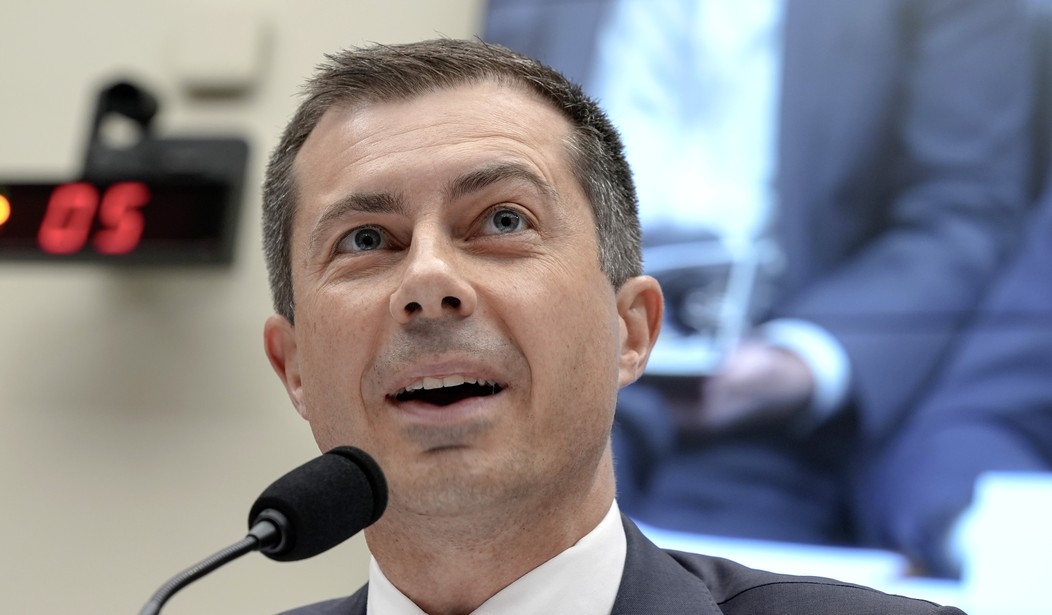
Class before competence. That sums up the appeal of Pete Buttigieg. He strokes the sociological erogenous zones of the educated elite. He may suck as an actual manager, but he sounds like me.
I am still working out my ideas on this, but the data is real. Highly educated voters will pick a highly educated candidate, largely out of class preference. The same effect does not show up as strongly for people with less education and verbal fluency. They tend to focus on more practical variables.
I think the preference for technocracy you see in the educated class stems from this class loyalty. Technocrats have credentials, which carry special weight with people of this class. This is why Buttigieg's record can be atrocious and still make him a rock star for this group, while a governor like Ron DeSantis, who sounds different from them, repels them even though his record is stellar.
It would be an interesting test, actually, to poll Democrats/liberals about their candidate preference between Buttigieg and DeSantis, and ask what they think of their competence in particular. I would lay money down saying that Democrats assume that Buttigieg is competent and DeSantis is not.
The irony is that experience shows that neither verbal fluency nor education is a particularly good predictor of competence where it matters in many fields, including governance. A person with good judgment or instincts will outperform Gavin Newsom, who could talk himself out of a conviction for a murder he committed on live TV.
Sixty to seventy percent of politicians are either lawyers or career government officials and politicians. As a group, they lean heavily Democrat, while the other large professional group — businessmen with practical experience outside speaking — leans Republican.
I make my living off of verbal fluency, of course, but unlike many people in my social class I tend to distrust the smooth talkers and the overeducated. It's not that I assume verbal ability is negatively correlated with practicality; it's just that I know the two aren't that highly correlated, or at least not as correlated as assumed.
Still, at least a plurality of people in the Democrat Party vote out of class loyalty, even if they aren't aware of it. They believe a "smart' person, judged by how they talk, will be an obviously better choice.
"They're just like me" is the "I would rather have a glass of Chardonnay" version of "which would you prefer to have a beer with?" question.
Editor’s Note: Hollywood, academia, and liberal elites are out of touch with the average American.
Help us continue to report the truth about what 77 million patriots voted for by joining HotAir VIP and using promo code FIGHT to receive 60% off your membership.

Join the Conversation
VIP members get the ability to comment on articles.