






It’s not going to work.
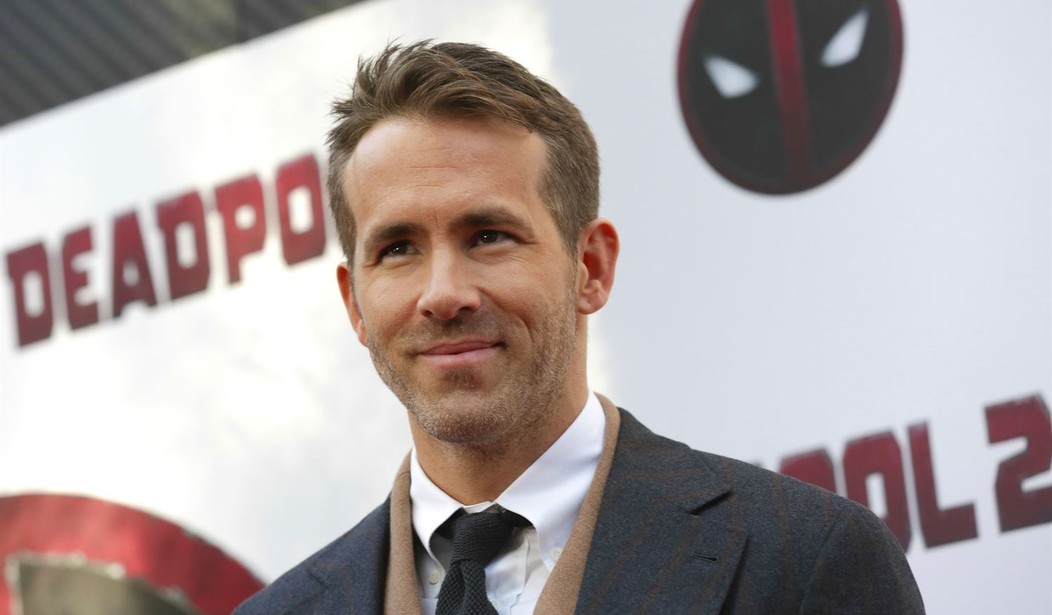
In recent years, a few self-important liberals have tried to disparage the 1980s, that amazing decade of freedom, patriotism, and incredible music. The latest is dim actor Ryan Reynolds, who went viral declaring the Reagan Era a “traumatic” time when we had to deal with things like ... the Cuban Missile Crisis.
Everyone fired back, and rightly so. The 1980s were great because they were a bright window between the violent radicalism of the 1960s and the sad grunge of the 1990s — and the malevolent wokeness to follow. It was a great time when Americans pushed back against what historian James Pieresson calls “punitive liberalism.” Punitive liberalism was hatched in the 1960s. It is the idea that America is a corrupt and sinful nation that needs to be punished. The 1980s rejected that idea, and the left hates it for that.
Punitive liberalism makes people like Ryan Reynolds feel smart and important. They think they attain virtue by running down the USA. He’s not the first one. In a 2025 column, “The 1980s are Back, and Not in a Good Way,” Elizabeth Spires was sour that President Trump has brought back the era of greed, when “being rich and preppy looked cool.” As in the Reagan era, young people are “rejecting the progressive politics of their elders.” Even fashions have taken on “a slightly modernized 80s look.”
Spires once admired the 80s as a girl in rural Alabama, but now knows better: “For much of the world, the shining city on a hill [President Reagan evoked] appeared more like the distant compound of a Bond villain. Nancy Reagan’s anti-drug campaign seemed virtuous when my fifth-grade teacher made our class memorize all the street names for PCP in case we ever encountered it in rural Alabama. I later understood the war on drugs as a prosecutorial cover for persecuting and incarcerating Black people. My isolation in a small, culturally monolithic community rendered these things invisible to me as a child, when the Reagan years were all glitter, big hair, and fun.”
Spires must be fun at parties. Spires doesn't get that there is a reasonable midway point between blind patriotism and hating your own country. You can intelligently love your country. Generation Xers who were young in the 80s understood that racism was still a problem, that gay people were being treated unfairly — and often violently — and that America had made mistakes. Vietnam was still in our living memory. This didn’t mean we didn’t love America. I worked in a movie theater and then a record store, and spent my free time reading books, going to movies, dating fantastic New Wave girls and clubbing. Often it was bliss.
One person who gets this is Justine Bateman. Bateman, a star from the 1980s and now an accomplished producer and director. Bateman has recently been online championing free speech, art, and America as exceptional. She wants young people to do what we did in the 80s — think for themselves. She recently posted this on X: ”If you're under 30, you've most likely been convinced that you need to politically ‘resist the other side.’ You've been cheated.” Bateman argued that voters should "insist" candidates "audition for your vote" and that voters "examine their actions objectively and decide if, in the big picture, this is benefiting America as a whole."
The writer Paul Elie has also written well about the 1980s. In his absorbing new book, The Last Supper: Art, Faith, Sex, and Controversy in the 1980s, Elie describes how so many young people viewed America in the 1980s. It was a time when both celebrity artist Andy Warhol and Pope John Paul II could be loved by the people — in fact, Elie’s book opens with the two men meeting. Of New York in the 80s, Elie notes that “the city was characterized by its celebrity nightlife: discos, launch parties, black limousines, lines of cocaine on the counters of mirrored bathrooms. And it was defined by squalor and decay.”
Yet despite the drugs and the decay, people saw fun and opportunity: “And yet those of us who had come from somewhere else were struck by the stone-and-iron solidity of the city, not by the signs of decay. New York City in that moment was as ancient-seeming as Rome. It was an unreconstructed place, free of the shopping malls and space-age sports arenas that had transformed the mainland. It was still in touch with the dark forces of clan and tribe and territory, of sin and retribution, and the Old World feel of the city was what set it apart from continental America.”
He goes on: “The city was powered by the shared belief that it was the center of everything and that being a New Yorker gave your life meaning and purpose. It was this belief that drew you there and held you there.”
This describes so much of life in the 1980s in America, not just in New York City. But maybe a frequent response to those not around at the time is the truest: If you weren't there, you don't get it.
Editor's Note: We now have the room to run outside commentary by some of our favorite and most provocative thinkers on the Right. That only happens because of the support of our readers, who ensure that we have the resources to keep providing an independent platform and independent voices in a sea of Protection Racket Media domination.
Help us maintain that fight! Join HotAir VIP and use promo code FIGHT to get 60% off your membership.


Join the Conversation
VIP members get the ability to comment on articles.