



In advertising, the "New Look, Same Great Taste" tactic is so common that TV Tropes lists it. It's right up there with the "Very Special Episode," where a comedy show addresses a controversial or timely topic. It's the sort of thing at which you roll your eyes because it is common, annoying, and exists to grab attention without adding anything of value.
Businesses rebrand to get attention for their products as their brand appeal wears off or gets stale, but when an unpopular idea or program gets rebranded, it's about escaping the negative connotations of a brand people have grown to hate.
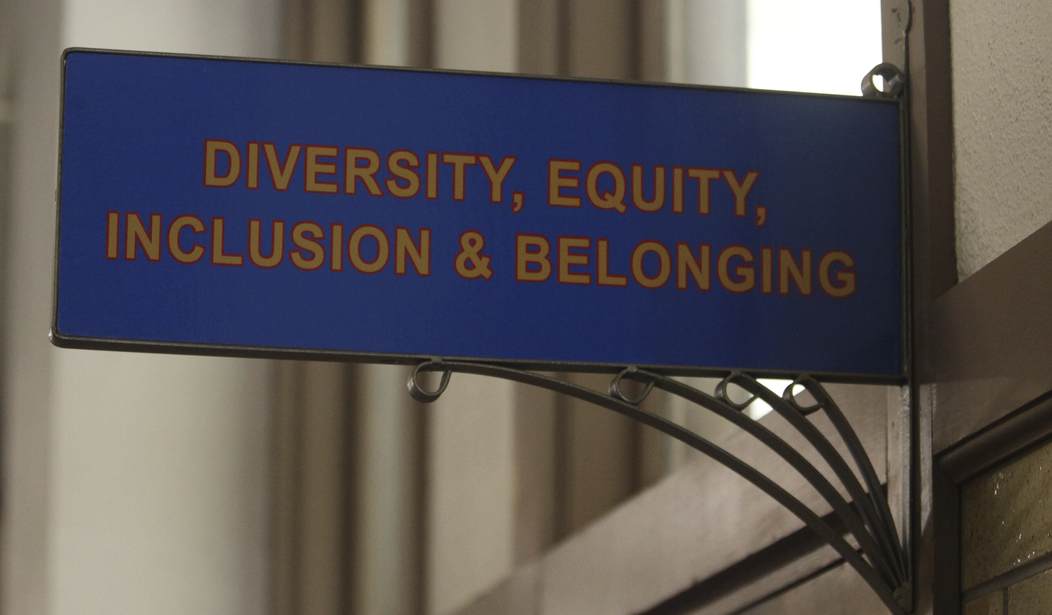
Like DEI, which became so unpopular that several states have banned it, and it's illegal to implement if you get federal money. Not that it should have been legal in any case, given that it violates the Civil Rights Act and the Equal Protection Clause, but suing to get rid of illegal programs can take decades; look at race-based hiring, which took the Supreme Court decades to reverse.
We already knew that many institutions have "complied" with the law in name, but not in spirit, because they are committed to DEI programs to the point where breaking the law is almost mandatory in their eyes. It's the same impulse that has Colorado and Washington politicians scheming to overturn voter-approved gender measures.
Read my full reporting at @CityJournal: https://t.co/qEtg8EOkIR
— John Sailer (@JohnDSailer) November 16, 2026
In the eyes of the Left, it's all about branding. Words substitute for reality, which is why their response to arguments about genetics and sex comes down to repeating "trans women are women," as if that settles the matter. Words are magical incantations, not carriers of common meanings.
So when DEI becomes poisonous or even illegal, their response is to simply change the words.
“By shifting the language,” Michael Crawford told his audience, they could “show the concepts of diversity or equity or inclusion without using the words that some people find triggering.”
Crawford was speaking at a virtual training hosted last year by Spitfire Strategies, where he serves as vice president. A few minutes later, Jen Carnig, Spitfire’s president, reiterated the message in a recording I obtained: “Now keep in mind, again, we use the phrase ‘fair opportunity’ instead of ‘equity.’”
Spitfire Strategies, as Carnig explained in the recording, is a communications firm that “works exclusively on racial, economic, and climate justice.” Since last year, the firm has worked closely with the Alliance for Higher Education, a hub for dozens of nonprofits seeking to “defend” higher education—and DEI. As I’ve previously reported, the alliance has been quietly spearheaded by the Andrew W. Mellon Foundation, which has long thrown big money behind campus social justice initiatives.
The alliance is Mellon’s tool for fighting reform. Spitfire, it appears, provides the playbook.
When it comes to DEI, Spitfire’s strategy is simple: “shift your language but never your values,” as one of its documents puts it.
"New Look, Same Great Taste." Great, for the tiny slice of the population who already love it. It's as if changing Vegemite's name would suddenly make it popular in the United States.
Only, in this case, the universities set the menu, so you have no chance to get rid of Vegemite, even if everybody voted to ban it from the menu. It's still the same leftover Brewer's Yeast it always was, and DEI by another name will be as evil.
The records give a glimpse into the machinations of the academic resistance. Emails show Spitfire consultants corresponding with a small but well-organized cadre, including Jeremy Young, a senior advisor for the American Association of Colleges and Universities (AAC&U); Isaac Kamola, who leads a center at the American Association of University Professors (AAUP); and Mike Gavin, president of the Alliance for Higher Education. As I’ve previously reported, all three receive funding from Mellon.
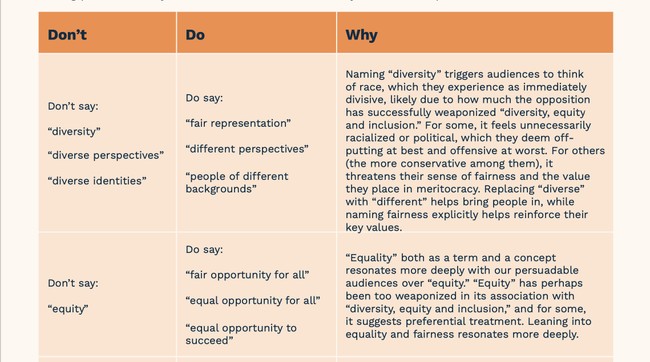
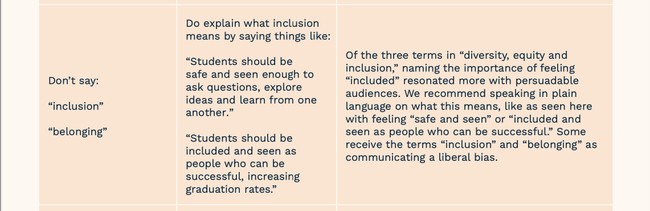
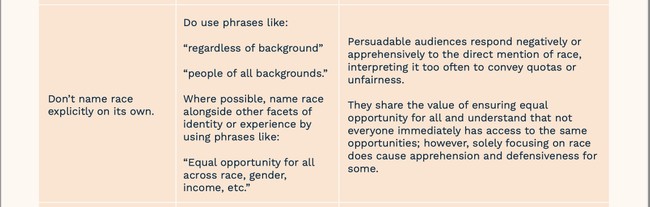
In that messaging playbook, which is titled “Shift Terms, Not Values,” Spitfire makes the case for an entirely new vocabulary. University leaders should use terms like “different perspectives” instead of “diversity,” the guide explains. They should say “equal opportunity for all” instead of “equity.” And instead of “inclusion,” the guide recommends explaining how students should be free “to ask questions, explore ideas and learn from one another.”
Spitfire’s playbook is sober about the average American’s attitude toward DEI. “‘Equity’ has perhaps been too weaponized in its association with ‘diversity, equity and inclusion,’ and for some, it suggests preferential treatment,” it notes. “Leaning into equality and fairness resonates more deeply.”
These negative connotations, Spitfire asserts, are the result of “extremists” who have run successful smear campaigns. “One of the top findings in the research,” the guide notes, “is just how much the opposition has effectively weaponized the phrase ‘diversity, equity and inclusion’ and its acronym ‘DEI.’” The better approach, the firm argues, is to simply drop the terms altogether.
As always, a consultant group and an NGO are in the background, because they always are. Donors and grifters, donors and grifters. It is the American Way these days.
This is the technocrats' answer to the plebs' disapproval or outright rejection of anything the people at the top of the cultural and political pyramid dislike: if you can, suppress or ignore their concerns; where you can't, simply rebrand and make them fight you again. Rinse, repeat. If you can delay changes long enough, you eventually win, or at the very least make a lot of money for yourself and entrench your goals as much as you can.
Spitfire’s online training sessions attracted an eclectic list of attendees, hailing from universities, academic societies, and nonprofits. In two training sessions I viewed, participants included Alex Levy, director of communications at the American Historical Association; Ava McLaughlin, a program assistant at Mellon; and Alisha Knight, chief diversity officer at Johns Hopkins University.
Spitfire has also worked directly with other nonprofits in Mellon’s orbit. With the American Association of Colleges and Universities, it created a messaging guide on how to “advance public trust” in higher education, as a part of a project run by Jeremy Young. Young previously worked on a Mellon-funded project with PEN America before starting a Mellon-bankrolled project at the AAC&U.
Some clients have adopted Spitfire’s strategy wholesale. As I’ve previously reported, the president of the Alliance for Higher Education, Mike Gavin, privately made plans to “protect and/or rebuild DEI” at the group’s soft launch. Before this year, Gavin had written about the need for a new group with “an unapologetic, visionary commitment to diversity, equity, and inclusion.” Since the alliance launched publicly in January, however, its website makes no reference to DEI, promising instead to fight for “a fair opportunity so that all students, faculty, and staff are represented and thrive,” borrowing Spitfire’s language. Its “blueprint” for higher education reform employs Gavin’s turn of phrase without using the term “DEI” itself, in describing goals that include “establish[ing] an unapologetic, visionary commitment to ensuring people from all walks of life are represented, belong, and thrive in our institutions.”
This is the classic move of leftists. Unlike most advertisers, and to a great extent, all politicians, they seem to firmly believe that you can keep selling dog food even if the dogs won't eat it. And they can do so in the same way that socialists can force people to stand in line for poor products wherever they rule: they control all the positions of power.
Which is the ultimate problem: despite the progress the Trump administration has undoubtedly made in pushing back, you really need to control the Executive Branch of government and have at least a decent foothold in the Judiciary to make the changes stick. Universities and NGOs can do this because they are confident that any interruption in their monopoly on power is temporary.
I'm not sure they are wrong. Bush Republicans seemed fine with all this, too.
As frustrating as Trump has been at times, we kept losing almost all these battles before he came on the scene. At a minimum, there was a liberal ratchet: when they had the power, they used it. When they didn't, they waited us out.
We need, at minimum, another 4-8 years of power at the federal level and many years at the state level to roll all this back.
As you can see, even changing the law has only a cosmetic effect, at least at first.
Editor’s Note: Every single day, here at HotAir, we stand up and FIGHT, FIGHT, FIGHT against the radical Left and deliver the conservative reporting our readers deserve.
Help us continue to tell the truth about the Trump administration and its successes. Join HotAir VIP and use promo code FIGHT to receive 60% off your membership.



Join the Conversation
VIP members get the ability to comment on articles.