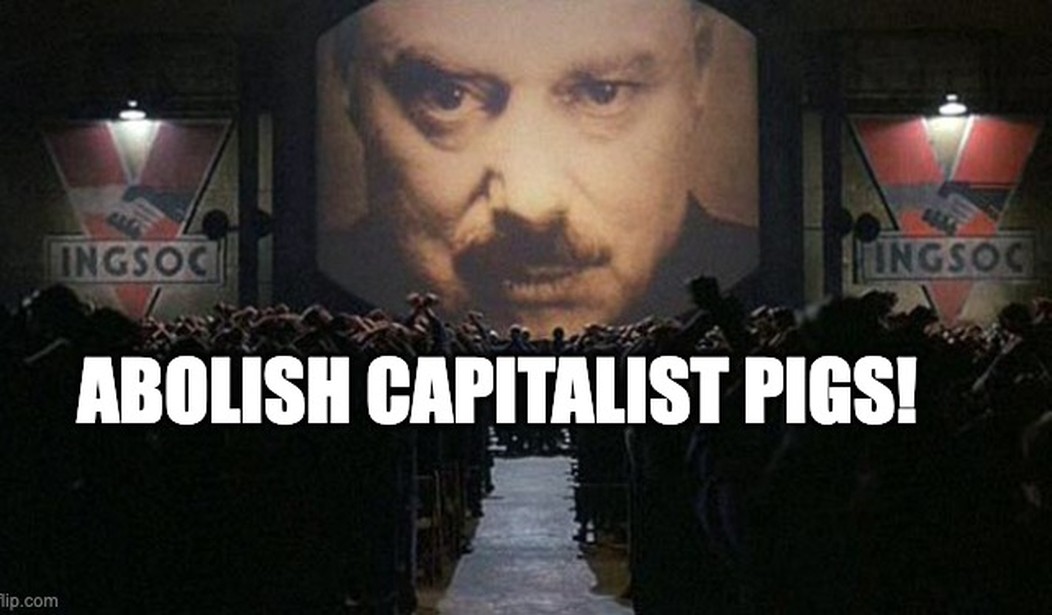
Anti-capitalist movies are all the rage, except modern audiences want no part of them.
Earlier this month, "Animal Farm" bombed in theaters, big time. George Orwell's anti-Soviet classic got "re-imagined" as an anti-capitalist screed. The film got oodles of negative publicity for the bald bait-and-switch. Social media proved relentless on the matter.
Orwell fans and casual movie goers alike got the message, and they stayed home in droves. The film opened with a disastrous $3.3 million at the US box office and limped along to a $5.5 million stateside haul.
Ouch.
Now, another anticapitalist film is scaring movie goers away from their nearest cineplex.
"I Love Boosters" follows a gang of thieves who steal high priced fashions and sell them for a profit. The crooks target a famous fashion designer (Demi Moore) in a wild, genre-bending comedy from writer/director Boots Riley.
The film is slated to earn $3.9 million from 1,750 screens. That's despite fawning reviews from the critical class - a sparkling 92 percent "Fresh" at RottenTomatoes.com.
Riley made no bones about the film's target in press interviews.
Theft is not outside of capitalism, it’s what it was built on.
Audiences weren't so sure.
Maybe movie goers are exhausted by supermarkets locking up so many household items behind glass in major metropolitian cities. Suddenly, the "boosters" concept isn't as cute. Heck, it's maddening, and that's before the morality of the action is considered.
These aren't the only films crushing capitalism that cratered at the box office. Last year, "Mickey 17" attacked corporations and a certain real estate mogul turned President, and it became one of the year's biggest busts. The film's gaudty budget ($118 million) was no match for its US box office tally - $46 million. The international box office proved far more kind, but it still registered in the loss column.
Other anti-capitalist busts include the recent "They Will Kill You" ($10 million US) and 2022's "Triangle of Sadness" ($4 million US).
An exception? The excellent thriller "The Menu" (2022) made $38 million stateside and kept entertainment top of mind. That film's more modest budget ($30 million) was matched by its global tally ($79 million).
A profit, perhaps? It depends on the Hollywood accounting.
Overall, anti-capitalist movies might make film critics melt and get plenty of fawning press, but audiences are less impressed.
Then, again, if you make a movie attacking capitalism and it bombs at the box office, that's a win.
Right?