
Since Sunday, the United States has been in hot pursuit of an oil tanker known as the Bella 1.
As I explained a week ago, this is all part and parcel of the Trump administration's plan to completely cut off Venezuela's illicit and sanctioned oil trade by interdicting the shadow and dark fleet tankers that populate the country's ports and move its sludgy black gold.
And the president's declaration that he was going to go after 'sanctioned' oil tankers doesn't pertain only to the individual ships themselves, but also to the sanctioned cargo that could be onboard. For example, if a tanker itself isn't sanctioned but is known to have left an Iranian port, or is carrying Russian cargo, or has a history of warning flags, such as numerous flag registration changes or ownership shifts, that's enough to warrant a stop at sea and perhaps a seizure depending on what they find.
The aggressive nature of US forces off Venezuela and in the Caribbean, once this was announced, has made the operators of these vessels extremely nervous. It's literally raising havoc with Venezuelan port operations and the country's oil-based finances.
The United States’ aggressive campaign against tankers carrying Venezuelan crude has thrown the country’s oil industry into disarray, jeopardizing its government’s main source of revenue.
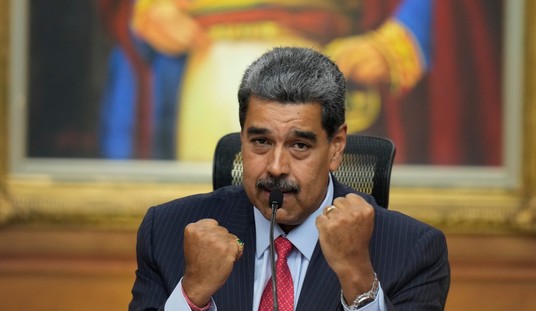
President Nicolás Maduro of Venezuela has been struggling to adjust to President Trump’s dramatic escalation of pressure against his government, which has seen U.S. law enforcement agents taking action against three tankers involved in the export of Venezuelan crude, according to people close to the Venezuelan oil industry. They spoke on the condition of anonymity to discuss sensitive matters.
Venezuela’s ports are piling up with tankers filled with oil, as officials fear releasing them into international waters and into the cross hairs of the United States. Tankers bound for Venezuela have turned around midway, shipping data shows. And shipowners are canceling contracts to load crude, the people said.
In the past two weeks, the United States seized one sanctioned tanker carrying oil as it sailed from Venezuela toward Asia. It intercepted another oil vessel that was not under U.S. sanctions. And the U.S. Coast Guard tried to board a third tanker as it was on the way to Venezuela to pick up cargo.
The measures have paralyzed Venezuela’s oil export industry, according to the people and shipping data. Oil accounts for a vast majority of the country’s foreign currency earnings.
The third tanker that the NYT mentions is, indeed, the aforementioned Bella 1. There was quite a brouhaha when the US attempted to stop and board her in the Caribbean - lots of cries of, 'Hang on! That ship's not on a sanctions list!' etc.
U.S. forces, led by the Coast Guard, are now chasing a third oil tanker near Venezuela, sharply escalating a high-stakes crackdown aimed at the country’s sanctioned crude trade.
The Coast Guard is working with federal partners to track another oil tanker in international waters near Venezuela suspected of moving crude in violation of U.S. sanctions, official said. The pursuit comes days after two other tankers were seized, marking a broader escalation by the Trump administration to cut off oil revenue tied to Venezuelan President Nicolás Maduro and to warn foreign buyers that sanctioned shipments now face direct interdiction.
The latest pursuit per officials is unfolding in the Caribbean—an area that has become a focal point of stepped-up U.S. sanctions enforcement. The Coast Guard has not confirmed whether the vessel has been boarded, diverted or escorted, citing the active nature of the operation and ongoing coordination among federal agencies involved in maritime security and sanctions enforcement.
Now, as facts concerning the Bella 1 have come out, all the objections have predictably died down, as this is a legal maritime action. The Bella 1 has a sketchy history of transporting, aka smuggling, Iranian oil as part of that massive shadow fleet, faking its position, and doing ship-to-ship transfers in open water at sea. At the time she was spotted by the US forces in the area, the vessel was unregistered - in other words, not flying a national flag - so she was fair game for boarding and inspection under international maritime law.
This is a terrific use of a tad over a minute of your time explaining the legal authority behind the chase.
I’ve been closely tracking recent 🇺🇸🇻🇪developments, particularly the interdictions of 'shadow fleet' oil tankers departing from or bound for 🇻🇪
— Jennifer Parker (@JAParker29) December 23, 2025
It’s been valuable to help @BBCWorld audiences unpack the international maritime law and operational issues involved, including why… pic.twitter.com/QaqJSQiybf
The reason the US is after the Bella 1 is because the ship has refused to stop for boarding and inspection, and at the moment, the Coast Guard does not have enough of the specialized forces it needs to physically board her under those hostile circumstances.
They're a little short-handed, having only two of those combined Coastie-Marine Corps teams.
The U.S. Coast Guard is waiting for additional forces to arrive before potentially attempting to board and seize a Venezuela-linked oil tanker it has been pursuing since Sunday, a U.S. official and a source familiar with the matter told Reuters.
The ship, which maritime groups have identified as the Bella 1, has refused to be boarded by the Coast Guard. That means that the task will likely fall to one of just two teams of specialists – known as Maritime Security Response Teams – who can board vessels under these circumstances, including by rappelling from helicopters.
The days-long pursuit highlights the mismatch between the Trump administration’s desire to seize sanctioned oil tankers near Venezuela and the limited resources of the agency that is mainly carrying out operations, the Coast Guard.
Unlike the U.S. Navy, the Coast Guard can carry out law enforcement actions, including boarding and seizing vessels that are under U.S. sanctions.
The U.S. Coast Guard is waiting for additional forces to arrive before potentially attempting to board and seize BELLA 1, Reuters reports. The tasks will likely fall to one of just two Maritime Security Response Teams. https://t.co/T6X77az3vk pic.twitter.com/VY1TBCwcLj
— Christiaan Triebert (@trbrtc) December 24, 2025
These are the fastrope teams they're referring to.
WATCH: U.S. forces seize oil tanker off the coast of Venezuela pic.twitter.com/xCJjDP2oY3
— BNO News (@BNONews) December 10, 2025
If they can break a team loose to reach the Bella 1 before it breaks into the open Atlantic (the tanker can only do 11 knots, which is a slow trot for American naval vessels), they may still attempt to board. If not, there's plenty to do where they are, and the Coast Guard assets are stretched thin enough as it is.
...The administration could ultimately choose to not board and seize the vessel.
The White House said that the United States was still in “active pursuit of a sanctioned dark fleet vessel that is part of Venezuela’s illegal sanctions evasion.”
...The U.S. Coast Guard is a branch of the armed forces but a part of the Department of Homeland Security.
The United States has assembled a massive military force in the Caribbean, including an aircraft carrier, fighter jets and other warships. Ospreys and additional MC-130J Commando II aircraft arrived in Aguadilla, Puerto Rico in recent days, according to a separate source.
The Coast Guard has far fewer resources in place.
The service has long said that it lacks the resources to effectively carry out a growing list of missions, including search and rescue operations and drug seizures.
In the meantime, the message is being sent and received that the US won't be pushed around like the good old days.
In 2023, the Iranian regime seized a U.S.-bound oil tanker because Joe Biden projected weakness.
— Christian Collins (@CollinsforTX) December 24, 2025
Democrats said nothing.
Now they’re outraged that President Trump seized a tanker carrying SANCTIONED oil to Iran.
Make it make sense. pic.twitter.com/bNto2OUlfP
If Trump says all the sanctioned tankers belong to us...or the U.S....they'd better believe he means it.
Sound up.
All your oil tanker belong to us. pic.twitter.com/HPxvcrbaS6
— Brenden Dilley (@WarlordDilley) December 22, 2025
Beege UPDATE: Guess they got the guys together for a Christmas takedown. The Bella 1 is now in United States custody.
TANKER #3 Bella 1 seized
— Sal Mercogliano (WGOW Shipping) 🚢⚓🐪🚒🏴☠️ (@mercoglianos) December 25, 2025
Registry: UNKNOWN (was Panama until Oct 2024)
Insurance: None identified since the end of 2021
Classification: Was Lloyds up to July 2025
Multiple voyages of US sanctioned cargo from Kharg Is, Iran
VLCC
318,518 deadweight tons
1,092 feet https://t.co/O9Gm0sIuMR
Fear of the Orange God ruling the seas right now.
Once upon a time (like, 2 weeks ago), Dark Fleet tankers navigated in a fairly straight line between two ports in Venezuela.
— TankerTrackers.com, Inc. (@TankerTrackers) December 25, 2025
Now however, they are hugging the coastline out of fear. That in itself is risky business because these vessels might accidentally ram into something. pic.twitter.com/0CpE1ylilb
Please help Ed, David, John, and me continue exposing Democrats' plans to lead America down a dangerous path.
We'd love to invite you to join Hot Air VIP and use promo code MERRY to get 74% off your membership!






Join the conversation as a VIP Member