








When the headlines broke late last night, I thought, wowsahs - this is an escalation.
And that while a 'blockade' was a dramatic move, it seemed like it would be kind of difficult to enforce on a country whose other two-thirds of borders had nothing to do with the oceanfront. There are plenty of roads in and out of Venezuela, and people who are willing to still trade with them in South America.
Maduro's gang hasn't reached complete pariah status yet, but, man, are they getting there quickly.
When I had a chance to read what Trump had actually announced vice breathless media chirps, it made perfect sense as the next step to ratchet up pressure on Maduro's finances.
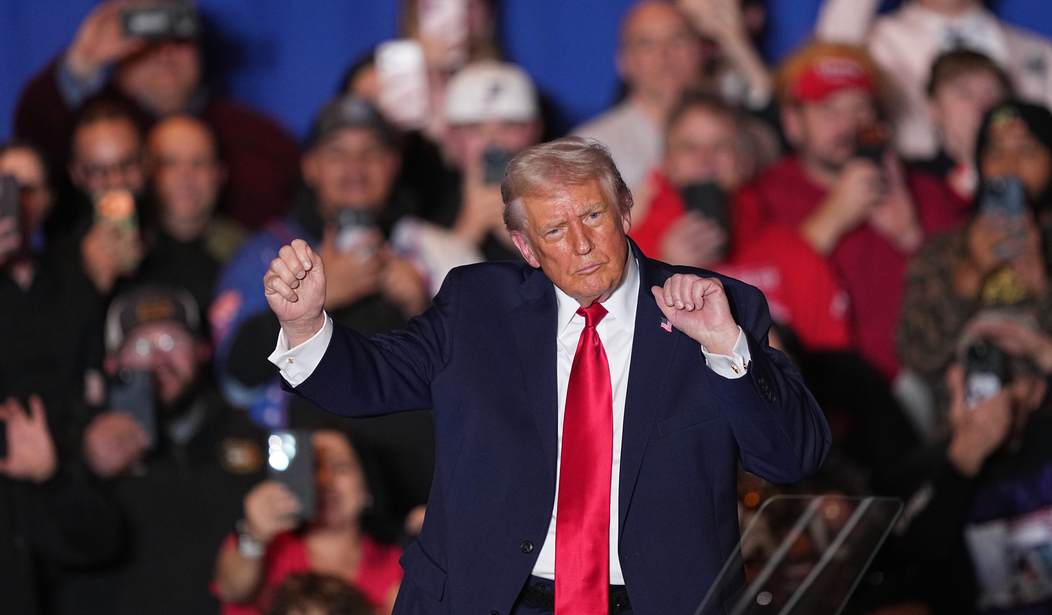
President Donald Trump said Tuesday he is ordering a blockade of all “sanctioned oil tankers” into Venezuela, ramping up pressure on the country’s authoritarian leader Nicolás Maduro in a move that seemed designed to put a tighter chokehold on the South American country’s economy.
Trump’s escalation comes after U.S. forces last week seized an oil tanker off Venezuela’s coast, an unusual move that followed a buildup of military forces in the region. In a post on social media Tuesday night announcing the blockade, Trump alleged Venezuela was using oil to fund drug trafficking and other crimes and vowed to continue the military buildup until the country gave the U.S. oil, land and assets, though it was not clear why he felt the U.S. had a claim.
“Venezuela is completely surrounded by the largest Armada ever assembled in the History of South America,” Trump said in a post on his social media platform. “It will only get bigger, and the shock to them will be like nothing they have ever seen before — Until such time as they return to the United States of America all of the Oil, Land, and other Assets that they previously stole from us.”
The keywords are 'sanctioned oil tankers' - not the entire country.
What Trump has done with this blockade announcement is put teeth into the enforcement of sanctions on the 'shadow fleet' of oil tankers that have been financing regimes and wars all over the globe for decades. They slip in and out of various Russian, Iranian, Venezuelan, etc. ports and deliver that 'sanctioned' crude illicitly to entities that need it and are willing to turn a blind eye to operating under international norms, like China. Then they return with supplies the sanctioned regimes need for mayhem or whatever, purchased with the ill-gotten gains.
Here's a really good, quick primer on the differences between the fleets that carry oil throughout the world, and what authorities and those involved in interdiction look for when trying to determine whether a tanker is legit or carrying basically black-market goods. This was written as it applies to the Russian oil sanctions, but the same vessels, owners, and skullduggerous methods are involved coming out of Venezuelan ports.
Viewing the current Russian maritime landscape through the prism of a tiered system, and detailing these tiers and their sub-categories, has offered organizations a framework to clear legitimate business deals faster, facilitating global trade, while not unintentionally supporting Russia’s invasion.
The tiers:
Cleared Fleet
These are tankers not exhibiting any suspicious static conduct, such as flag hopping or irregular ownership structure. Behaviorally, these vessels do not indicate any participation in deceptive shipping practices, such as going dark for periods of time that might suggest involvement in a commodity trade. An additional indication of this fleet’s legitimacy is the areas in which they operate and the level of regulation of the ports and terminals they frequently call.
Gray Fleet
The oil ban and price cap imposed on Russian oil has led to a major shift in the oil supply chain. The most notable of these changes is the identity of Russian crude and oil product importers. Excluding the countries that ban the import of Russian oil – including the U.S., UK, EU, Australia, and Japan – and the decline of Russian oil prices, has led to the emergence of other buyers. Countries such as China, India, Libya, and Turkey, have significantly increased their trade with Russia. This has led to the creation of a quasi-legal fleet working in parallel to the cleared fleet to carry out this trade.
Windward’s Maritime AI™ platform utilizes a variety of behavioral and ownership-related indicators. These indicators include, but are not limited to, port calls, ship-to-ship operations, ownership and identity changes, first-time visits and more. We cover new areas of operation and ship-to-ship hubs along the way to the cargo’s final destination, enabling us to identify not only the vessels loading the oil in Russian terminals, but also other vessels further down the supply chain.
Dark Fleet
These are the tankers carrying out clandestine trade of sanctioned commodities, using diverse methods of obfuscating their origins. This fleet utilizes a variety of DSPs, including both static and dynamic methodologies. These include dark activities, GNSS manipulation, and many more DSPs.
The fleet is characterized by weak ownership structures and the use of multiple flags of convenience over short periods of time. The size of this fleet has fluctuated substantially with each new regulation published and even more so following the Russian oil ban and price caps.
This shadow or dark fleet explanation is why the oil tanker The Skipper, which the United States recently seized, caused such confusion - most people don't understand what that means, and to progressives with terminal TDS it was a pure case of Trumpian piracy on the high seas.
In reality, The Skipper had been designated by the Biden administration as a member of the sanctioned shadow fleet and, as such, was open to search and confiscation at any point afloat, especially if circumstances warranted an interdiction.
...Once a business is found to be a participant in the actions of terrorist organizations or organized crime, perhaps as a safe house for their members, or as a holding tank for weapons involved in gun-running, or as a money-laundering step to hide the profits of a kidnapping or child-slavery ring, it gets added to the list, and all American businesses are banned from doing business with them in any way. We don’t want to be part of that network, and we certainly don’t want to help them get away with their illegal activities.
Such lists include the Specially Designated Nationals (administered by the Office of Foreign Assets Control), the Nonproliferation Sanctions list (administered by the State Department), and the Denied Persons List (administered by the Department of Commerce).
Now imagine the transportation of sanctioned products by a sanctioned transportation company, for the profit of a sanctioned terrorist organization in one or more sanctioned countries; such a move would be a violation of all three buckets of the US Export Controls.
Now we are ready to discuss the news of the day.
The oil tanker known as The Skipper was added to the SDN list in 2022 by the Biden/Harris regime. At that time, it was called the Adisa, and it was flying the flag of Panama.
But when it was identified off the coast of Venezuela this week, it was called The Skipper and it was flying the flag of Guyana, presumably in hope of throwing international police and other law enforcement agencies off the scent.
Oh, HELLO.
So Marines and Coasties climbed aboard and took control.
...Guyana confirmed to multiple press sources Wednesday that it most definitely was not registered in Guyana, so it did not merit Guyana’s legal support in any way.
This ship is owned by a sanctioned Russian oligarch, Viktor Artemov, and to currently be controlled by the Nigerian shell company Thomarose Global Ventures Ltd.
And what business is it engaged in these days? Primarily transporting Venezuelan and Iranian oil, to or from Venezuela and Iran, in direct support of Hezbollah and the Iranian Revolutionary Guard.
This means the ship itself, its owners, its crew and its cargo are all essentially under sanctions. The seizure of this vessel, essentially enforcing a warrant issued by the Biden-Harris regime three years ago but apparently never followed up on, is not just legal, but an admirable accomplishment for this administration.
Hezbollah and the IRG lost a significant source of their revenue stream at one boat stop.
Not only did the seizure of The Skipper set back Venezuelan and Iranian financial dealings, it also sent a message to a shadow fleet that, in spite of warrants like the one on The Skipper, have all been operating for years with impunity on the high seas, moving their cargo with little worry of interdiction or impedement other than the random Ukrainian drone attack when in that neighborhood.
This 'wink and nod' state of affairs had now seemingly changed, and operators were becoming concerned about what the US would do. With a large number of shadow fleet vessels docked in Venezuelan ports, reports indicated that the operators were considering having them leave the area.
Shadow Fleet on Edge After U.S. Seizes Tanker in Venezuelan Waters
...U.S. authorities, including the Coast Guard, FBI, and Homeland Security, executed a seizure warrant, boarding the tanker by helicopter. The vessel, identified by maritime sources as the Panama-flagged “Skipper” (formerly named “Adisa”), had been under U.S. sanctions for several years for its alleged role in transporting Venezuelan and Iranian crude via a shadow oil-shipping network tied to Hezbollah and the Islamic Revolutionary Guard Corps-Quds Force.
According to tracking data, the tanker had recently loaded heavy crude at Venezuela’s Puerto José. U.S. officials say the seizure is part of an intensified campaign of maritime interdiction by Washington, a strategy that appears to be expanding the use of naval power beyond sanctions, with the objective of targeting illicit oil trade and networks tied to sanctioned regimes.
...There are reportedly over 30 U.S.-sanctioned oil vessels doing business in Venezuela that may now be reconsidering setting sail from Venezuela in the coming days.
Now, Trump has made it official, cutting off the sanctioned lifeline Maduro needs to literally stay afloat. And in doing so, some of the news reports are also shining more light on the seizure of The Skipper.
Odd how in all the brouhaha over the legality of our military taking the tanker, none of the previous stories I read mentioned a federal judge had signed a warrant authorising them to do so.
The stuff you learn when some of the dust settles, huh?
...“Venezuela is completely surrounded by the largest Armada ever assembled in the History of South America,” Mr. Trump wrote on social media. “It will only get bigger, and the shock to them will be like nothing they have ever seen before.”
The move could hobble Venezuela’s oil exports, which are the lifeblood of the country’s economy. Venezuela relies entirely on tankers to export its oil to world markets. There were more than 30 vessels operating in Venezuela earlier this month that had been sanctioned by the United States, according to the independent tracking service Tanker Trackers.
Last Wednesday, the United States seized a tanker in the Caribbean Sea that was carrying Venezuelan oil for Cuba and China. A federal judge had issued a warrant for the seizure based on the fact that the tanker had recently transported oil from Iran.
The NYT is still parsing words for legality's sake, but it acknowledges that Trump's announcement may be enough, by itself, to frighten the rest of the fleet away.
...In his social media announcement on Tuesday, Mr. Trump wrote in all capital letters that he was ordering a “a total and complete blockade,” which by itself would have been a substantial step. In international law, a blockade prevents all vessels from entering and leaving the ports of an enemy country during an armed conflict. But Mr. Trump added the qualifier “of all sanctioned oil vessels,” which changed the meaning.
Mr. Trump appeared to be threatening to enforce existing sanctions against some of the tankers exporting oil. If the U.S. Navy continues to allow most vessels to freely enter and leave Venezuelan ports, it is not a real blockade.
Still, any threat of seizure may be enough to scare off many companies that transport Venezuelan oil.
That alone would devastate what's left of Maduro's economy and his grip on power.
Maduro says the spice will flow.
🚨 JUST IN: 🇻🇪 Venezuela says crude exports will continue despite blockade attempt
— Radar 𝘸 Archie🚨 (@RadarHits) December 17, 2025
Any disruption would have major implications for government revenue. pic.twitter.com/mqTcr4Wvza
He has to. It's all he's got right now.
Interestingly enough, there's a strategic angle that the Bloomberg wonks bring up, too - we're in an oil glut right now. It's relatively cheap, and the US has lots of it. Stomping on sanctioned Venezuelan shipments through the blockade, which will affect oil prices, won't have nearly the impact it could have.
No time like now.
There is no blockade against Venezuelans.
— Lord Iván E Cañas G 🇬🇧🏴🇻🇪 (@LordCanas) December 17, 2025
What exists is interdiction against sanctioned vessels and shadow fleets that for years have extracted oil outside the system.
That oil does not benefit the Venezuelan people. It fuels criminal networks and sustains the Cartel of the…
...That oil does not benefit the Venezuelan people. It fuels criminal networks and sustains the Cartel of the Suns a notorious syndicate comprising high-ranking Venezuelan military officials, accused of drug trafficking, money laundering, and corruption under the Maduro regime. These illicit revenues bypass public welfare, funding repression and elite enrichment instead of alleviating Venezuela’s humanitarian crisis.
The squeezeplay is on, big time.
At HotAir, we’ve been dealing with real government suppression of free speech for YEARS. Despite the threats and consequences, we refuse to go silent and remain committed to delivering the truth.
But we can't do it without your support.
Please help Ed, David, John, and me continue fighting back against government censorship by joining our terrific HotAir VIP community today. Use promo code FIGHT to receive 60% off your membership.
And thank you so much again for being here with us at HotAir.
Join the Conversation
VIP members get the ability to comment on articles.