








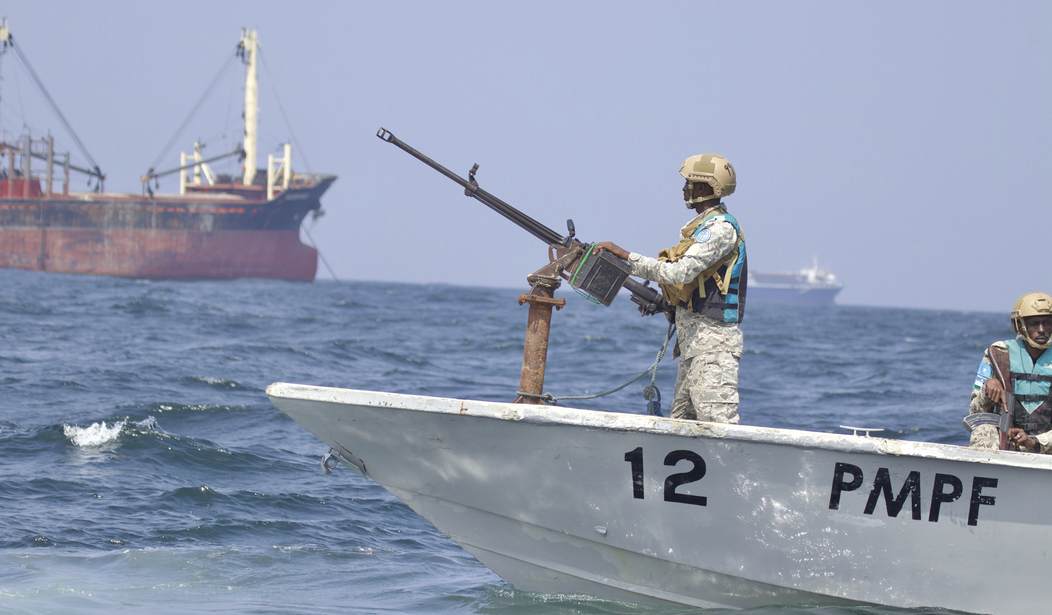

Speaking as a native of North Dakota - known as a maritime people, with salt water in our veins - I have to say I'm amazed it took the Trump administration this long to come around to this idea: reinstating "Prize Courts" to give some market incentive to seizing rogue tankers carrying oil from Iran (or to Russia, for that matter).
SCOOP: Justice Dept. plans activating long-dormant maritime war court to streamline capture of Iranian oil tankers as US prizes. Legally uncertain plan intended to bolster blockade of Iran.
— Ben Penn (@benjaminpenn) August 26, 2026
A feature of 1700s naval combat, prize courts set to return. https://t.co/K8gBrQZiwM
The Justice Department is preparing to activate a long-dormant maritime war court to streamline military capture of Iranian oil tankers as US prizes, according to three people familiar with the plans.
Reviving prize courts, which is expected to face legal challenges, is intended to strengthen the blockade of Iran and offset the cost of the conflict.
Aaron Reitz, the Houston-based US attorney whose office is partnering with department headquarters on the initiative, confirmed DOJ is “now reviving” prize courts, which he described as an “ancient body of maritime law.”
If it sounds like a blast from the past - it is:
The idea of a prize court dates back to the Age of Sail and the contests between colonial powers, when blockades and militarily-aligned merchant shipping were part of the everyday business of warfare. The court is convened in a belligerent state's seaport when a captured merchant ship is brought in. If the ship meets the standard for a prize, the court transfers ownership of the vessel (and any contraband cargo) to the belligerent state.
International law places limits on this practice. To be eligible for capture, the vessel must be doing one of six things: carrying militarily-useful goods toward enemy territory (contraband goods); transporting enemy servicemembers; operating under enemy control or charter; using fake documents; violating regulations near naval activity; or attempting to run a blockade. Recent U.S. ship seizures connected to its Venezuelan and Iranian blockades appear to satisfy several of these conditions, and more than a few legal experts have advocated taking advantage of the benefits of prize court procedure.
The idea has opponents - unsurprisingly, mostly ship owners and, well, Iranian regime supporters:
US considers reviving Civil War-era 'prize courts' to steal Iranian oil
— The Cradle (@TheCradleMedia) August 27, 2026
——
The US Department of Justice is reportedly considering reviving the long-dormant US Civil War-era “Prize Courts” system to seize Iranian oil tankers and cargoes, according to three sources cited by… pic.twitter.com/MXfNHKtX8j
Of course, nothing says it has to be just US ships doing the capturing. This might be just the thing to get cash-strapped NATO navies to step up their maritime interdiction game, and bring a little free market enterprise to the problem of rogue shipping. And offering "letters of marque" - government licences to be free-lance "pirates" seizing qualifying ships - could go a long way toward expanding the feebler allied navies, just as they provided the bulk of US naval power during the Revolution and the War of 1812.
By the way - while prize courts officially stopped awarding prize money over a century ago, the last award of prize to a Navy crew wasn't all that long ago:
In 1940, the cruiser USS Omaha and the destroyer USS Somers captured the fast cargo ship MS Odenwald, a "blockade runner" carrying scarce raw materials to Germany past the British navy's blockade. The crews cashed out pretty well: the 60+ men in the boarding party each got $3,000 1940-sized dollars (right around $70,000 today). The other officers and crew on both ships - about 800 of them - each got two months' pay and allowances - about $3.6 million today. And the Federal government banked another $70K or so. Of course, it took until 1947 for the issue to make it through the courts, who were out of practice handling such cases.
I'd suspect that a big payout on returning home might make a long deployment go a lot more bearable.