








Let's set the stage for both of the stories that I'll be covering.
Violent crime in the United States, at least in the modern era when record-keeping has been fairly uniform, peaked in the 1990s. Between the crack epidemic, the acceleration of cultural decline, and other factors, there was a sharp, hard spike. Between the crack epidemic and the running-amok of the cartels, violent crime rates peaked around 1992 and started falling. And but for a few bounces - the years of unrest between Ferguson and the aftermath of the George Floyd riots - they've been dropping steadily ever since.
As rates started falling, almost thirty years ago, the New York Times's Fox Butterfield reported a phenomenon that maxed out his internal metaphorical CPU:
IT has become a comforting story: for five straight years, crime has been falling, led by a drop in murder.
So why is the number of inmates in prisons and jails around the nation still going up? Last year, it reached almost 1.7 million, up about seven percent a year since 1990.
The question is not merely a trick quiz, because the costs of running America's constantly expanding prison system -- now more than $30 billion a year -- have begun to impose an enormous burden on state governments.
The correlation between "Imprisoning violent criminals" and dropping violent crime just did not make sense to that elite member of the media - a disconnect so comical it led to the coining of the phrase "The Butterfield Effect", when someone just can't connect a correlation that's too obvious for most to miss.
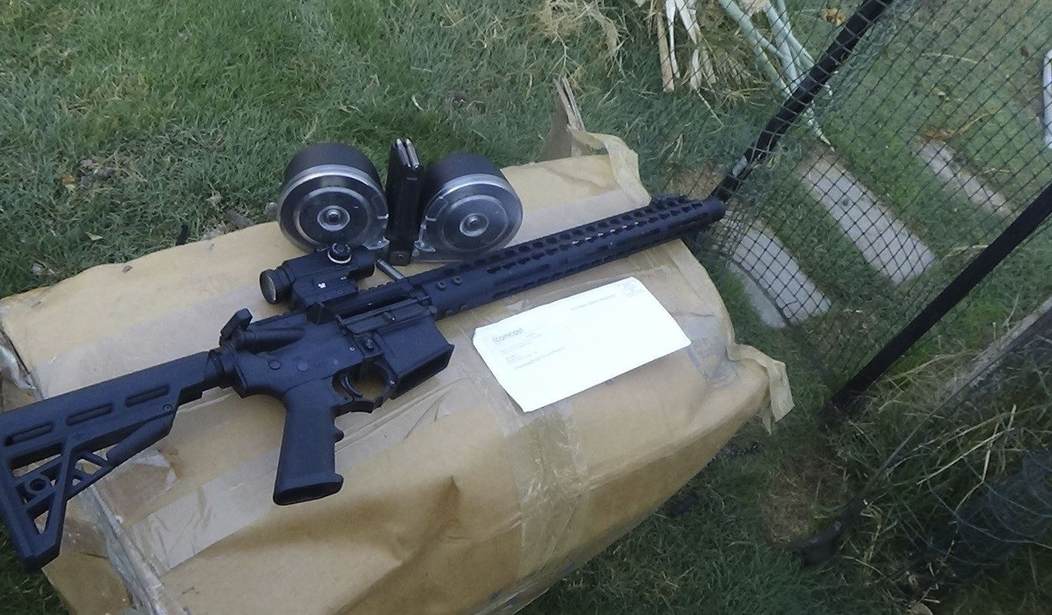
Speaking of drops in crime rates, the phenomenon did provoke one premature victory lap on the left: violent crime was already falling by the time Bill Clinton signed the 1994 "Assault Weapons Ban". And it kept falling until 2004, when the Bush Administration allowed the law to sunset. After which, alarms about carnage in the street notwithstanding, violent crime kept right on dropping, all the way to the present, with a few situational detours. And this happened as the number of "assault weapons" in the US grew from under 700 thousand in 1994 to likely over 30 million today - meaning that if "assault weapons" were correlated with violent crime, those rates should have gone up by a factor of about 40.
I bring this up because, along with tens of millions of AR and AK-style platforms, humbler and more prosaic guns have been selling like tickets for an eternal Taylor Swift tour for well over a decade. By some estimates, Americans may own more firearms than there are, well, Americans - up to 400 million guns are concealed among the body politic.
And yet the crime rate just keeps dropping.
As Dan Zimmerman at Shooting News Weekly notes:
The latest manifestation of the Butterfield Effect kicking in comes to us from our good friends at Michael Bloomberg’s anti-gun agitprop outlet, The Trace, where Aaron Mendelson has written this classic: By the Numbers: Shootings Decrease, But Gun Sales Are Up.
Quoting numbers from the frequently discredited Gun Violence Archive, Mendelson notes that . . .
Shooting deaths and injuries remain at historic lows in the United States, continuing the trend seen in Q1 and in recent years.
Data from the Gun Violence Archive shows 6,458 shooting deaths, and 11,781 shooting injuries in the first six months of the year. Both represent the lowest number since 2015.
That’s good news, of course, and something many of us have noticed. But it baffled Mendelson, so he consulted…an expert . .
Mendelson isn't the first prog writer to get this wrong - although the fact that he's doing it on Michael Bloomberg's pet anti-gun publication is a nice twist.
An estimated 7.3 million firearms have been sold in the United States—about 4.5 million handguns and another 2.8 million long guns. That would be enough to arm every single resident of Tennessee.
The numbers represent a 2.7 percent increase in gun sales through six months compared to 2025. This marks the first time in six years that we’ve seen an increase in sales.
An estimated 7.3 million firearms have been sold in the United States — about 4.5 million handguns and another 2.8 million long guns. That would be enough to arm every single resident of Tennessee.
The numbers represent a 2.7 percent increase in gun sales through six months compared to 2025. This marks the first time in six years that we’ve seen an increase in sales.
Mendelson notes that some of the increase comes from panic-buying in states that've passed draconian (and likely legally doomed) gun control measures - Virginia, Connecticut, Rhode Island - because anti-gun Democrats are the best gun salesmen.
But the elephant in the proverbial room is this: if there were even a weak correlation between crime and law-abiding citizens owning firearms, these numbers would not be moving the way they have been for the 35 years the 2nd Amendment movement has been in the ascendant.
Unless...the correlation is negative or inverse.
Nah. That's just crazy talk.