






It is a stroke of genius that in The Divine Comedy Dante depicts Satan as trapped in a giant bedrock of ice. Hell isn’t necessarily flames, which can be beautiful and life-sustaining, but ice - cold, non-generative, deadly.
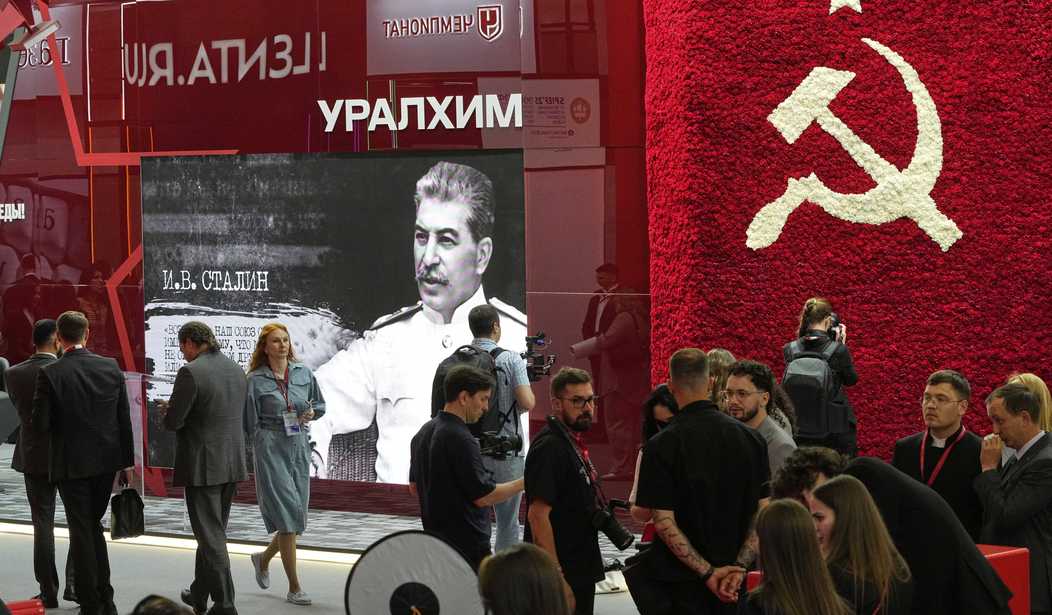
A cold Moscow winter in 1930 is the setting for The Trial, a rarely seen but vitally important 2019 documentary by Ukrainian filmmaker Sergei Loznitsa. The Trial - which should not be confused with Trial, the great 1955 anti-communist drama starring Glenn Ford - is constructed of restored black-and-white footage from one of Joseph Stalin’s first show trials, recorded in 1930 in Moscow. Stalin had falsely accused a political rival of seeking to sabotage the USSR at the behest of French Prime Minister Raymond Poincaré and other Western leaders. In shocking footage, the accused, all innocent, confess to crimes they never actually committed.
The Trial is not available on streaming, but I reached out to director Loznitsa and his team was kind enough to provide me with a screener. I am currently in talks with them to perhaps show the film at the upcoming Anti-Communist Film Festival. The Trial is a film that should be shown in every university classroom in the United States and the West. It depicts the kind of nightmare that our own American socialists would not hesitate to inflict on the rest of us.
In a New Yorker review of The Trial, critic Masha Gessen offered astute analysis:
It is striking that the trial took place just thirteen years after the Bolshevik Revolution. All of the defendants would have been adults, even professionals, before the change of regime—they had not, it would seem, been shaped by totalitarianism. At the time of the trial, state terror had not yet been felt in the cities as strongly as in the countryside. This was the time before the purges, before the better-known show trials, during the year when the Gulag was just coming into existence. And yet everyone is dutifully playing his role. The defendants don’t defend themselves—indeed they cannot, because there are no specific accusations to deny. All they do is beg for mercy.
Five of the eight defendants are sentenced to death by firing squad; the three others are sentenced to ten years of incarceration. All or most of the sentences were soon reduced, but then some of the defendants were executed in the late nineteen-thirties, while others were released. One of the defendants even went on to be awarded the Soviet Union’s highest civilian honor. The prosecutor, on the other hand, was falsely accused of being a spy and executed. Terror continued to assign roles at random.
A palpable sense of randomness is Loznitsa’s singular accomplishment. As in the trial itself, there is no story in “The Trial”—only the spectacle of the transformation of people into totalitarian subjects.
Loznitsa is also the director of Two Prosecutors, which is based on a story by the dissident author and scientist Georgy Demidov. Demidov, a physicist, was held in the gulag for 14 years during World War II and harassed by the state until his death in the late 1980s. His work has been compared to Aleksandr Solzhenitsyn. Two Prosecutors will be released in a special edition in September by the Criterion Collection.
Last year, Loznitsa was criticized last year for resigning from the European Film Academy. In 2022 the academy issued a statement expressing "solidarity with Ukraine.” When the academy announced that it would exclude Russian films from awards, Loznitsa objected, saying, "many friends and colleagues, Russian filmmakers, have taken a stand against this insane war. ... They are victims as we are of this aggression.” Loznitsa demanded to "not judge people based on their passports" but "on their acts.”
The Ukrainian Film Academy expelled Loznitsa, stating that Loznitsa had "repeatedly stressed that he considers himself a cosmopolitan, 'a man of the world.’ However, now, when Ukraine is struggling to defend its independence, the key concept in the rhetoric of every Ukrainian should be his national identity." Loznitsa issued a statement: ”I was astonished to read of the Ukrainian film academy's decision to expel me for being a cosmopolite…It is only during the late Stalinist era, from the onset of the antisemitic campaign unleashed by Stalin between 1948 and 1953, that the term acquired a negative connotation in Soviet propaganda discourse. By speaking out against cosmopolitanism, the Ukrainian 'academy members' employ this very discourse invented by Stalin.”
I saw Two Prosecutors when it screened at the AFI in Washington, D.C. last year. It’s set in 1937, just a few years after The Trial. An attorney named Kornyev (Aleksandr Kuznetsov) receives a letter from Stepniak (Aleksandr Fillipenko), a prisoner in Bryansk. The note is written in blood on a piece of cardboard. It alleges that the Russian security services, the NKVD, are torturing and murdering veterans like him to replace them with young Stalin loyalists.
When Kornyev tries to figure out what is happening to Stepniak, the bureaucracy shuts him down. In what one critic described accurately as “weaponized inertia,” Kornyev is forced to wait - and wait and wait. There are long shots of grey rooms and corridors where nothing goes on. Kornyev goes to Moscow to meet with chief prosecutor Vyshinsky (Anatoliy Beliy). Kornyev gets nowhere, his situation becoming more and more desperate and claustrophobic. Stalin’s Russia is, as one critic noted, “a malign bureaucracy which protects and replicates itself by infecting those who challenge it with a bacillus of guilt.” This is the dull, inescapable nightmare of Kafka, Orwell, and the cultural star chambers of Britain and America in 2026. There is a growing sense of dread as the audience suspects that Kornyev doesn’t fully understand the danger he is in. Stalin is liquidating anyone who might be a competitor. It is a chilling film that is relevant with the new rise of socialism. The New New Left would gladly do to us what Stalin did to his people if it would give them power.
Editor's Note: It’s America’s 250th birthday! Help HotAir celebrate the greatest nation in history by honoring its past, defending its present, and preserving its future with reporting you can trust.
Join HotAir VIP and use promo code AMERICA250 to receive 74% off your membership.


Join the Conversation
VIP members get the ability to comment on articles.