






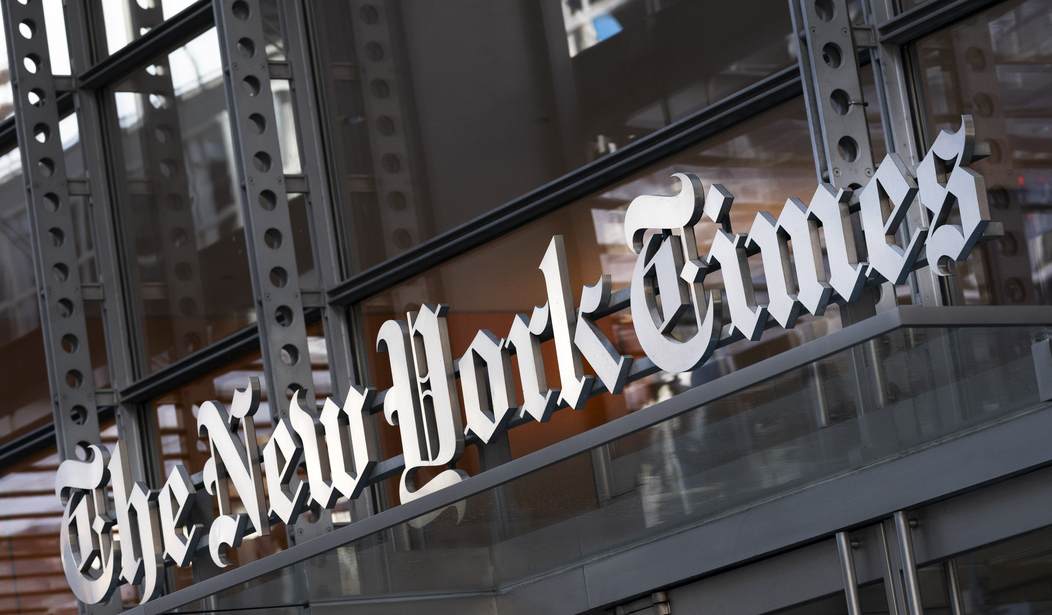
Yesterday, a jury in Alabama sided with a college basketball player who had sued the NY Times in 2023 over a false story claiming he was present at the scene of a shooting. The Times has been ordered to pay him $9.25 million, though it appears the paper is planning to appeal.
An Alabama jury has awarded former Alabama basketball player Kai Spears $9.25 million after finding The New York Times defamed him by incorrectly linking him to the 2023 killing of Jamea Harris in Tuscaloosa.
The eight-person federal jury reached its verdict Thursday following a nine-day trial.
The basic facts underlying the case are not in dispute. Spears was a member of the team in 2023 when Harris was shot. However, the NY Times reported in 2023 that Spears was present for the shooting. Even after Spears denied their reporting, they refused to take it down.
The article at the center of Mr. Spears’s lawsuit was published on March 15, 2023, after coverage of a deadly January shooting at which three Alabama basketball players were present. (One player was charged with capital murder and awaits trial. Two others were not implicated in the shooting or accused of any wrongdoing.)
The article, by the reporter Billy Witz, said that Mr. Spears had also been present at the shooting, attributing the knowledge to a single anonymous source. The article said that Mr. Spears had declined to comment and that university officials had not immediately responded to a request for comment.
After publication, Mr. Spears’s father and the university’s athletic department denied that Mr. Spears had been at the shooting. The article was updated with the denials, and The Times continued to stand behind its reporting.
Also not in dispute at this point is that Spears was not present. The Times got it wrong but didn't correct the story for two months. It finally made the correction two days after Spears sued.
Two months later, Mr. Spears sued The Times. In his complaint, he said he had been out that night with some of the players, but had been back at the Alabama athletes’ dorm by the time the shooting occurred. The lawsuit said The Times’s “false statements will be associated with him for the rest of his life,” and that he had endured mental anguish and death threats.
The Times corrected the article two days later on June 2, 2023, and added an editor’s note. Based on information from Mr. Spears’s lawsuit, the note said, “editors assigned further reporting, which determined that the other person at the scene was not Spears.” The Times also published another article that day reporting that another student was present at the shooting, not Mr. Spears.
In short, the Times didn't correct the record until information was handed to them indicating they were wrong and only then did they assign further reporting.
There's also a racial aspect to this. The reporter, Billy Witz, wasn't given Kai Spears name identifying him as the person in the car at the scene of the shooting. Instead, he was told it was a white guy (Kai Spears is white).
On the witness stand, Mr. Witz, the Times reporter, apologized to Mr. Spears. He said he had been confident in his source and had tried to confirm with other sources before talking to a person who told him that the car’s occupant was “a white guy on the basketball team.” That person did not recall the name.
After the false report was published, Spears got booed at the next game. During the trial he argued that the story damaged his life and caused his grades to slip. He wound up transferring to another school.
Spears was not involved in the shooting and was never charged with a crime. In his lawsuit, he argued the inaccurate report caused emotional distress and permanently associated his name with a murder investigation.
Spears transferred from Alabama after the 2023-24 season and spent two seasons at Marshall.
The person who was actually in the car was a student manager for the team.
This is the first time the NY Times has lost a defamation suit in 50 years. The key here may have been a decision by the court that Kai Spears was not a public figure.
In legal circles, the New York Times is synonymous with the standard for proving defamation. In the landmark Supreme Court case New York Times Co. v. Sullivan, a libel suit also brought in Alabama, the justices established that public-figure plaintiffs must prove “actual malice” — that false information was published knowingly or with reckless disregard for the truth.
Private figures, however, only have to prove that the information was false and published with negligence. The court deemed Spears, despite his stature as a college basketball player, a private figure.
Reckless disregard for the truth, in practice, seems to mean that the paper has to refuse to make a correction even after proof has been provided that the paper was wrong. Short of that, the paper can never be found liable for defaming a public figure (as opposed to a private figure like Spears). The paper won a defamation suit brought by Sarah Palin even though the false claims it published in a 2017 editorial had been known to be false for many years prior to publication.
The Times hasn't said it will appeal the outcome of the current case but that seems likely.
Editor's Note: Do you enjoy HotAir's conservative reporting that takes on the radical Left and woke media? Support our work so that we can continue to bring you the truth.
Join HotAir VIP and use promo code FIGHT to receive 60% off your membership.
Join the Conversation
VIP members get the ability to comment on articles.