








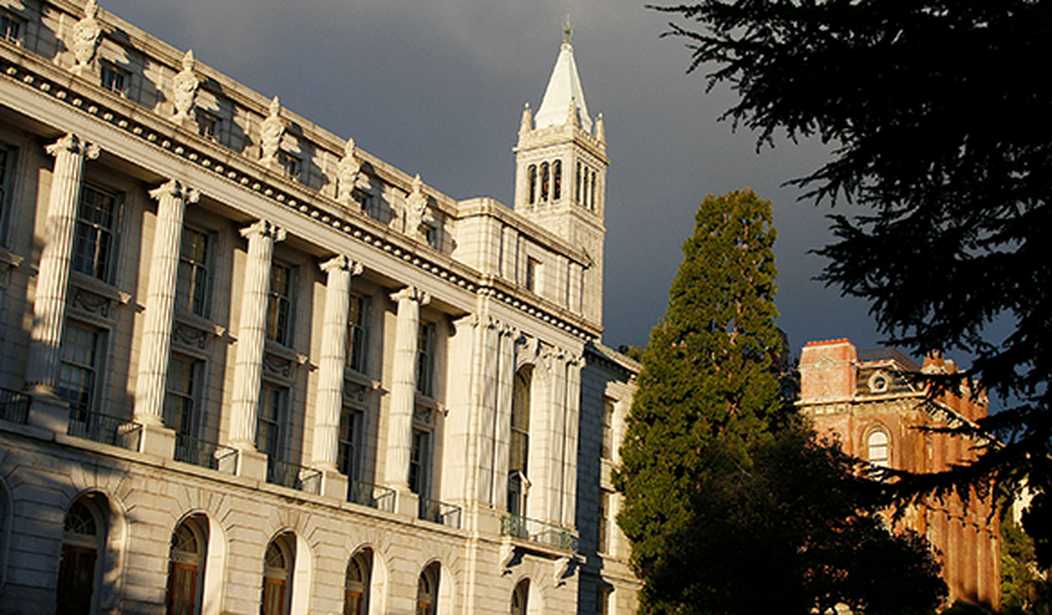
It wasn't my intention to write about this all day but after writing about billionaire's plans to leave the state earlier today, I came across this discussion in which one of the designers of the California wealth tax tried to defend it as several critics pointed out its flaws. The conversation was put together by an opinion editor at the NY Times (Stephen Stromberg) and featured a discussion between Steve Rattner, Catherine Rampell (economics editor for The Bulwark) and Emmanuel Saez, the U.C. Berkeley economist who helped design the tax.
Right out of the gate, Saez explains that he doesn't think many billionaires will leave to avoid the tax and even those who want to will be trapped by it's retroactive design.
Emmanuel Saez: California faces significant defunding from the federal government, especially for Medicaid, hence the urgent need for more revenue to preserve those programs. Billionaires are the socioeconomic group that has done best in recent years, seeing a 158 percent increase in their wealth between 2022 and 2025. Hence, it makes sense to ask them to contribute. A 5 percent tax on their wealth is modest relative to their gains yet can raise substantial revenue. The tax is based on residence as of Jan. 1, 2026, sharply limiting their ability to flee the state to avoid paying. Despite billionaires’ threats to leave, I think extremely few will have been able to change residence by Jan. 1, given the complexity of doing so.
Catherine Rampell turns out to be the voice of reason in this discussion. She sees this as likely to backfire.
Rampell: I feel like I’ve seen a lot of commentary of the “good riddance!” variety about tech billionaires moving, or moving assets. Ro Khanna tweeted a version of this. But losing your tax base is bad if you’re trying to raise revenue — and you don’t need a lot of people to leave to blow a big hole in your state budget. Just ask New Jersey, when hedge fund manager David Tepper left for a while...
The big risk is that California’s wealth tax doesn’t pass and people still leave the state, pre-emptively reducing income tax revenue. Or it does pass and the courts strike it down, but people leave in the meantime, again reducing income tax revenue. Maybe it passes, nobody moves because California is such a fantastic environment that can’t be replicated elsewhere, and the courts don’t strike it down. But this seems Pollyannish.
There is an argument to be made, and billionaires will surely make it, that a wealth tax is unconstitutional. That means this is potentially a tax which could be tied up in court and eventually decided by the current Supreme Court. This seems like a pretty large hole in this plan, but Saez completely sidesteps all of these possibilities (that the tax might not pass or might have negative consequences, etc). He really seems to believe billionaires will just stick around and pay the tax no matter what. In fact, he more or less admits that he thinks the tax will work even if it's not a "one-time" tax as promised. [Emphasis added.]
Saez: A successful capitalist system needs to encourage innovation and the creation of new businesses. Some businesses will be successful, creating billionaires. After the business is successful, it no longer needs a founder who controls it fully. This is why a wealth tax on billionaires, even a recurrent one, that essentially dilutes slightly founders’ ownership is not going to harm business dynamism.
He's right that a tax like this won't harm business dynamism in the long run, but that's because all of the dynamism will leave California and continue to happen in states like Texas and Florida where a wealth tax is unconstitutional. Still, it's revealign that Saez is admitting he doesn't see any downside to making this recurrent. Anyone who claims this will only happen once is kidding themselves.
Rampell argues that it's not clear if the goal of this tax is to solve the funding problem in California or simply to punish the wealthy. She is given the last word and she hits the whole concept of the tax pretty hard.
Rampell: Everyone’s favorite tax is one that someone else pays. But a one-time tax that will be hard to collect and might drive away the tax base without increasing long-run revenue is the definition of “slopulism.” It’s designed to fire up the base. In general, I think Democrats need to focus more on policies that will invest in the future and improve the living standards of the bottom half of the population, not just on who they want to punish.
Slopulism is a word I wasn't familiar with. I read it as solipsism the first time through, which means self-centered. But actually she's saying slopulism which is a word that seems to be mostly used to criticize a kind of online, right-wing populism which is based on vibes and anger. But in this case, it seems she's using it to attack left-wing populists, i.e. the type of very online progressives who think billionaires should be illegal. She's saying that this wealth tax might work up that base in California, but Democrats should focus instead on something like the the abundance agenda.
Anyway, I think the real takeaway here is that one of the designers of the wealth tax sees it as a plan to trap the wealthy into what could be a recurrent tax used to plug the gap in California's annual spending. Based on what billionaires are actually saying and doing, I think his views are delusional.
Editor’s Note: Do you enjoy Hot Air's conservative reporting that takes on the radical left and woke media? Support our work so that we can continue to bring you the truth.
Join Hot Air VIP and use promo code FIGHT to receive 60% off your membership.

Join the Conversation
VIP members get the ability to comment on articles.