Remember Jimmy McMillan? He landed on the national scene in 2010 when he announced a run for the presidency in 2012 as the nominee of The Rent Is Too Damn High Party. The novelty and bipartisan draw of his central message landed him a memorable invitation to CPAC in 2011, where he spoke briefly at Blogger's Row, to some amusement. He later shifted his ambition to the 2013 mayor's race in New York City, governor in 2014, and then briefly again aimed at the presidency in 2016 before endorsing Donald Trump.
McMillan may occupy the political fringe – yes, he's still around – but his message hits directly at the mainstream. Joe Biden even attempted to co-opt it last year, shortly before he dropped out, as a way to distract from his obvious and advancing senility. New York City voters handed the mayoralty to an outright socialist largely on the issue of "affordability," a historic irony that has apparently escaped the addled brains in the Bronx, Brooklyn, and Manhattan.
During his Oval Office meeting with Zohran Mamdani, Donald Trump took up the issue of "affordability," specifically aimed at the rapid escalation of housing costs in the US. Along with all other prices, housing costs exploded during the Biden Regency, in part as a result of the generally inflationary policies of that administration. Trump insisted that his administration would address "affordability," and the national media has made it a buzzword, banking on an assumption that the problem is too difficult to fix.
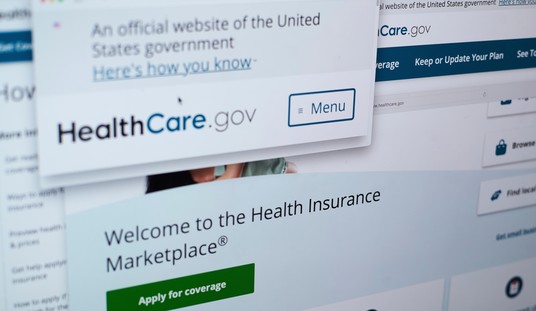
Has Trump proven them wrong already? CNBC reports today that rents have not just stopped going up, but have actually started to edge down. And once again, the law of supply and demand has ruled in favor of markets over control:
The improvement on affordability has vacancies remaining at an 8-year high, and rents falling 5% from their inflationary-wave peak during the Biden Regency:
A slew of new supply is still making its way through the multifamily housing market. That, coupled with weakening demand, especially from the youngest workers, is pushing vacancies up and rents down.
The national median rent for apartments fell 1% in November from October, and now stands at $1,367, according to Apartment List. It was the fourth consecutive month-over-month decline. Apartment rents are down 1.1% from November 2024 and have fallen 5.2% from their 2022 peak.
“Earlier this year, it appeared that annual growth was on track to flip positive for the first time since mid-2023; however, that rebound stalled out and reversed course during a particularly slow summer,” according to Apartment List researchers.
After hitting a record high for this index, which dates back to 2017, in October, the national multifamily vacancy rate remained at 7.2% in November.
Did Trump just get lucky with his Mamdani summit last month and his embrace of affordability? Or did Trump see an opening to co-opt the Democratic Socialist message and yank the rug out from under Mamdani's feet? Bet on the latter, as the data had already shown significant improvement by the time New Yorkers handed Gracie Mansion to a dilettante trust-fund socialist.
The Wall Street Journal had reported the week before that election that new supply and a reduction in demand had already begun pressing rent costs downward. It noted one reason for slack demand in the rental market that won't play well into Trump's economic messaging, but barely mentions another, one that CNBC ignored altogether:
Renters across much of the U.S. have enjoyed easing prices and months of free rent this year. Now, this tenant-friendly environment looks poised to extend deep into next year, and perhaps beyond.
Apartment rents nationally are advancing at their slowest pace in years, thanks to the glut of new units that has taken longer than expected to absorb. More recently, job concerns among young people are posing a new threat to the rental market.
The U.S. unemployment rate for people aged 20 to 24 was 9.2% in August, more than double the overall rate. If a weaker job market continues, it could lead more of these renters to seek roommates or move back with their family, rather than get their own place.
The jobs data is a real problem, and it also goes to affordability, albeit less directly. A lack of new jobs means that people can't afford to spend on rents, no matter what the prices may be. The labor markets have stalled for most of this year, although there has been some debate as to whether that's true broadly or just for foreign-born workers
That brings us to the other reason that the WSJ cites almost as an aside:
Remote workers who once helped power the Sunbelt’s population boom are getting called back to the office. And as President Trump cracks down on international immigration, the influx of new foreign residents is also slowing.
That is not a side consideration. The Biden Regency flooded the nation with as many as 20 million illegal aliens, all of whom had to find housing once inside the country. The explosion of demand and the lack of supply sent rent costs soaring. That was the single largest impact on "affordability," and ending that influx has already started to weaken the pressure on rents. Add in the outflow of illegal aliens avoiding the aggressive enforcement of the Trump administration, and the likelihood of a long-term reduction of rental prices looks stronger every day.
This is nothing more than basic supply and demand. Biden's open-borders policies vastly increased demand over an incredibly short period of time forced prices upward sharply for the limited supply on hand. States and cities then finally allowed for more construction of rental units, but hardly fast or large enough to deal with the demand. Trump, who has made vast fortunes in real estate, understood the issue much more clearly and took steps to reduce demand back to rational levels by closing the influx of illegitimate demand.
It doesn't take rent control or property seizures to address this problem. In fact, those exacerbate housing shortages by disincentivizing supply, as has been proven in every environment in which those policies are applied. Javier Milei ended a housing shortage and affordability crisis by ending those policies in Argentina, resulting in a supply glut and suddenly affordable rentals that benefit the working and middle classes most. Trump can't do the same in the US due to constitutional jurisdiction, but he can make it clear that New York City's affordability is New York City's problem, not Trump's.
The rent may still be too damn high, but it's finally going in the right direction, thanks to firm immigration-law enforcement and incentives to bring supply to market. Jimmy McMillan may not yet be satisfied, but he has to be happier these days.