






If there is one fact about our higher education system that everybody in the higher education system agrees on, it's that women have no power, minorities are deeply oppressed, and that white heterosexual men are so privileged that they can get away with literally anything at all.
It's really shameful, if you think about it. Institutions like Cornell have attitudes about sex and race that are as outdated and oppressive as those held by slave masters in the worst days of Haiti. Something must be done about it, and clearly what's necessary is dropping the whole "Dead White European Male" curriculum and diving deep into feminist theory and anticolonial education.
Do these people live on another planet? College campuses are already anti-men to the max. Many male college students I’ve spoken with tell me they feel like a punching bag. Absolutely delusional to suggest that college men “aren’t being taught about inequality, power & sexism.”
— Lisa Britton (@LisaBritton) October 15, 2026
The problem, no doubt, is that K-12 education is deeply mired in misogyny and heterosexism, so institutions of higher ed need to follow the examples of the more progressive institutions out there and chain men to their desks and force-feed them the Right™ ideas.
Universities already have ways to make learning about power and inequality part of an ordinary college education. At Oregon State University, the Difference, Power and Oppression program asks students to examine institutionalized systems of power, privilege and inequity and works with faculty across disciplines to develop courses that do so. I co-designed and have taught a social justice course that included a unit on gender oppression, masculinity and sexism. In this course, one of the approved courses that students could choose from to meet the Difference, Power and Oppression requirement, I have watched students connect ideas they had understood separately, including gender expectations, sexism, peer pressure and the behaviors that those norms make seem acceptable.
Men who initially resisted the material sometimes reached a simple recognition: “Oh, this makes sense now.” They began to see how everyday sexist attitudes can rest on ideas about women’s inferiority and men’s entitlement and how masculinity shapes expectations about whose bodies, behavior and boundaries deserve respect. We examined how survivors are blamed for drinking, for walking alone, for being in the wrong place. These conversations did not transform every student. But they gave students sustained time to question assumptions, which a one-hour training rarely could.
Other universities, including the University of Washington, have built similar approaches into general education and graduation requirements. At the University of Oregon every undergraduate student takes a course on power imbalances, and undergraduates complete a required online module on sexual violence prevention. Cornell itself requires students in the College of Arts & Sciences to complete coursework in its Social Differences category, which includes the study of topics such as gender, sexuality, race, class and ability.
The issue, then, is not whether universities have the infrastructure to teach about these topics. It is what they choose to teach through that infrastructure. If universities believe that understanding power and inequality is part of what an educated person should know, gender inequality, masculinity and sexism should not be left primarily to electives, orientation programs or students who happen to seek these topics out.
Surely no man who has been admitted to Cornell has ever been told about intersectional levels of oppression, or even been exposed to the concept that white men are oppressors. They obviously need a "Difference, Power and Oppression" requirement at every school.
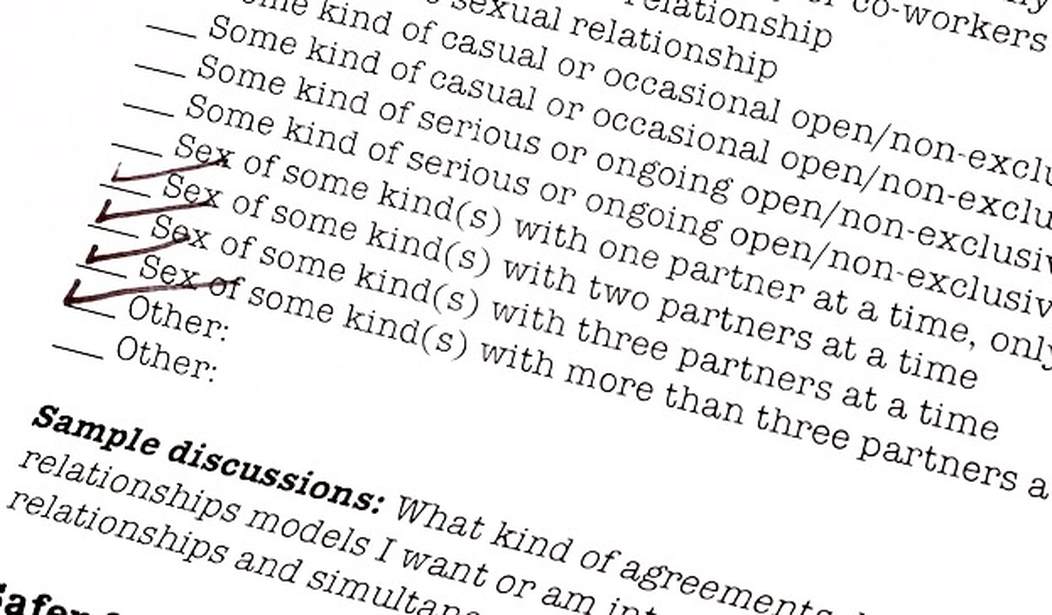
Of course, I am old school, and don't buy this line of bulls**t. In fact, I would note that Cornell spends an awful lot of time promoting transgressive sexual practices such as group sex, having sex while high, and "kink." It works hard to make sure everyone flies their freak flag high. That's where Jane Doe got her original "our bodies, our choice" ideology, by which she chose to justify the "gang bang" before she changed her tune.
Instead of spending enormous amounts of effort teaching ideological lenses through which to understand who is at fault for bad things happening, it might make more sense to teach people basic common sense and cultural norms that discourage bad behavior, and quit looking for more and more elegant or complicated ways to blame things on societal forces and structural power.
Yet academics don't think that way. They love to talk about systems as a way to help favored groups and harm disfavored ones instead.
The upshot? Since men, and especially white heterosexual men, are the disfavored group, they are opting out of subjecting themselves to the abuse at higher and higher rates, and the rate would be higher if parents understood how bad things have gotten.
What happened at Cornell was bad, whichever version of the story you believe. It was also at least partly the product of the elite values that teach that transgressive sexual practices are empowering and that cultural norms that promote simple dating and monogamy are oppressive.
Diving deeper into that ideological pool will only make things worse.
Editor's Note: The Democrat Party has been infected by socialism, and it's spreading FAST. Democrats are claiming there's nothing to worry about, but we know the truth.
Help us continue to shine a light on the socialist takeover by joining HotAir VIP. Use promo code FIGHT to get 60% off your VIP membership.


Join the Conversation
VIP members get the ability to comment on articles.