







Or at least try to.
This has been quite the cool weekend, no? Blew my Saturday morning all to bits after I woke up to John's early morning post about the invasion, and Ed's 'We got him' follow-up. The next couple of hours were busy as the unbelievable events of the past 24 hours unfolded, and we started getting the scoop on the raid in the capital city of Venezuela that had gone down damn near flawlessly.
As the press conference wrapped up, I had already started wondering what the ripples - or maybe it would be even a tsunami - of aftereffects flowing from yanking this one guy out of his chair would do around the world.
My immediate thought had turned to Cuba, as I'd already mentioned how the US oil embargo was crimping an already crappy socialist lifestyle on that God-forsaken little island.
The importance of the Venezuelan pipeline to the Cuban communist regime cannot be underestimated. Cuba didn't buy oil from Venezuela - it was given to them.
1. The End of the "Free Oil" Lifeline
For over two decades, the single most important pillar of the Cuban economy has been the "Barrio Adentro" agreement, which saw Venezuela ship roughly 50,000 barrels of oil per day to Havana essentially for free. With the US military now securing Venezuelan ports and oil fields following yesterday's operation, these shipments have hit zero overnight. Cuba, which is already cash-strapped, simply does not have the foreign currency reserves to buy this amount of oil on the open market at global prices, meaning the island's energy supply has effectively been cut in half instantly.
2. The Loss of the "Resale" Revenue Stream
Few people realise that the Castro regime didn't just use Venezuelan oil to keep the lights on; they used it as a major source of income by selling the surplus. Venezuela often sent more refined fuel than the island needed, allowing Havana to sell the excess on the international market to generate hard currency. The fall of Maduro wipes out this "middleman" profit entirely, removing one of the few remaining sources of US dollars the government used to import food and medicine, which will accelerate the humanitarian crisis to breaking point.
Another important point made in the article is that there are somewhere in the neighborhood of 15,000 Cuban intelligence and security operatives, not to mention medical professionals who were 'leased' to Maduro as another source of hard cash, who are now fleeing back to a crumbling Cuba.
Maduro's personal bodyguard detail lost 32 CUBAN soldiers when the Americans came for their boss.
Most of his security are Cuban not Venezuelans
— VoiceofReason (@sincerelyovi) January 5, 2026
I think it's safe to assume the rest of the Cuban detachment is on their way back to the island.
So all the oil and 'security leasing' funds that Cuba has been running on for decades are now gone, overnight.
They've had continued blackouts on the island, which are now only going to get worse. Again, as the article points out, unlike every other crisis in the dictatorship's history, there is no one to save Cuba from itself this time. Russia can't, and no other of the remaining leftist South American or Latin countries has the wherewithal or the desire to go up against the 'Donroe Doctrine' now in effect.
You also now have a Secretary of State who has always said, 'The head of the snake is in Havana.'
Should the Cuban people rise up, the regime will, quite literally, have run out of the fuel to suppress them in about twenty days.
7. The "Maleconazo 2.0" Risk
The Cuban regime’s survival has always depended on its ability to repress dissent, but repression requires fuel. You need gasoline to run the police trucks, troop transports, and surveillance vehicles that crush protests. When the strategic fuel reserves run dry in roughly 20 days, the Cuban military effectively loses its mobility. If the population rises up in a desperate "Maleconazo" style rebellion and the police cannot physically deploy to stop it, the 67-year-old dictatorship risks collapsing simply because it ran out of gas.
This is what Trump was referring to when he said, 'Cuba looks like it's ready to fall.'
🚨 President Trump’s comments on Air Force One demonstrate how he knows EXACTLY what’s happening in #Cuba.
— Rep. Carlos A. Gimenez (@RepCarlos) January 5, 2026
The murderous Communist regime is an enemy of freedom & has threatened the US for far too long.
The regime must be totally annihilated. pic.twitter.com/v5XH3w3s3e
Iran is another country buffeted by the widening circle of ripples from Caracas. Not only did the mullahs' already tenuous hold on power take a symbolic right to the chin with the decisive US move against an authoritarian dictator, but their national purse did as well.
There was a multi-billion-dollar, pseudo-clandestine cooperative drone program between the two countries that had been running with impunity for years. Iranian designs were manufactured in Venezuelan factories overseen by Iranian management and scientists. An article from this past September is pretty illuminating and should have been alarming, had it been more widely disseminated.
Venezuela’s drone industry, built on Iranian designs, is still overseen by Iranian specialists who block local staff from entering without permission amid a standoff over US warships deployed in the Caribbean, the Miami Herald reported.
The Herald said the drone program began in 2006 when Caracas signed a military deal with Tehran. Iranian firm Qods Aviation Industries supplied assembly kits, Venezuelan engineers trained in Iran, and Iranian teams later worked at the El Libertador Air Base in Maracay.
The program has since produced reconnaissance, armed and kamikaze drones modeled on Iranian systems.
“Cooperation with Iran was essential. Not only could Venezuela never have developed drones on its own, but even today it’s the Iranians who control those facilities. Venezuelan personnel can’t enter without their authorization,” one source who asked not to be identified told the Miami Herald.
The paper said it interviewed half a dozen people familiar with the ties between Caracas and Tehran and reviewed Venezuelan government documents — some signed by Chávez — that showed billions of dollars were funneled into the partnership.
Many projects were disguised as civilian ventures, such as bicycle or tractor factories, but served as fronts for more sensitive military work. At the core, Chávez sought weapons that could challenge US military power, the Herald reported.
Six days ago, the US slapped sanctions on individuals associated with the programs.
...The Treasury Department slapped additional sanctions Tuesday on 10 people and entities based in Venezuela and Iran accused of aiding Tehran’s drone and missile programs — including a Venezuelan firm that assembles Iranian-designed combat drones.
Aragua, Venezuela-based Empresa Aeronautica Nacional SA and its chairman, Jose Jesus Urdaneta Gonzalez, was targeted for helping acquire and assemble Mohajer-series drones from Iran’s Qods Aviation Industries, the department said in its sanctions announcement.
“Iran’s ongoing provision of conventional weapons to Caracas constitutes a threat to US interests in the Western Hemisphere, including the Homeland, and the United States will use all available measures to prevent this trade,” the Treasury proclaimed.
There is rumored to have been a little extracurricular action associated with the extradition of Maduro.
If there's any truth to it, Hizbollah and Iran are most affected.
The reason this all matters?
— Adam Milstein (@AdamMilstein) January 4, 2026
The U.S. allegedly struck a facility in or near the port city of Maracaibo linked to the assembly of Iranian drones.
Hizbullah was responsible for setting up domestic assembly for Iranian-designed drones such as the ANSU-100 at Maracaibo.… pic.twitter.com/AR3h83Cwt4
...Hizbullah was responsible for setting up domestic assembly for Iranian-designed drones such as the ANSU-100 at Maracaibo. Hizbullah operatives provided the expertise needed to weaponize these drones.
Hizbullah also ran a Margarita Island facility which served as Hizbullah's most critical operational base in the Western Hemisphere. The facility was a hub for document forgery, allowing operatives to obtain Venezuelan identification and travel throughout Latin America undetected. There was a paramilitary training center on the island, managed by the Nassereddine clan (a family with deep ties to Hizbullah and senior Venezuelan officials). In addition, the facility was also a consequential money laundering operation.
If there's not, it's still a psychological shot across the bow worth every dime.
The Iranian regime is also scrambling to answer questions about cash reserves held in Venezuelan accounts.
Oh, they said, We got those funds all out before the recent unpleasantness.
YOUR MONEY IS SAFE, TRUST US
Money held by Iran in Venezuela has already been withdrawn, the head of the Iran-China Joint Chamber of Commerce said on Monday, as questions grow over Iran’s investments following the arrest and transfer of Venezuelan President Nicolas Maduro by the United States.
“Anyone who had money in Venezuela has already taken it out,” Majidreza Hariri said, responding to concerns about Iranian assets worth an estimated two billion dollars.
He added that instability in Venezuela had been evident for at least five to six months, leaving ample time for Iranian funds to be withdrawn, and warned against attempts to use the crisis as a pretext to write off debts.
The Iranians are in a pickle, as is Putin, who has dumped billions into Maduro.
2/ Maxim Kalashnikov is scathing about what the fall of Maduro means for Russian foreign policy, saying that it "marks the collapse of the Russian leadership's long-standing PR-fueled foreign policy."
— ChrisO_wiki (@ChrisO_wiki) January 4, 2026
Venezuela was a black hole even before the Ukraine invasion, all based on being able to gain control of Venezuela's oil reserves at some point.
...Between 2006 and 2014, the governments of Hugo Chavez and Nicolás Maduro purchased billions of dollars of arms from Moscow. But even when Venezuela’s oil-exporting economy was doing relatively well, Caracas could only afford the purchases by taking out three loans between 2009-2014 totaling $10 billion—also extended by Moscow.
This arrangement has left both parties in a hole: since oil prices tanked in 2014 Venezuela simply hasn’t been able to make its payments.
It's also going to pinch Putin's income in the short term as bringing all those oil reserves under US control should keep prices relatively low, which hurts Russian oil, and that's okay.
Scary reputations also took a hit in the US lightning raid.
Russian and Chinese weapons systems, which had always been regarded as top-tier, failed miserably in Caracas. Even allowing for the fact that Venezuelan army crews probably operated them, there's still no excuse for the shambles they made defending the city.
"[W]hen it came to the moment of truth, the Russian kit was easily defeated, a reminder that the talk of asymmetric threats to western weapons systems can easily be exaggerated" https://t.co/5RTg7KZFbg pic.twitter.com/r5hJd4Q2ti
— Alex Rowell (@alexjrowell) January 5, 2026
Which is pretty good news for everyone concerned. We had only a few casualties, not a bloodbath, thank God.
There's nothing like a real-time test to see what's hype and what's real.
Taiwan officials see Trump's move for what it is -- a massive deterrent against Communist China.
— Michael Lucci (@Michael7ucci) January 5, 2026
Chinese defense systems failed Maduro.
Chinese oil supplies are compromised.
Chinese commitments in the Americas are in shambles.
U.S. defense tech outperformed. https://t.co/IFGfmXdLtY pic.twitter.com/eQENq1IEGG
China, as I noted in my earlier post, now has a real problem on its road to Taiwan conquest. With the US in control of one of its two sources of oil and the other - Iran - looking as if the China-friendly regime there is not long for this world, Xi may literally not have the gas to go to war.
China has sought for more than a decade to secure a supply of oil that would be immune from western sanctions should they choose to invade or blockade Taiwan. Venezuela and Iran are a key part of this strategy.
— Gordo Stevens (@GordoCDA) January 3, 2026
The bottom line is that if these governments fall, then China…
...The bottom line is that if these governments fall, then China won’t have enough oil to wage war.
Thanks to the unflinching defense of our national security interests in our hemisphere, the United States is now in the captain's chair.
Venezuela a strategic prize: not just 303bn barrels of oil, but 10k tonnes gold for AI chips & aerospace, 14bn tonnes of iron ore for EV frames, coltan for tech capacitors, 5.5m tonnes nickel for batteries. A magnet for hedge fund short-sellers, lobbyists, brokers & billionaires. pic.twitter.com/KXqg7B4XTl
— Özer (@OzerKhalid) January 5, 2026
The world is on notice that the Donroe Doctrine is now in effect, not by forceful imposition, but also in a Latin America now turning rightward, back towards the United States.
The US Is Doing the Dirty Work That Latin America’s Leaders Wouldn’t
NO MORE DANCING
...For Latin America, the episode is a blunt reminder: When divided regional leaders fail to produce homegrown solutions to their gravest crises, the risk that the US will step in — and act alone — is ever present. That risk is heightened by the return of great-power competition and Trump’s transactional, spheres-of-influence worldview. The region now faces the uncomfortable prospect of the US remotely administering a mid-sized South American country bordering Brazil and holding the world's largest oil reserves, with little regional input.
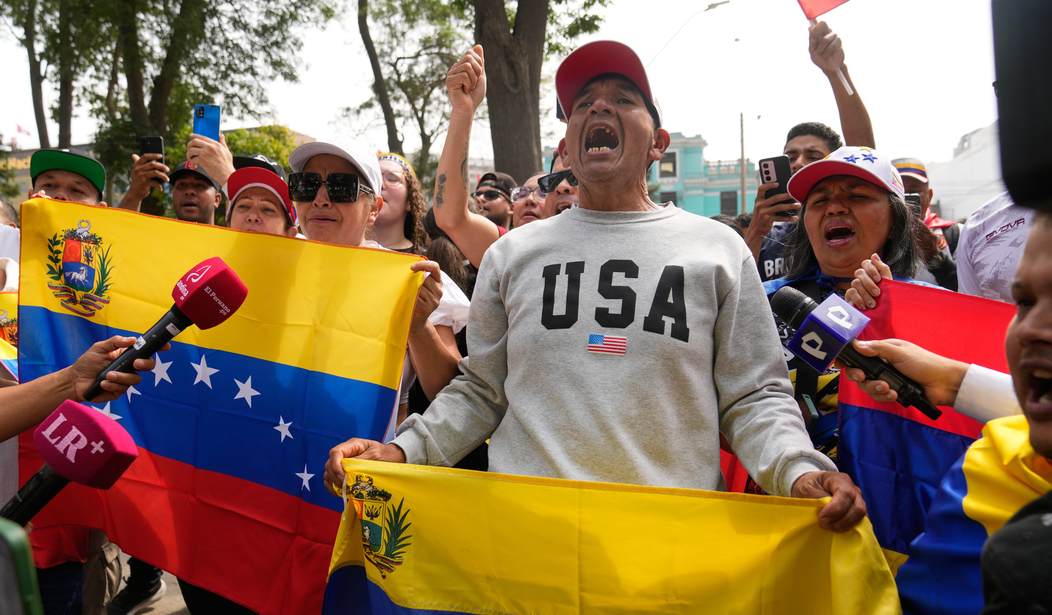
Reactions among Latin American leaders split along predictable ideological lines. Left-wing governments in Brazil, Chile and Mexico joined Cuba in condemning an intervention that violated Venezuela’s sovereignty. Right-leaning leaders in Argentina and Ecuador welcomed the departure of the hated mustachioed dictator. Yet both positions can be true at once. Trump acted with evident disregard for international law in pursuing unilateral regime change — but Maduro and his cronies also tempted fate far beyond the odds. They had multiple opportunities to negotiate a political transition. Instead, Maduro chose to steal the 2024 election so brazenly that even his closest allies withheld support in his final days. He is now likely to follow the path of Panama’s Manuel Noriega nearly four decades ago: ending his days in an American jail, rueing having overplayed his hand. No more dancing.
The freedom ripples look to rock some serious boats as they spread.
Please help Ed, David, John, and me continue revealing Democrats' plans to lead America down a dangerous path.
Please help us continue to expose Democrats, progressives, and the media's left-wing bias by reading news you can trust. Join Hot Air VIP and use promo code FIGHT to get 60% off your membership!

Join the Conversation
VIP members get the ability to comment on articles.