







Secretary of the Interior Doug Burgum strikes again.
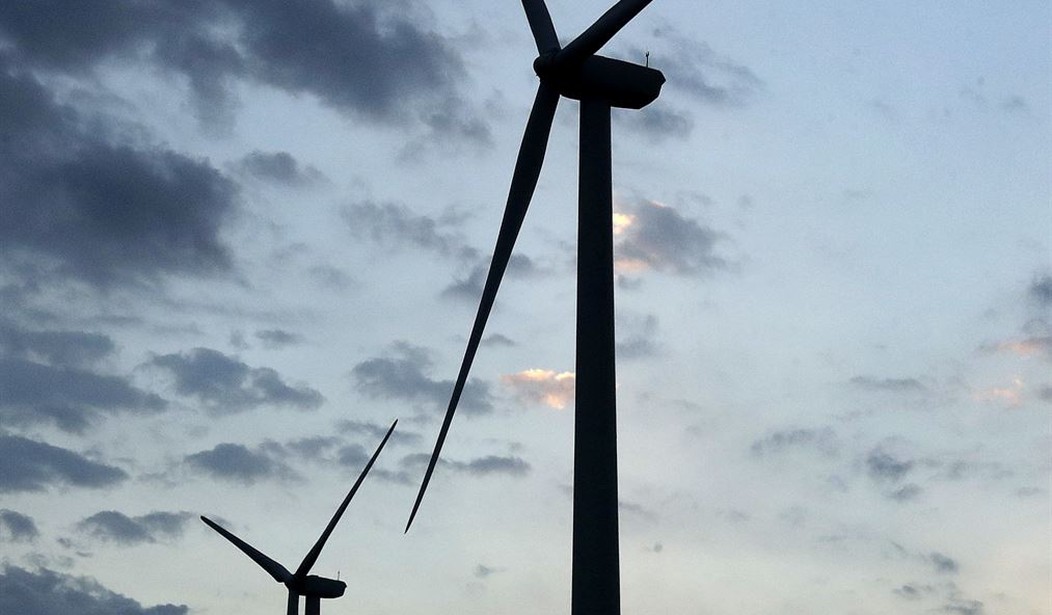
Today, we're sending notifications to the five large, offshore wind projects that are under construction that their leases will be suspended due to national security concerns.
🚨 JUST IN: It's been revealed that the FIVE offshore windmill projects being terminated by President Trump and Sec. Doug Burgum could be replaced with *ONE* natural gas pipeline to produce the same amount of energy.
— Eric Daugherty (@EricLDaugh) December 22, 2025
WIND ENERGY SUCKS! Trump is right!pic.twitter.com/g1YZ91Wrlb
This includes Empire Wind, which was restarted as part of the deal with Hochul, and the two projects that a judge recently overturned the Trump administration's pauses on.
The Trump administration on Monday said it would pause leases for five wind farms under construction off the East Coast, essentially gutting the country’s nascent offshore wind industry in a sharp escalation of President Trump’s crusade against the renewable energy source.
The decision leaves just two intact wind farms in U.S. coastal waters — one small project off Rhode Island that has been operating since 2016 and a larger project off New York that has been complete since 2023.
Citing unspecified national security concerns, Doug Burgum, the secretary of the interior, said in a statement that “the prime duty of the United States government is to protect the American people.” He said the decision “addresses emerging national security risks, including the rapid evolution of the relevant adversary technologies, and the vulnerabilities created by large-scale offshore wind projects with proximity near our East Coast population centers.”
I have covered most of the five affected projects repeatedly:
Vineyard Wind 1 – Located off the coast of Massachusetts, this 800-megawatt project was one of the first large-scale offshore wind farms in the U.S. It features turbines supplied by GE Vernova and was expected to power over 400,000 homes.
Revolution Wind – Situated off Rhode Island and Connecticut, this 704-megawatt farm is designed to provide clean energy to approximately 350,000 homes. Construction was reportedly 80% complete before a prior partial halt in August 2025, now fully suspended.
Sunrise Wind – Off the coast of New York, this 924-megawatt project aims to serve around 600,000 homes and includes an onshore transmission system connecting to the state’s grid.
Coastal Virginia Offshore Wind (CVOW) – Commercial – Positioned off Virginia’s coast, this massive 2,600-megawatt initiative is the largest offshore wind project in the U.S., capable of powering up to 660,000 homes upon completion.
Empire Wind 1 – Also off New York, this 816-megawatt farm is part of a broader development plan and was set to contribute significantly to the region’s renewable energy goals, powering over 500,000 homes.
These projects collectively represent a combined capacity of over 5,000 megawatts, enough to supply electricity to millions of households and support thousands of jobs in manufacturing, installation, and maintenance.
Vineyard Wind, the offshore farm of the infamous shredded blade, had been given the go-ahead to continue building out, and I think they've got about half of the planned 62 operational turbines or so up and spinning. It turns out they're working about as efficiently as you'd expect a wind farm to operate - aka 'not very.'
The Emperor has no clothes! The offshore Vineyard Wind plant is at a complete standstill on this frigid day, when we need our electricity the most to stay warm. The Massachusett’s ratepayers are getting screwed. #mapoli #whales pic.twitter.com/oASYU3OVyk
— Mary Chalke (@ChalkeMary40147) December 9, 2025
People on Nantucket have been fighting both the developer and the wind-crazy climate cultist governor of Massachusetts ever since. There were any number of promises made even before the blade disaster that haven't been kept or have turned out to have been outright lies. Residents had their hopes raised when the first Trump pause occurred, but then a negotiated agreement was reached, and the activist judiciary stepped in to restart construction.
The developer has simply gone to ground and won't answer any media queries.
...While ACK For Whales and other opponents of Vineyard Wind had hoped the election of Donald Trump as President of the United States in November 2024 would stop the project, construction of the wind farm has continued. In an executive order signed just hours after his inauguration, Trump halted all new federal leases for offshore wind projects and called for a review of existing wind energy leases. That review will focus on "the ecological, economic, and environmental necessity of terminating or amending any existing wind energy leases, identifying any legal bases for such removal."
It's unclear where that review stands today. While Trump's order has indeed halted the progress of offshore wind projects that were still in the permitting stage, including SouthCoast Wind, the construction of projects that had been fully authorized and funded, such as Vineyard Wind and Revolution Wind, has continued."We are hopeful that President Trump will follow through on his promise to end offshore wind," Oliver said. "We wish things were moving faster in that direction, but perhaps the best way is a careful and thorough process that exposes exactly what offshore wind can and cannot do. Sadly, that conversation never took place before we headed down this unfortunate path."
Vineyard Wind did not respond to a message seeking comment for this story. The offshore wind developer has, in fact, ceased almost all communication with the media, on its website, and social media platforms.
All that money and green skullduggery to power 70,000 homes to the single farm that been fully constructed and operating.
NEW: The Trump admin just ordered all offshore wind projects to halt construction over national security concerns. The order impacts 5 projects being built.
— Thomas Catenacci (@ThomasCatenacci) December 22, 2025
Biden permitted 11 offshore wind projects overall. Now, just one remains fully constructed—and it powers just 70k homes. pic.twitter.com/mCbyT30PcW
The radar issue that is the impetus for this pause has long been a concern, with very little data in the bank before the first tower ever went up.
...The Department of War’s report, which prompted the Interior Department’s action, cites radar interference as the primary national security concern. Specifically, the rotating turbine blades and highly reflective tower structures disrupt military radar systems, potentially compromising detection capabilities for incoming threats.
The report emphasizes the risks posed by these installations’ proximity to densely populated East Coast areas, where evolving adversary technologies could exploit such vulnerabilities. Secretary Burgum highlighted that the DoD’s findings were “conclusive,” noting that these projects create a “genuine risk” to U.S. defense operations.
This isn’t the first time such issues have arisen; earlier assessments and memorandums between the DoD and Interior have long acknowledged the need for compatibility between renewable energy and military readiness.
Seven years ago, a little local station in Oklahoma did a story on the spread of wind farms in that state and how local meteorologists were already concerned about the effect on weather radar.
The paperwork for Vineyard Wind has radar interference addressed in it, but only as far as the developer being responsible for mitigating the interference if it's found that the massive towers do cause a problem.
Well, I'm sorry - that's 'barn door after the horse is already out' planning, only with lives in airliners.
Radar issues were discussed in the projects' respective environmental review & approval processes.
— Ben Schifman (@BenSchifman) December 22, 2025
As an example, here's an excerpt from the conditions of approval for Vineyard Wind project which provides notification and mitigation procedures. pic.twitter.com/0ThxFylNmO
But when you have an administration on a climate crusade such as Biden's was, this is the half-assed rush into madness that you get.
Germany, my favorite Green whipping boy, is finally admitting the obvious - more wind doesn't mean more electricity. In that country right now, it only looks that way because the industry that would normally use it most is dying off due to the cost of those very same green renewables.
Energy transition paradox explained: More wind power does not generate more electricity – Prof. Kobe in an interview
Physicists warn: More wind power does not generate more electricity. Deindustrialization distorts the figures, and storage technologies do not offer a fundamental solution.
Berlin/Dresden – Germany is massively expanding its wind and solar power capacity – but the actual amount of electricity generated is stagnating. Physicists at TU Dresden warn of misleading statistics and fundamental problems that battery storage alone cannot solve. New data shows that periods of low wind and solar power generation are not the exception , but the norm.
Germany's energy production: Installed capacity increases, annual yield stagnates
Germany's installed wind and solar power capacity is growing steadily. However, a closer look at the actual yields reveals a paradox. According to analyses by Professor Sigismund Kobe of the Technical University of Dresden, annual wind power yields are stagnating despite massive expansion – and are even declining for offshore wind power. The data is clear: Even under the optimistic assumption that the maximum yield of previous years will be added in December 2025, the annual yield will hardly reach the 2024 level, Professor Kobe explained to Ippen.Media . It is particularly striking that annual yields for offshore wind power have been steadily declining since 2020 – even though new plants are being connected to the grid.
There's going to be another problem for wind advocates in the States as these pauses Trump initiates play out, either through the courts or if they actually hold - the subterfuge and outright lawlessness the Biden administration used in order to permit these abominations across the country is going to be revealed.
Any number of lawsuits challenging aspects of the Biden permits are in progress right now, and have cooperative administration departments, from Interior to Energy and the EPA, to work with as they move forward.
Wind turbine eagle-kill secrecy may soon end
A new lawsuit could finally end the secrecy surrounding wind turbines killing eagles. Wyoming’s Albany County Conservancy (ACC) is suing the US Fish and Wildlife Service (FWS) for failing to provide the mandatory eagle kill reports for three big wind facilities.
This is a Freedom of Information Act (FOIA) case. ACC made a proper FOIA request. Five
months later FWS said they had over a thousand responsive document but ACC could only see a small fraction.
Since ACC is after total kills this fraction is useless. Moreover the reason FWS gave for withholding most of the kill records looks to be invalid. So ACC is asking the Court to require FWS to cough up the kills.
The introduction to ACC’s Complaint is very clear so rather than tell you what it says, here it is:
“1. This is an action under the Freedom of Information Act (FOIA or the Act), 5 U.S.C. § 552, seeking to compel Defendants U.S. Department of Interior (DOI) and the U.S. Fish and Wildlife Service (FWS) to comply with their statutory obligation to disclose nonexempt information concerning the mortality and injury of legally protected eagles at three major wind energy projects located in Carbon County, Wyoming.
The Biden administration approved these farms with ever-larger, more powerful turbines, with little to no serious scrutiny, and, if many of the citizens who have spent years reviewing every aspect of the permitting paperwork are correct, basically rubber-stamped whatever developers needed to get the project approved and moving.
Every pause gives breathing space for more evidence to come to light.
Besides...
All Large-Scale Offshore Wind Projects Under Construction Suspended Due to National Security Concerns
— STUART TURLEY - Energy Podcast Host (@STUARTTURLEY16) December 22, 2025
“Oil saved the whales the first time, and natural gas could replace all 5 projects with one pipeline saving the whales the second time” – Stu Turley
In a significant blow to… pic.twitter.com/eQL2qDJ1IW
Oil saved the whales the first time, and natural gas could replace all 5 projects with one pipeline saving the whales the second time
Sometimes the truth hurts.
Help Ed, David, John, and me continue exposing Democrats' plans to lead America down a dangerous path.
We'd love to invite you to join Hot Air VIP and use promo code MERRY to get 74% off your membership!

Join the Conversation
VIP members get the ability to comment on articles.