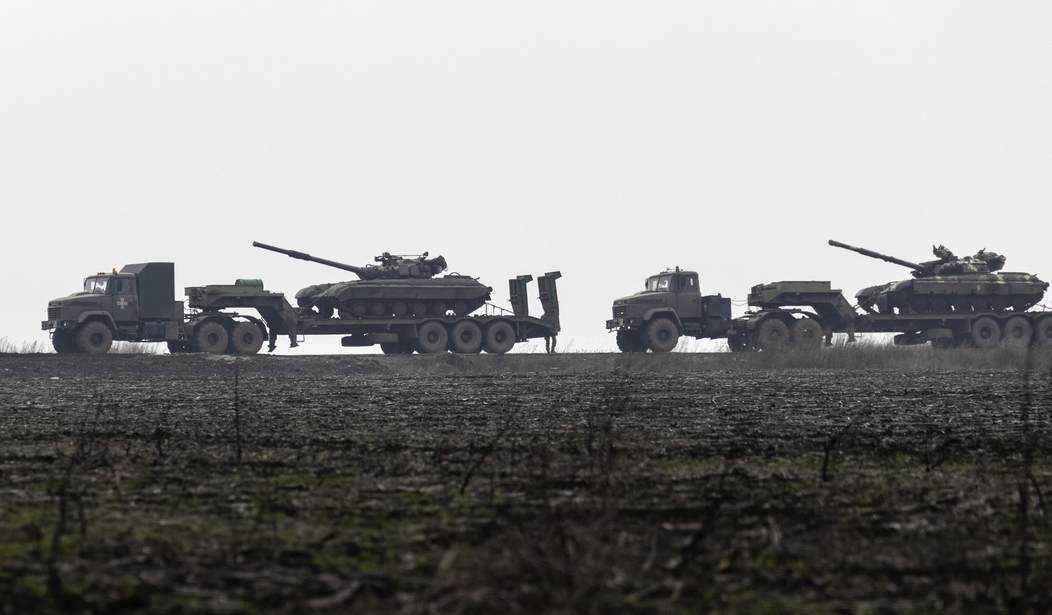
The nearly four-year-old Russian invasion of Ukraine seems to be destined to drag on until one side or the other finally bleeds out; Ukraine isn't giving up, and it doesn't appear Russia can stop.
The US peace plan seems to have bogged down:
President Trump's latest Ukraine peace offensive took the world by storm. The 28-point plan and Thanksgiving deadline set off a diplomatic frenzy on both sides of the Atlantic. The Ukrainian government and European negotiators rushed to connect with their U.S. counterparts, and the Russians passive-aggressively threatened to veto any proposal emanating from these talks. As of this writing, 19 points are now on the table—and peace is nowhere in sight.
Amid this week's zigs and zags, three dynamics stood out as the most important factors affecting the fate of Ukraine: Trump is determined not to be dragged in any further, but he wants to be at the center of anything that happens, and none of the other powers are strong enough to change his mind or meaningfully alter facts on the ground.
It's the last of those three points I'd like to look at today.
The 20th Century left the Western world leery of Germany, for some pretty valid reasons:
As a response, the rest of Europe, after a few decades of laborious negotiation, focused, in and among the process of creating a bureaucratic superstate, on preventing another (ahem) unnamed European power from metastasizing into a threat to peace on the continent.As to external threats, from the (cough cough) other power on the continent that was making expansionist noises? That was what NATO was for. And for four decades, Europe pulled something like its weight, militarily.
But after 1992, with the fall of the Soviet Union, Europe scaled its mililtaries back to shadoes of their Cold War selves; the German Bundeswehr, 12 divisions strong when West Germany stared across the Inter-German border at East Germany, shrank to two divisions today, and even that rump force, focused on "peacekeeping", is not as adapted for fighting against an, oh, hypothetical near-peer enemy as those numbers would indicate.
Which brings us to post-2022 Europe, with the United States trying to scale back its role as the world's enforcer, a predator on its eastern flank with designs on more than just Ukraine, and no real way to deal with the situation without some strong, decisive government able to focus force on transgressors.
So, turn to the EU - right?
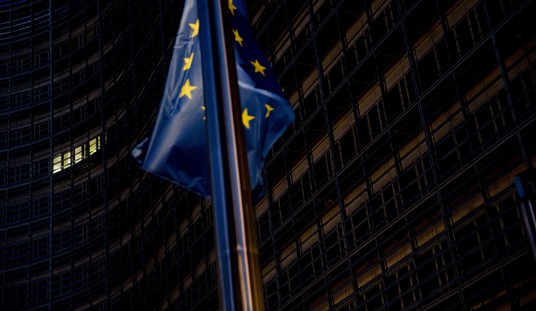
Well, no. To avoid having a nation get powerful enough to upset order on the continent, the EU's system allows any member, even the smallest and weakest, to derail efforts to respond to countries that are big and powerful and violating the order; in this case, Belgium sidetracking the EU's plans to use frozen Russian assets to help fund Ukraine's resistance:
Top brass within the European Commission and the Belgian government will meet on Friday in a bid to break the political deadlock over using frozen Russian state assets to finance a €140 billion reparations loan to Ukraine, two senior EU officials told POLITICO.
Belgium has been reluctant to endorse the plan, floated by the Commission as a way to use sanctioned Russian funds to support Ukraine without permanently seizing the cash, because the funds in question are held by the Brussels-based financial firm Euroclear.
Prime Minister Bart De Wever fears that his government will be on the hook to repay Moscow’s billions if an army of Kremlin lawyers sue over the initiative. At a meeting of EU leaders in October, De Wever demanded stronger assurances from EU leaders to protect his country from the financial and legal risks that could arise from the initiative.
The EU's decision-making process has the unfortunate side-effect of making decisions very difficult to make.
Which is OK, more or less, when you're balancing textile exports between Bulgaria and Portugal, but less optimal when you have a wolf at your door.