Fifty years ago this year, the punk group the Sex Pistols were busy being banned - from radio, from television, from live performances. The band and songs like “God Save the Queen” were just too much for the British establishment to handle.
In 2026, conservatism has become the new punk rock. For the past six months, I’ve been writing pieces on Hot Air and elsewhere about the Anti-Communist Film Festival, an idea I had last year and am currently organizing. I had a setback recently when the AFI Silver Theatre in Maryland, after months of positive emails and phone conversations, informed me that they would not be able to rent their space to me - not in 2026, not for a day, not for two hours, not ever. Like the Pistols, I was banned.
That won't stop us. There are a lot of other theaters that would like to fill their seats and make some money, all while celebrating freedom.
The irony, of course, is that the same leftists who cheered on the Sex Pistols, not to mention the freedom of speech and books that had been banned, are now the authoritarians telling me I can’t show The Lives of Others in their theater.
It was an expected setback, but it will not stop us. I am now in conversations with other spaces that may be able to host us. The people at the film studios I have been dealing with also remain enthusiastic. Hollywood likes money. They like their films shown and celebrated. We are also thinking of potential speakers. One I had wanted was Tim Mohr. Sadly, Mohr passed away last year. Mohr was the author of Burning Down the Haus: Punk Rock, Revolution, and the Fall of the Berlin Wall. Publisher’s Weekly called the book an “up-close-and-personal tour of the punk rock scene of 1980s East Germany” that proves “engaging, enlightening, and well worth checking out.” Mohr also collaborated on memoirs by musicians Gil Scott-Heron, Duff McKagan of Guns N’ Roses, and Paul Stanley of KISS.
In Burning Down the Haus, Mohr explores how the postwar German Stasi, the secret police of the state, harassed, monitored, and beat punk rockers. Between 1981 and 1985, one of the most popular bands behind the Iron Curtain was Wutanfall (“Tantrum”), a Leipzig six-piece who, Mohr writes, “represented a loose but dedicated opposition to the state.”
The leader of Wutanfall was a frontman who called himself Chaos. Chaos was interrogated once a week by the Stasi, whose harassment and beatings became so severe that Chaos ultimately gave up. “I’m not doing anything!” he once told his parents, who told Chaos to abandon music. “I just play music and spike my hair up with shaving cream, OK? I just want to have my own brand of fun, that’s all. That’s no reason for them to beat me half to death!”
Finally, it was too much. Wutanfall collapsed. “It had always been so fun,” Mohr eulogizes, “the little gang of punks against the idiot overlords. All the difficulties had just brought them closer together. But now he felt overwhelmed. Beaten down. The Stasi’s strategy of degradation had worked.”
The best and sharpest punk rock of the 1970s and 1980s was about questioning liberalism as much as “social justice.” Daniel Wattenberg, who had been part of the New York punk scene in the 1970s, describes it well: “New York punks were unapologetic about their comfortable suburban origins, playful and irreverent in tone, and pretty affirmative about modern American life. Indeed, in many ways, New York punk represented a first skirmish within American popular culture with the then-gathering forces of political correctness.”
He goes on:
A small but very influential segment of the punk community . . . explicitly rejected at one time or another just about every one of the reverse pieties then associated with the Left: anti-commercialism, anti-Americanism, reverse racism, you name it. This was coupled with an assault on the stale residue of the sixties counterculture, the whole sleepy, slit-eyed, vegetative, sexually, intellectually, and emotionally subdued, value-neutral, tie-dyed, and forever-fried cannabis cult that worked its way through suburban basements and college dorm rooms in the seventies.
Today’s punk bands like Rage Against the Machine have become, in the words of journalist Salena Zito, “the musical equivalent of the swamp.”
In the 1980s bands like the Replacements, the Dead Kennedys, and the Clash revolted against racism, censorship, war - and the arm of the state, which was often controlled by liberals. Dead Kennedys singer Jello Biafra was particularly angry and articulate about being spied on by government agents. Biafra was arrested, and in 1987 faced off against the people who wanted to shut him down—most notably, Tipper Gore.
The Dead Kennedys sneered at rich, clueless liberals in “Hop with the Jet Set”:
We’ll save the whales
We’ll watch them feed,
Buzz around them in boats
‘Til they won’t breed
Just here for the ride
Then we hop with the jet set tonight
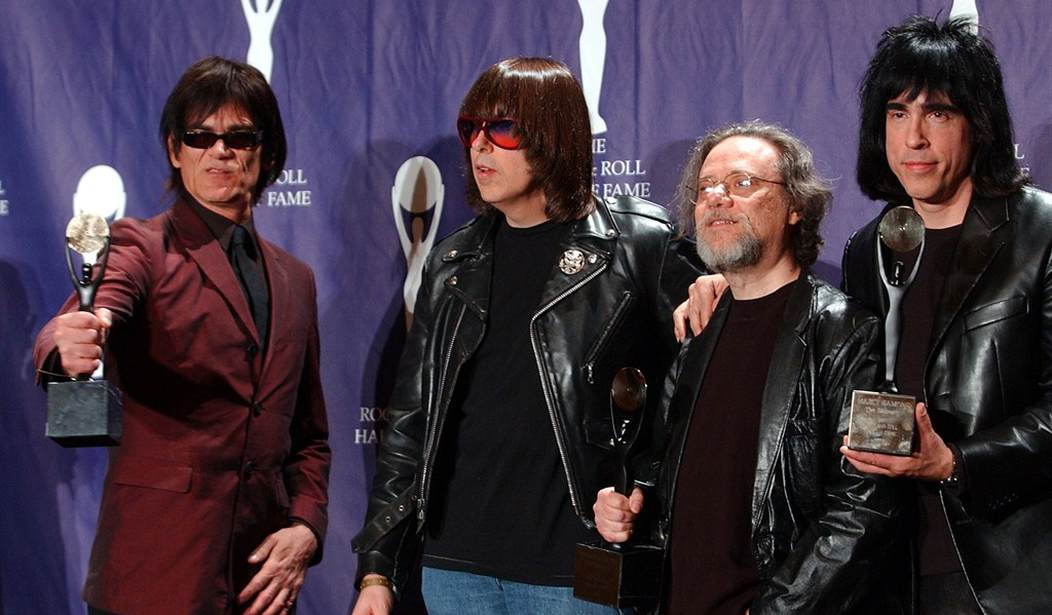
Johnny Ramone of the Ramones once offered this wisdom: “People drift towards liberalism at a young age, and I always hope they change when they see how the world really is.” Ian Curtis, the singer of the seminal band Joy Division, voted for Margaret Thatcher in 1979. Johnny Rotten from the Sex Pistols has become something of a conservative, defending Israel and the cultural heritage of Britain.
We are moving ahead with the Anti-Communist Film Festival. Johnny Rotten will be on the guest list.
Editor's note: We now have the room to run outside commentary by some of our favorite and most provocative thinkers on the Right. That only happens because of the support of our readers, who ensure that we have the resources to keep providing an independent platform and independent voices in a sea of Protection Racket Media domination.
Help us maintain that fight! Join Hot Air VIP and use promo code FIGHT to get 60% off your membership.











Join the conversation as a VIP Member