



Yesterday we had SpaceX's Starship test flight 15 and, as I described here, the launch looked really good this time. None of the Raptor 3 engines went out on the climb toward space. Stage separation went as planned and the ship itself would eventually boost itself into orbit for the second time with no problems.
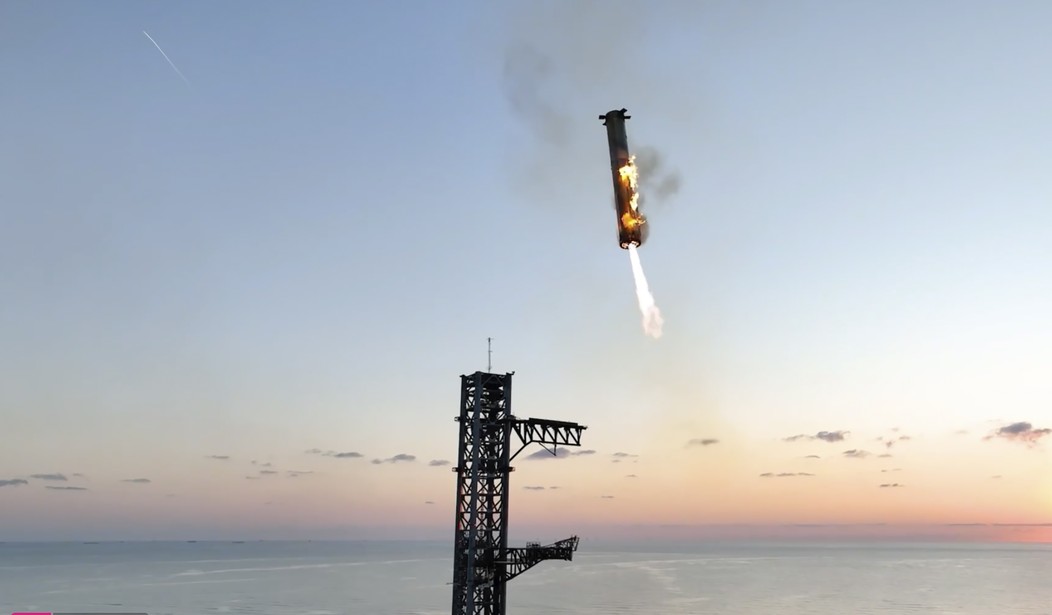
However, there was one disappointment yesterday. The original plan called for both the booster and the ship to be caught by the towers. But during the boostback phase, when the booster returns itself for a landing, something went wrong. Instead of a tower catch we got another simulated water landing followed quickly by an explosion. Here's video shot from nearby Bronsville showing the landing and explosion.
Starship Flight 15 from Brownsville. Never gets old, even when it ends in a fireball. Explosion sound at 44 second mark. 🚀 https://t.co/lfyJliGl68
— Matthew Lopez (@MatthewLopez) November 13, 2026
And here's a close-up of the last moments in slow motion. Notice that the flame coming out of the three central engines briefly turns green at the last moment.
🚨 BREAKING: BOOSTER 22 EXPLOSION IN SLOW MOTION! 💥🚀 A dramatic slow-motion view of Super Heavy Booster 22’s explosion following Starship Flight 15. An incredible look at the final moments of the booster’s flight! 🎥 Credit: astronomy4u https://t.co/3MAZf78SrI
— Stellarix (@Stellarixorine) November 14, 2026
The booster is fueled by liquid methane and liquid oxygen.
🚀 SpaceX Starship Flight Test 4: By the Numbers! Check out the full technical breakdown of Starship S29 and Booster B11. Standing 121 meters tall combined and powered by 39 Raptor 2 engines, here is the internal layout, propellant distribution (CH4/LOX), and engine configuration behind humanity's largest rocket. 🌌🔥
— Stellarix (@Stellarixorine) November 13, 2026
The plume turning green means the fuel mixture was running oxygen-rich for a moment and that oxygen reacts with copper in the engines to produce that color. Elon explained this was a result of the booster running low on fuel. He said the latest engines and minor changes to the software will fix this problem.
Yes, the green flame is caused by burning copper from depleting fuel in the regenerative cooling circuit and going oxygen-rich (closer to stoichiometric temperature) in the main combustion chamber. Slight underperformance of engines on this flight is the reason. The booster is meant to land with tiny residuals, so the solution is to improve engine performance and performance consistency (underway with Raptor V3.2), as well as adjust flight software to do MECO1 about one second earlier to ensure enough propellant for boostback and landing (tiny change). These early ships and boosters are already outdated by improved designs in production or on the test stand, so this booster loss does not change our timeline to reach high volume, fully reusable Starship flights.
— Elon Musk (@elonmusk) November 14, 2026
Yesterday, it wasn't clear why the tower catch had failed but today we know that the booster essentially made its own decision to abort the attempted tower landing. Here's SpaceX's Dan Huot explaining it.
SpaceX's Dan Huot explains why Super Heavy Booster 22 skipped the tower catch on Starship Flight 15 🚀: "We were initially go for a catch, but in the later stages of the coast, the booster aborted itself for a GNC issue that it detected and that put it into its landing offshore. It did that hover, cut the engines off, the FTS, the flight termination system triggered, and it splashed down in the water." The booster caught its own problem and diverted itself. Ship 42 is still in orbit. 🎥 via Spaceflight Now
— The Future Is Bright (@aBrightFuture69) November 14, 2026
GNC in this case stands for guidance, navigation and control. So he's saying the booster detected that it was not in the exact right position to safely attempt the tower catch and sent itself to the back up location for the water landing. It also triggered its own flight termination system, blowing up the rocket before it hit the waves.
This morning, Huot gave a little update noting that what happened was not a failure of the GNC system or the team behind it. Instead, it was doing exactly what it was designed to do. If the system detects a landing would be unsafe, it moves to the backup landing spot. So it acted properly under the circumstances.
Flight 15 Update: Starship coasting in orbit, still looking good for return to launch site today. Pad and tower systems are go for catch. https://t.co/vMkjoZdxa6
— SpaceX (@SpaceX) November 14, 2026
What we still don't know yet is why the booster was out of position. They are working on that and eventually we should get an answer. One of the best things about SpaceX is that they are open and share all of this stuff with the public pretty much as it happens.
Meanwhile, the ship itself has been coasting around the earth for 16 hours after successfully deploying 26 new Starlink satellites. In the update, Huot said ground control spent the night checking on systems and that, so far, everything looks good. In a few hours they will make the final decision about going for a return to Starbase and a tower catch of the ship. I'll update this post once that decision is made.
Starship in orbit over Africa https://t.co/vwkuBpdrLI
— SpaceX (@SpaceX) November 14, 2026
Editor's Note: Do you enjoy HotAir's conservative reporting that takes on the radical Left and woke media? Support our work so that we can continue to bring you the truth.
Join HotAir VIP and use promo code FIGHT to receive 60% off your membership.



Join the Conversation
VIP members get the ability to comment on articles.