








There's a long and somewhat sketchy story to tell here. I'm not sure I can do it justice but I'm going to try. It starts with a guy named Roger Worthington, a progressive attorney who lives in Bend, Oregon. Worthington is behind a lawsuit attempting to blame the fossil fuel industry for a deadly heat wave that impacted Multnomah County, the county where Portland is located. Yesterday, the NY Times published a flattering profile of Worthington.
Roger Worthington flitted around his sprawling brewery in the mountain town of Bend, Ore., on a recent Saturday, moving with a frenetic energy. He tried a new wings recipe from his young chef, congratulated the brewmaster on a recent prize and sipped a pilsner as he got ready to introduce a rock band.
On Wednesday, Mr. Worthington is expected to appear in a quite different setting: in Washington before the House Judiciary Committee, which is investigating him.
Aside from selling beer, Mr. Worthington is a prominent attorney pursuing a $50 billion lawsuit against oil companies over their role in climate change. And that has made him a target of congressional Republicans.
Mr. Worthington, 65, is helping represent Multnomah County, home to Portland, in a unique case against the energy industry. The county claims oil companies bear responsibility for a specific heat wave five years ago that killed 69 people...
Mr. Worthington’s environmental advocacy and deep pockets — he made a fortune years ago representing victims of asbestos exposure — have made him a lightning rod for critics, including some in Congress.
Worthington is apparently very rich. Settlements for his asbestos cases have totaled over $2.5 billion dollars. His firm got some significant percentage of that money and much of it then presumably went to him.
Today, Worthington was subpoenaed to testify in closed session before congress.
His appearance — ordered by congressional subpoena — is the latest flash point in a high-stakes legal and political battle over a swath of lawsuits brought by more than two dozen city and state governments seeking to hold oil and gas producers financially accountable for climate change. The industry has warned that the lawsuits could cost it tens of billions of dollars. House and Senate Republicans have filed legislation to wipe out the litigation.
Blocking the lawsuits has emerged as one priority for the Trump administration amid its broader effort to stifle climate initiatives. The Department of Justice has filed unsuccessful lawsuits to block climate cases brought by Hawaii and Michigan, as well as derail a lawsuit by Minnesota. And the Supreme Court this fall is poised to hold oral arguments on the industry’s bid to quash the cases.
So is this just a case of big business vs. a big lawyer? In part, but Worthington has also been criticized for his work behind the scenes to generate papers that would help support his lawsuit.
Chevron is asking a court to disregard two climate studies — as well as review whether the research was "supported or otherwise influenced” by a top lawyer in a multibillion-dollar lawsuit against fossil fuel companies.
The unconventional motion, filed Friday in Multnomah County Oregon Circuit Court, asserts that the lead counsel for Multnomah County’s 2023 lawsuit against the oil and gas industry failed to tell the court about his involvement with two papers published in April and May in the scientific journal Nature and referenced in court documents.
In one paper, "partial support" from the counsel, Roger Worthington, was listed in the acknowledgments. Early drafts of the other journal article were posted on the website of his firm, Worthington & Caron.
And that wasn't all:
The company also pointed to editorials Worthington wrote in local papers in support of the lawsuit, identifying himself as a brewery owner, not as an attorney in the case.
The omissions, Chevron argued, were not isolated incidents, “but part of a broader pattern confirming the lack of disclosure is intentional.”
Circuit Judge Benjamin Souede declined to strike the studies, but scolded Worthington for a “gobsmacking failure” to alert the court to his involvement in the study.
“What has been achieved by this knowing hiding of the ball is beyond me,” the judge said. “This is simply not an appropriate way to practice law in the courts of the state of Oregon.”
There's also Worthington's possible involvement in a chapter on climate change that was part of a reference book for judges. The chapter was removed from the book back in March after complaints from a group of Republican AGs.
The climate science section of a new judicial reference manual has been scrapped after a group of Republican attorneys general complained it was biased against the fossil fuel industry.
The Federal Judicial Center made the move a week after 27 attorneys general called for the climate chapter to be struck. Some of the same attorneys had also asked lawmakers to investigate — and potentially defund — the center, which serves as the education and research arm of the federal court system.
After the chapter was removed, Democrats led by Sen. Ron Wyden of Oregon demanded they put it back in.
Led by Sen. Ron Wyden of Oregon, the Friday letter to the Federal Judicial Center said erasing the chapter “sends a clear and chilling message that the federal judiciary is susceptible to partisan political pressure.”
Wyden just happens to be a Democrat who has received a lot of money from Roger Worthington over the years.
Senator Wyden’s advocacy for restoring the chapter has also drawn attention because of his financial and public ties to a climate litigation attorney whose courtroom tactics have faced scrutiny.
Federal Election Commission records show Wyden has received approximately $11,000 in campaign contributions from Roger Worthington, an Oregon-based attorney involved in climate liability cases.
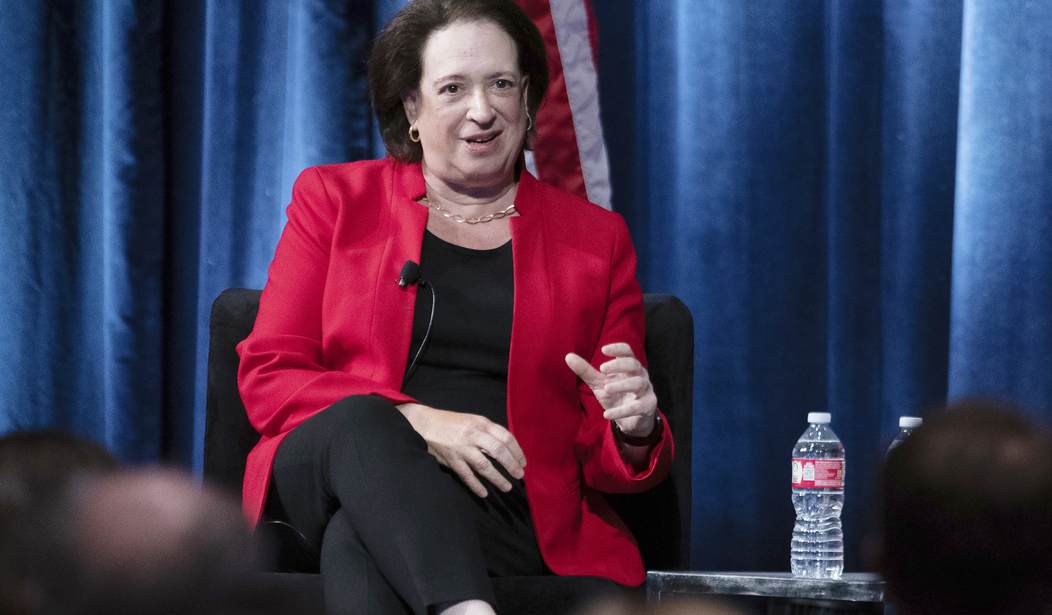
And there's one last wrinkle. The person who wrote the foreword to the reference book containing the chapter on climate change was Justice Elena Kagan. Some conservative groups are not asking her to recuse herself from the upcoming SCOTUS case over this.
A coalition of conservative groups is asking the Senate Judiciary Committee to investigate whether Supreme Court Justice Elena Kagan has violated the court’s ethics code by not stepping back from a blockbuster climate change case.
In a letter sent Monday, groups that include the Judicial Crisis Network and the Heritage Foundation said Kagan’s foreword to a recent judicial education manual points to evidence of “obvious and public prejudgment of the material legal questions” raised by the upcoming case...
The move comes weeks after Justice Samuel Alito refused calls from government watchdog groups to recuse himself from the same climate case, Suncor v. Boulder, which could wipe out dozens of lawsuits that seek to hold the fossil fuel industry liable for climate change.
A court spokesman said Alito is not required to recuse himself despite substantial holdings in the oil and gas industry because he does not have interests in the companies directly named in the case.
Kagan was testifying before congress today and was asked about the book and the climate change chapter.
During a congressional hearing Tuesday on the Supreme Court’s budget, Senate Appropriations Chair Susan Collins (R-Maine) asked Kagan about the controversy.
It stems from the foreword the Kagan wrote to a judicial reference manual that contained a chapter on climate science. That chapter has since been withdrawn.
“I hadn’t read the chapter in question prior to that time. Actually, I still haven’t read it,” Kagan said.
The justice added that the purpose of the manual was not to take positions on “contested and contestable” issues and said the decision by Judge Robin Rosenberg, director of the Federal Judicial Center, to pull the climate chapter was made out of concern that some people would view the reference material as “slanted in a particular direction.”
Not everyone was impressed with this answer.
Kagan says she didn't read disputed climate chapter she endorsed:
— Steve Milloy (@JunkScience) July 14, 2026
"Steve Milloy, who signed the letter, said Tuesday that he didn’t accept the explanation Kagan gave to Collins.
"“I’m a lawyer, she’s a lawyer, and as a lawyer, you don’t get to sign and endorse things you don’t…
So there you have it. There's are major lawsuits which could open the floodgates to billions in lawsuits against fossil fuel companies. The Trump administration is trying to shut it down and Roger Worthington and Ron Wyden and other progressives are doing their best to win the case. But the battle may be decided by the Supreme Court when it hears Suncor v. Boulder. Oral arguments in that case are expected to take place in October.
Editor's Note: Unelected federal judges are hijacking President Trump's agenda and insulting the will of the people.
Help us expose out-of-control judges dead set on halting President Trump's mandate for change. Join HotAir VIP and use promo code FIGHT to receive 60% off your membership.
Join the Conversation
VIP members get the ability to comment on articles.