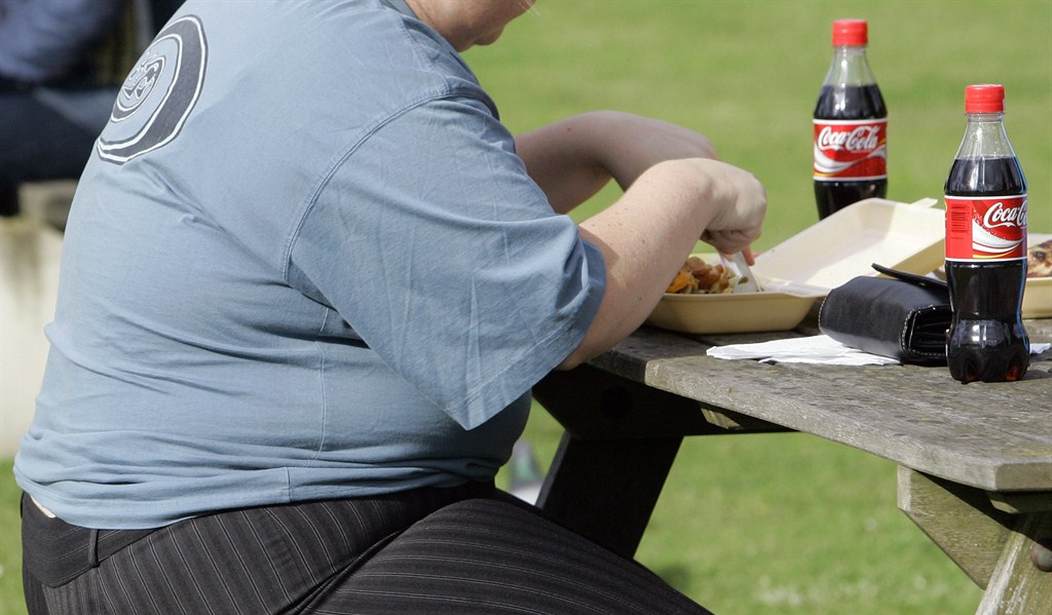
You may have noticed that in the era of GLP-1 drugs, there seem to be a lot fewer body positivity influencers telling people that it's great to be obese or that you can be healthy at any size.
Monday, the NY Times published a video featuring a former influencer who was all in on body positivity until she saw some of her fellow influencers die young from issues that were connected to severe obesity.
What's most interesting to me is the way this individual's story follows a pattern that we've all seen play out in other social issues, especially once they become politicized by the left. The patter goes like this:
1) Start by seeing yourself as a victim.
It was actually something people found disgusting. “Run for the hills. It’s Fatzilla!” Studies show fat people are often treated worse in health care. And for women, the heavier we are, the less we’re paid. I eventually learned that this discrimination has a name: Fatphobia.
2) Embrace your new identity and become a campaigner.
I started posting more intentionally. “You woke up for a reason. You didn’t wake up to feel bad about yourself.” Sometimes about plus-size fashion. “They actually look like a legit 3X. They look big.” Or travel. “I deserve to be on this flight just as anyone else.”
3) Become a minor celebrity for your activism.
I was on magazine covers and making headlines. It was the late 2010s and body positivity exploded. “Versace brand featured three plus-size models.” “Full-figured, plus-size ladies.” “American Vogue.” “Sports Illustrated.” “A huge step forward for body positivity.” ♫ “I ain’t no size 2, but I can shake it, shake it.” ♫ Seeing a community that welcomes you with open arms and tells you there’s no pressure to look this way, to be this certain weight, I mean, does that not sound like paradise?
4) Gradually realize what you're campaigning for isn't healthy.
I’m only five feet tall and at my heaviest, I was close to 400 pounds. I started to wonder if loving myself at any size had become an excuse to ignore how big I was getting. I felt like I saw myself being brainwashed, essentially.
5) Discover the movement you helped create is extreme but there is a price to pay for saying so.
“If I don’t want to step on the scale at the doctor‘s. I say, ‘Oh, I don’t want to be weighed today.’” “Intentional weight loss is fatphobic.” “This is what makes exercise fatphobic.” “It’s rooted in fatphobia. It’s not rooted in science. It doesn’t work.” I’ve even seen celebrities being attacked for losing weight...But as the body positivity community became more radical, I was scared to say the wrong thing, so I stayed silent.
6) Watch as others realize too late that this has been harmful to them.
A week later, another body positivity influencer posted this video. “I ruined my life with food, binge eating and lack of self-care. I’m hoping that it’s not too late for me this time.” Just months before, Brittany said she developed Type 2 diabetes and serious weight-related skin infections. “My pelvic region is literally the size of like a large purse. It’s extremely swollen and hard.” One week after posting that video begging the universe for another chance at life — “It’s really scary how bad things can get.” — she died.
7) Choose to become an apostate from the movement and get punished for it.
“I’m going to say something controversial, and I don’t care. I actually feel kind of guilty for being a part of this movement. Health is real. Organs failing is real. Diabetes, heart disease, all that [expletive] is real. OK? It’s not fatphobic to care about your health.
At this point all you've done is make it back to where 90% of people were in the first place. It was always obvious to most of us that 'healthy at any size' was stupid. Most people won't say that because it feels cruel and ultimately it's your life. If you want to shorten that life by decades by grossly overeating and telling yourself it's beautiful, I guess that's a choice.
But the rest of us knew it was a bad choice. It was a dumb choice.
It feels like this same series of steps could apply to a bunch of other social movements created by the left over the past decade, everything from "defund the police" (which ended badly for a lot of people when crime skyrocketed) to "trans girls should play on whatever sports team they want." Most of us recognize these efforts as dumb and destructive right away. But some people insist on learning the hard way and making a lot of other people miserable in the process, all so they can feel good about themselves.
There's not much difference between being stuck in an airplane seat next to an obese body positivity influencer or being a teenage girl stuck in a locker room with a trans girl who was on the boy's team last season. It's the same impulse to impose yourself and your "identity" on other people and dare them to complain about it. And for a long time, people didn't complain because if you do you're fatphobic or transphobic or whatever else they can come up with. It's an exercise in social power over others and people go along with it because the social power is real. You really can get canceled and lose your job for objecting to these things. It's just easier to say nothing most of the time.
I can't give the NY Times too much credit here because they should have know all of this stuff about obesity and health 10 years ago when body positivity was the new hip thing. Why didn't they run a video like this back then? Instead, they were running stuff like this back in 2017:
The model Tess Holliday was on a plane to New York in May when a modeling agent she didn’t know doled out some unsolicited advice: cut out white sugar to further her career.
Last month, an Uber driver in Los Angeles asked about her cholesterol, to which she replied, “I am healthy.” She captured this exchange on video and posted it to Instagram for her 1.4 million Instagram followers; it has more than 380,000 views and nearly 4,000 comments.
“I wanted to let my followers know what I deal with in my life, and that if this is happening to you, it’s not O.K.,” Ms. Holliday, 31, said in an interview. “This is not acceptable behavior. I just hope it opens people’s eyes a bit.”
They were urging this on. Anyway, kudos to Gabriella Lascano for finally admitting the truth and facing down the mob. I hope she can continue to lose more weight, get healthy and become a different kind of example to people.
Editor’s Note: Do you enjoy Hot Air's conservative reporting that takes on the radical left and woke media? Support our work so that we can continue to bring you the truth.
Join Hot Air VIP and use promo code FIGHT to receive 60% off your membership.







Join the conversation as a VIP Member