The California Wealth Tax proposal continues to take a beating from people who would be asked to pay it. You may remember that Rep. Ro Khanna, who represents Silicon Valley in congress, came out for this proposal being pushed by the SEIU and was immediately attacked by a bunch of venture capitalists. Rep. Khanna promised he was open to listening to his constituents about how to make the plan work and said he was going to be meeting with a couple of billionaires to discuss it.
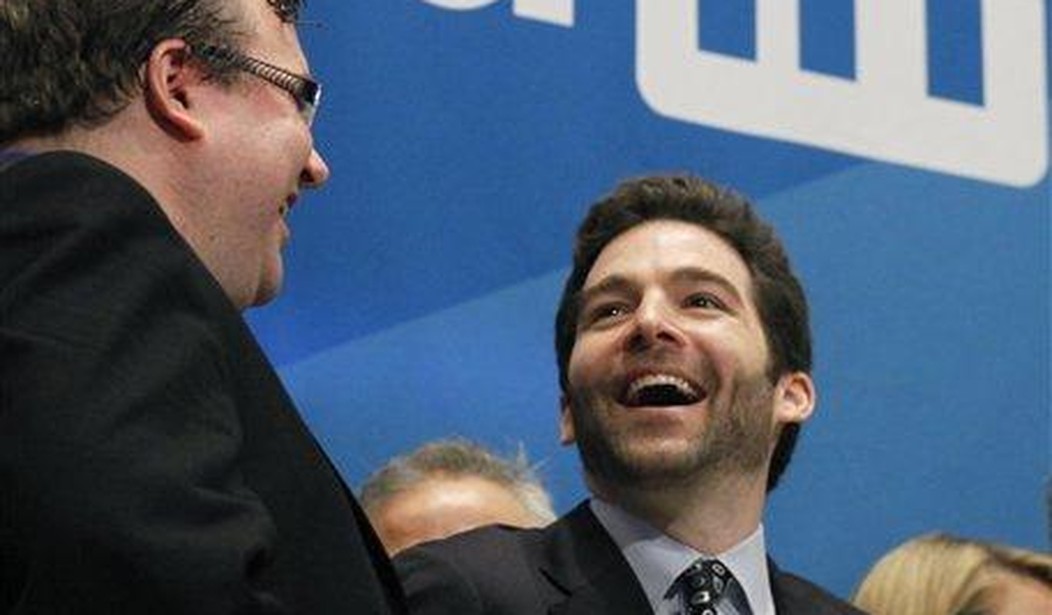
One of those billionaires was Reid Hoffman, the founder of LinkedIn. Hoffman is a big time Democrat and a critic of President Trump, so Rep. Khanna may have assumed Hoffman would be open to his socialist tax plan. But it turns out Hoffman was not impressed, saying the plan had "massive flaws."
Rep. Khanna reached out to me to discuss the proposed California wealth tax; and while I am against the proposed tax, I'm always open to dialogue with our elected leaders.
— Reid Hoffman (@reidhoffman) January 7, 2026
The proposed CA wealth tax is badly designed in so many ways that a simple social post cannot cover all of…
Rep. Khanna reached out to me to discuss the proposed California wealth tax; and while I am against the proposed tax, I'm always open to dialogue with our elected leaders.
The proposed CA wealth tax is badly designed in so many ways that a simple social post cannot cover all of the massive flaws. One well-documented example is the horrendous idea to tax illiquid stock in the proposal. Poorly designed taxes incentivize avoidance, capital flight, and distortions that ultimately raise less revenue.
Some of my takeaways from my conversation with Rep. Khanna are that he believes (1) that Silicon Valley is a massively important creation of the future, and (2) that he wants to preserve and evolve capitalism through creating a contribution loop from the massively wealthy to helping the rest of the people in the state.
It is true that we need to preserve and grow the incredible creation and generativity of Silicon Valley. It is also true that we must figure out how to help people who have not benefited from the wealth, jobs, and company creation engine of Silicon Valley thus far.
I, along with many others, have expressed to Rep. Khanna that this wealth tax proposal is not the best way to achieve those objectives.
Rep. Khanna supposedly also met with Netflix's Reed Hastings who has been a big proponent of higher taxes on the wealthy. So far, it doesn't appear that Hastings has said anything about that meeting or specifically about the wealth tax.
Rep. Khanna did pick up one endorsement for his plan, sort of. Jensen Huang, the CEO of Nvidia, said he doesn't care if the tax goes through. He'll just pay it.
“We chose to live in Silicon Valley,” Huang said. “And whatever taxes I guess they would like to apply, so be it.”
That puts him at odds with lots of other billionaires, some of who have already made plans to leave California.
Larry Ellison and Larry Page, two of Silicon Valley’s most influential figures, have taken concrete steps to move key business entities out of California as labor groups race to qualify — but have not yet secured — a proposed wealth tax on billionaires for the ballot...
Recent filings reviewed by Business Insider show that Page, the Google co-founder and one of the world’s richest people, shifted several businesses out of California ahead of an end-of-year residency deadline tied to the proposal.
His family office, Koop, was converted out of the state and incorporated in Delaware in late December, along with other entities tied to research, aviation and real estate ventures. Some now list principal addresses in Florida, Texas or Nevada...
Ellison, the founder and chief technology officer of Oracle, has also signaled a pullback. In December, he quietly sold his longtime Pacific Heights mansion in San Francisco for about $45 million in an off-market deal, according to multiple media reports.
As for Rep. Khanna, it appears efforts to primary him in the next election are moving forward.
Mr. Khanna, an ambitious 49-year-old Democrat seen as a possible 2028 presidential candidate, has publicly defended a proposed one-time wealth tax in California that has angered some of the state’s richest executives and prompted threats that they will flee.
Some of those wealthy Californians are now quietly mobilizing on WhatsApp chats and conference calls to try to put together a well-funded but long-shot bid to oust Mr. Khanna, according to half a dozen people close to the effort who spoke on the condition of anonymity to disclose private conversations.
Some tech leaders believe they may have found an anti-Khanna candidate in Ethan Agarwal, a Democrat and little-known start-up founder who has been waging a bid for governor that has failed to gain traction...
Warning that the measure “would end up destroying jobs and opportunity,” Mr. Agarwal said of Mr. Khanna, “The people of his district, Silicon Valley and California need someone working for them full time, not working to win over the Democratic Socialist vote in a future presidential primary.”
The story goes on to say that Agarwal was a second choice. Many of the people looking to primary Khanna wanted San Jose's mayor to run against him. Mayor Matt Mahan has come out against the wealth tax and said he had been contacted about the possibility of running but wasn't interested. Others are simply planning to run a campaign to keep the measure off the ballot. Gov. Newsom is against it so this shouldn't be a completely uphill battle.
One investor, Paul Graham, told the Times he felt sorry for Rep. Khanna. "I don’t think he had any idea what a land mine he was stepping on," he said.