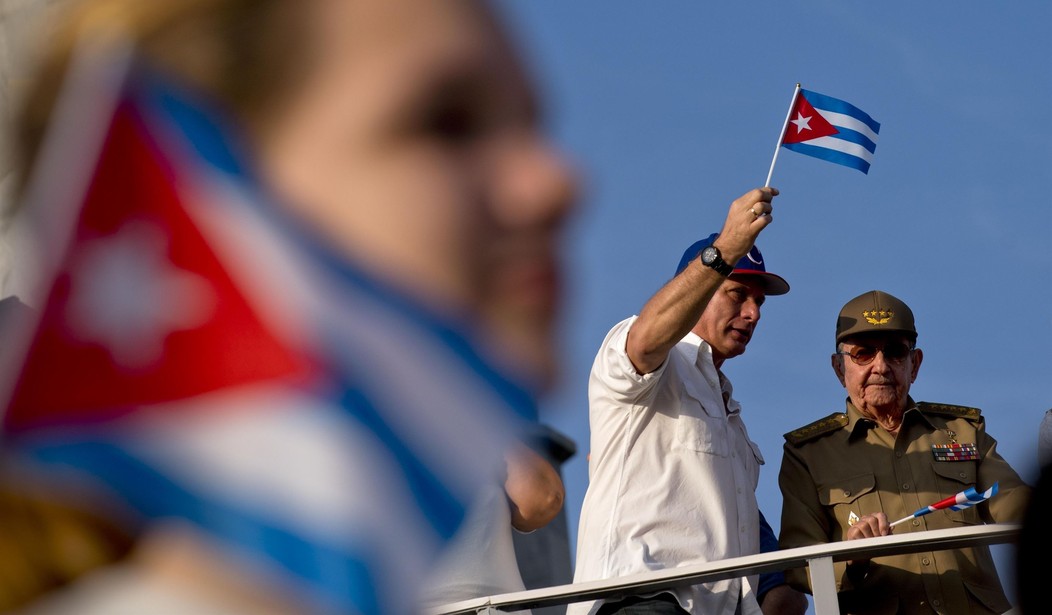
As I described here, Cuba's economy is in deep trouble. It was already facing frequent blackouts that impacted significant parts of the population and now it faces the loss of its #2 source of oil if President Trump decides to stop shipping it from Venezuela.
I saw some reports this week saying Venezuela was Cuba's #1 source of oil and that was true a few years ago, but not as of last year. The Financial Times reported yesterday that Mexico, rather than Venezuela, became Cuba's top oil supplier last year:
“Venezuelan crude imports into Cuba have fallen and Mexico has emerged as the country’s primary crude supplier,” Victoria Grabenwöger, crude research analyst at Kpler, told the Financial Times.
Mexico exported an average of 12,284 barrels of oil per day (bpd) to Cuba last year, about 44 per cent of the island’s total crude imports and a 56 per cent increase on its 2024 shipments, according to figures from the trade data and ship-tracking company.
By contrast, Venezuela, long the biggest supplier to Cuba, exported 9,528 bpd or 34 per cent. Its exports to Cuba last year, similar to their 2024 level, were 63 per cent lower than in 2023.
Today, Mexico's President Sheinbaum seemed eager to point out that Mexico has not increased oil exports to Cuba.
"We're not sending more oil than we have sent historically." she said. "Of course, with the current situation of Venezuela, Mexico has obviously become an important supplier, before it was Venezuela."
In any case, Cuba is likely to lose a significant percentage of its already insufficient supply of oil. Today the NY Times reports the Cuban economy is in the worst state it has ever been in since the communist takeover.
By all accounts, Cuba is enduring the worst economic moment in the 67-year history of its communist revolution.
While the island nation has endured periodic episodes of mass migration, food shortages and social unrest in decades past, never before have Cubans experienced such a wholesale collapse of the social safety net that the country’s leaders — starting with Fidel Castro — once prided themselves on.
“I, who was born there, I, who lives there, and I’ll tell you: It’s never been as bad as it is now, because many factors have come together,” said Omar Everleny Pérez, 64, an economist in Havana.
Another resident of Havana described the constant lack of electricity which existed prior to the military action in Venezuela as dehumanizing.
“Yes, many hours without electricity, many, many — 14, 15 hours,” Ms. Reyes, 56, said. “Oh, that terrifies you, it terrifies you, because food — which this is the hardest thing — you’re afraid it will spoil.”
“We don’t even know how we’re going to get by anymore,” she added. “We’re like human robots, humanoids.”
The situation for buying gasoline is even worse. In order to buy any you have to join queue and make an appointment that takes a minimum of three weeks. But the Times quotes one person who has been waiting three months already and is still about number 5,000 in the line.
Lack of gas has also resulted in failure to pickup trash which is believed to be partly why mosquito-borne diseases are on the rise in Cuba. And for those who do get sick, there is no medicine. Inflation is up to around 15% and the GDP is down by about 4%. Tourism, which helped support the economy, hasn't recovered since the pandemic.
As a result, more than 2.5 million Cubans have fled the country in the past five years. That's something like 10-15% of the total population. Ricardo Torres, a Cuban economist, told the Times, "The domestic economy is in a free fall."
Cuba routinely blames the difficulty on US sanctions and that's partly true. But it's also true that Cuba's refusal to allow more private enterprise is a big part of the problem.
Experts agree that while U.S. policies have hurt Cuba, poor planning and mismanagement are also to blame for the country’s economic troubles. Efforts to allow private businesses to operate have faltered because of onerous regulations.
So the situation has been dire for a while and now it seems likely to get much worse. This video was posted about three months ago and it shows the condition of the country in Havana but also in the more rural areas. There are a bunch of videos like this on YouTube some of them even more blunt than this one about the conditions.
Editor’s Note: Do you enjoy Hot Air's conservative reporting that takes on the radical left and woke media? Support our work so that we can continue to bring you the truth.
Join Hot Air VIP and use promo code FIGHT to receive 60% off your membership.







Join the conversation as a VIP Member