









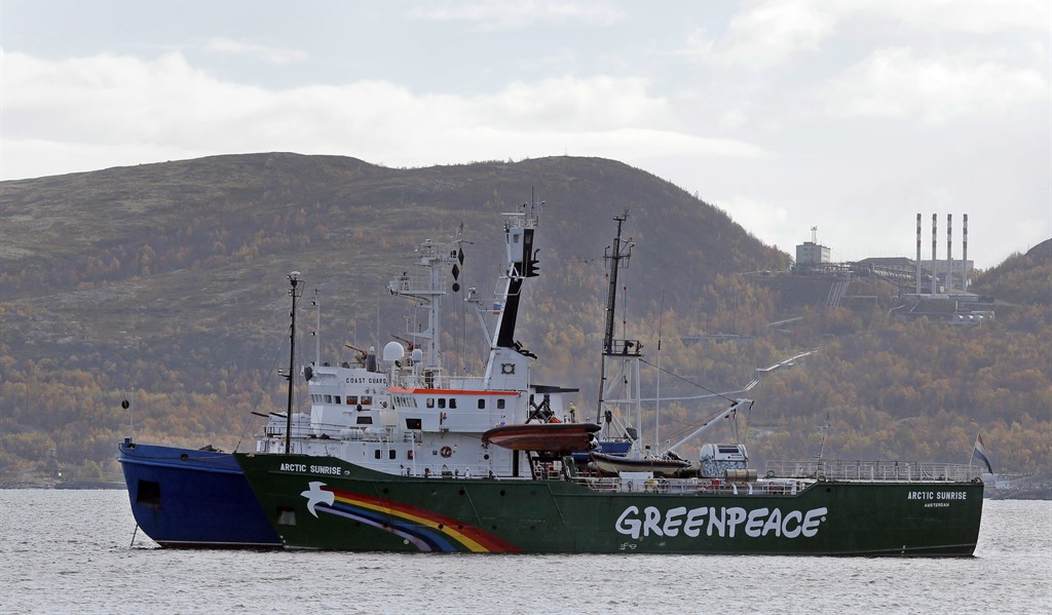

Energy Transfer is the company that built the Dakota Access Pipeline despite months of protest, harassment and arson aimed at the company by environmentalists. The pipeline has resulted in years of lawsuits including one filed by the pipeline company against Greenpeace for its involvement in the protests.
In March of this year, Energy Transfer won that lawsuit and Greenpeace was ordered to pay $667 million in damages to the company. That was more than enough to wipe out Greenpeace USA. A judge later reduced the penalty to about half that amount, $345 million.
But that was still too much for Greenpeace USA to survive. So Greenpeace came up with a novel approach. They sued in a Dutch court, claiming the case against them in North Dakota was designed to silence them.
All three Greenpeace defendants deny the allegations and claim the case is a tactic to waste their time and money as punishment for opposing the pipeline.
This led Greenpeace International to counter-sue Energy Transfer in a Dutch court in February under a European Union directive that provides recourse to those targeted by frivolous lawsuits for exercising their free speech.
The overseas lawsuit also argues Energy Transfer harmed Greenpeace International by bringing a similar federal lawsuit against it in 2017, which was dismissed, and for defaming the environmental group.
Energy Transfer has asked the judge overseeing the North Dakota lawsuit to stop the lawsuit in the Netherlands, but so far the judge has refused to issue such an order. And it's not clear how much it would matter if he did. Just as Dutch courts have no control over US courts, the same is true in reverse.
So what is the plan here? It appears that Greenpeace is looking from some hometown justice under which it could collect money from Energy Transfer, maybe enough to help offset their judgment in North Dakota.
Greenpeace International wants the Dutch court to order Energy Transfer to award it monetary damages.
How would that work exactly? Well, reports outlining how the Dutch law works seem to be pretty rare in English, but it seems that if the lawsuit succeeds, Energy Transfer's European outlets could be docked an unknown amount of funds. Again, it's not clear how much that would be but it sounds like it could potentially be the full amount of the judgement against Greenpeace.
Ashkhen Kazaryan, a senior legal fellow at The Future of Free Speech, a think tank at Vanderbilt University in Nashville, said that the European Union directive takes a different approach than U.S. states with anti-SLAPP laws. In those states, the laws allow judges to dismiss cases early in the legal process if they are deemed to be abusive and involve an imbalance of power between the parties.
But the E.U.’s directive allows parties to sue in European courts for damages caused by litigation. If the Dutch court ruled in Greenpeace’s favor, financial penalties could hypothetically be extracted from Energy Transfer assets in Europe, Ms. Kazaryan said.
Even if they don't get enough to pay the full judgement, a favorable ruling from the Dutch court would help insulate Greenpeace International from paying any money owed by Greenpeace USA.
The correct outcome here should be that Greenpeace USA is insolvent and has to shut down its operations permanently. But the legal maneuver overseas makes it possible that another court could offset whatever Greenpeace owes. In any case, it remains to be seen how either side will be able to collect.
Meanwhile, Energy Transfer won another victory last week which could help them in ongoing court fights.
On Friday, the Army Corps of Engineers, which manages land that the pipeline, the Dakota Access Pipeline, crosses at Lake Oahe, released a long-awaited environmental impact statement. The nearly 500-page document concluded that the pipeline could continue operating while recommending additional safety measures to protect water in the area.
The report’s finding wasn’t unexpected, and the government’s decision must still be finalized. But it’s important because it could weaken long-running litigation against the Dakota Access Pipeline filed by the Standing Rock Sioux Tribe, which claimed that the pipeline was operating illegally because it lacked a crucial easement and a final environmental impact report. The latest lawsuit was dismissed in March, and the tribe has appealed the decision.
Gov. Kelly Armstrong of North Dakota heralded the Army Corps report, saying the pipeline “has become an essential part of our nation’s energy infrastructure.”
Judge Gion has another hearing scheduled for Jan. 23. At that point he could finalize the verdict against Greenpeace, which would allow them to appeal the decision in a US court.