








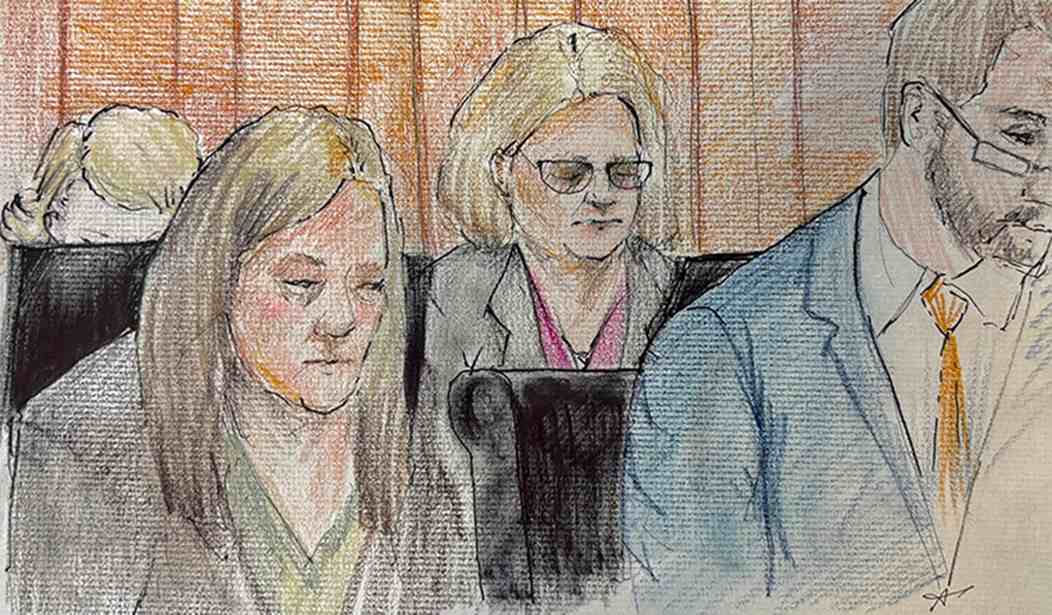
Yesterday was the start of the trial of Judge Hannah Dugan for interfering with an attempt by the feds to arrest a man who was appearing in her courtroom. Both sides made opening arguments and then most of the day was taken up by testimony from and FBI Special Agent named Erin Lucker. Lucker testified about the layout of the courthouse and walked through what happened based on video from the hallway (which had no audio) and audio from Judge Dugan's courtroom (which had no video).
Later in the afternoon yesterday, ICE supervisor Anthony Nimtz testified about why ICE arranged to take Eduardo Flores-Ruiz into custody at the courthouse.
Nimtz testified that enforcement efforts often take place at courthouses because they are generally safe, secured facilities where people are checked for weapons and contraband. He said the agency's policy was to take enforcement actions in public areas, and that they did not have a judicial warrant to take action in non-public areas.
On cross-examination, he was asked if there were any limits to whom ICE could arrest at a courthouse.
Nimtz testified that enforcement operations have some restrictions, and, for example, agents are not authorized to make a courthouse arrest of someone who is testifying as a victim. He said he was aware that the victims in the Flores-Ruiz case, who were at the courthouse, were Latino.
Flores-Ruiz was not a victim in the case before Judge Dugan, he was the aggressor. Finally, the day ended with testimony from FBI Special Agent Jeffrey Baker. Baker was part of the arrest team that day and testified he had made other arrests in a courthouse before. He gave some testimony about Judge Dugan's demeanor when she confronted members of the team.
Baker testified that he moved toward the judge after he saw, from down the hall, the arrest team moving to new locations after they spoke to Dugan. He said Dugan asked him if he was there for the hearing, and then asked if he was with "them" – he answered that he was. He described her demeanor as "angry at that point."
Day two of the trial opened with cross examination of Special Agent Baker.
Baker said he and other agents at the courthouse were confused when Dugan directed them from the main public hallway to the chief judge's office. He said it was the first time he had experienced something like that when attempting a courthouse arrest.
Next up was FBI special agent Phillip Jackling, one of the members of the 6-person arrest team who were confronted by Judge Dugan.
When asked by Assistant U.S. Attorney Kelly Brown Watzka to describe Dugan's tone, Jackling said Dugan sounded "very direct" and "she seemed upset."
After his team leader left and headed to the chief judge's area, Jackling said Dugan turned her attention to him and told him to follow his fellow agent. He interpreted that as an order, not a request, Jackling said.
The defense brought up a group chat on Signal called "frozen water" which was used by members of the arrest team. Jackling testified on redirect that a bailiff had told him Flores-Ruiz's case was being pushed through.
During the government's re-direct, Jackling testified that a bailiff informed him that he had not alerted Dugan about why agents were there – and that Flores-Ruiz's case was being pushed through.
After a break, Customs and Border Protection officer Joseph Zuraw testified that Judge Dugan has also confronted him and told him to follow the other agents to the Chief Judge's office.
Video shows Dugan then walked over to Zuraw and pointed her thumb over her shoulder in the direction of Ashley's office.
Zuraw said he was shaking his head 'no' as Dugan approached. He testified Dugan told him to "get out" or "leave." Zuraw testified he didn't know why he was being sent to the chief judge’s office.
He was still in the office when Flores-Ruiz exited the courtroom into the hallway.
Finally, ICE officer Joseph Vasconcellos testified that he had developed the arrest plan and once again repeated that having six people on the team and making the arrest in the courthouse was designed for the safety of everyone involved.
Vasconcellos testified he has been shot at, stabbed, has ruptured his Achilles, and has nerve damage in his neck as a result of people resisting arrest. He echoed what other agents have said – courthouse arrests are considered safe because every person entering goes through security and screening for weapons.
Vasconcellos was on the phone with the chief judge, who wasn't in the office that day, when he got a text telling him that Flores-Ruiz had exited the courtroom. He sent back a message that read "Follow."
The deportation officer said the chief judge never told them they could not conduct an arrest operation in the public hallway, and Vasconcellos told the chief judge they "always respected" a judge's courtroom.
So the diversion to the chief judge's office split up the arrest team but the chief judge never said they couldn't arrest someone at the courthouse.
That's all for now. I may update this a bit later if anything dramatic happens.
Editor’s Note: Do you enjoy Hot Air's conservative reporting that takes on the radical left and woke media? Support our work so that we can continue to bring you the truth.
Join Hot Air VIP and use the promo code FIGHT to get 60% off your VIP membership!
Join the Conversation
VIP members get the ability to comment on articles.