An amazing 8,000-word essay entitled The Lost Generation surfaced Monday in Compact Magazine by Jacob Savage, and is one of the most illuminating pieces I've read in years.
I'm 59-years-old. I'm at the very front edge of the Gen X'ers, but I identify as a Baby Boomer. I missed the cut-off by about two years.
I fully recognize that every generation, by the time they get to my advanced years, begins telling stories about how the generation following them just aren't the same as they were when they were growing up. With Millennials, I've discovered that this generational axiom has the added benefit of being true. Millennials have become the punchline of a lot of jokes. The rap on these current 28-44-year-olds are that they're lazier than the generation before them, not too motivated to make their own way in the world, very self-centered, and generally gloomy about what the future holds for them. My son is 35-years-old, right in the heart of this cohort of Americans, and just provided me with a year's worth of stand-up material with his pre-Thanksgiving trip to see me alone.
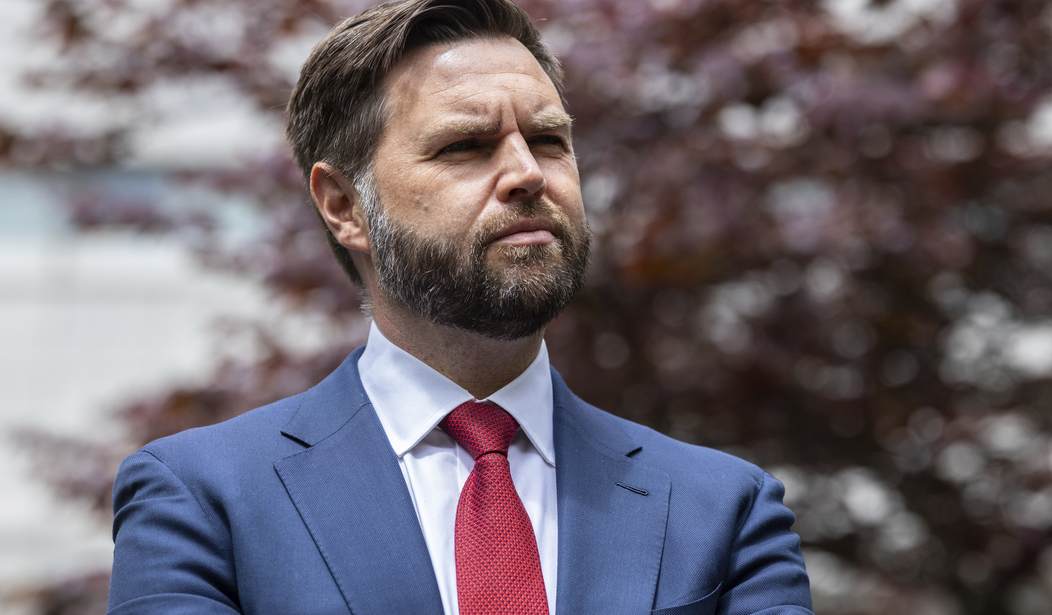
After reading this Savage article, complete with tons of stats and anecdotes accumulated from tons of first-person interviews, I now understand why Millennials in general are the way they are. And there is a ton of opportunity for J.D. Vance in 2028, assuming he's the Republican nominee after Secretary of State Marco Rubio all but cleared the field.
The article is about the incredible damage DEI policies have had on the employment prospects, and the resulting psychological impact, on Millennial white males trying to make their mark writing in the world of media. It's obviously a niche industry, but it's a microcosm of the ongoing devastation of DEI policies that took root during the Obama presidency and crescendoed after the death of George Floyd in 2020.
Savage, a fledgling writer trying to break through writing television pilots and pitching them to studios to turn into series, tells this story.
But of course, by 2016, we were already too late.
The showrunner emailed us back apologetically. “I had initially thought I might be able to bring you guys on,” he wrote, “but in the end it wasn’t possible.”
We met with the executive anyway—a Gen-X white guy—who told us how much he loved our pilot. But the writers room was small, he explained apologetically, and the higher-level writers were all white men. They couldn’t have an all-white-male room. Maybe, if the show got another season, they’d be able to bring us on.
They never did.
The doors seemed to close everywhere and all at once. In 2011, the year I moved to Los Angeles, white men were 48 percent of lower-level TV writers; by 2024, they accounted for just 11.9 percent. The Atlantic’s editorial staff went from 53 percent male and 89 percent white in 2013 to 36 percent male and 66 percent white in 2024. White men fell from 39 percent of tenure-track positions in the humanities at Harvard in 2014 to 18 percent in 2023.
In retrospect, 2014 was the hinge, the year DEI became institutionalized across American life.
Before you dismiss this as a lefty writer complaining that DEI policies he probably supported backfiring on him, this is a much, much bigger story than this one job market. Countless white males coming out of college or high school in the mid-10's, regardless of their political ideology, if they held any ideology at all, ran into a brick wall where career opportunities, and ultimately their chance at the American dream, were taken away from them for the sake of diversity hires.
In 1974's Blazing Saddles, there was a scene where the railroad workers were brought in to cut a deal with the all-white residents of Rock Ridge to build a fake city in order to thwart the evil Hedley Lamarr, played by Harvey Korman. I'll clean up the language to make it FCC-compliant, but the offer by the townfolk was, "All right, we'll give land to the Blacks and the Asians, but we don't want the Irish." That wasn't an acceptable deal, and finally, everybody was included in the opportunity of a stake of land. That's what's happening here, except the Democrats who implemented DEI policies across education, law enforcement, law, and much of corporate America, still don't want the Irish. Whites need not apply.
This may be how Boomer and Gen-X white men experienced DEI. But for white male millennials, DEI wasn’t a gentle rebalancing—it was a profound shift in how power and prestige were distributed. Yet practically none of the thousands of articles and think-pieces about diversity have considered the issue by cohort.
This isn’t a story about all white men. It’s a story about white male millennials in professional America, about those who stayed, and who (mostly) stayed quiet. The same identity, a decade apart, meant entirely different professional fates. If you were forty in 2014—born in 1974, beginning your career in the late-90s—you were already established. If you were thirty in 2014, you hit the wall.
To those of us on the right, DEI was an issue that became a political bludgeon for Donald Trump, and as president, signed two executive orders to end wasteful DEI programs and preferences in government agencies, and another one to end illegal discrimination based on race and restroring merit-based opportunities in states and entities like colleges and universities that receive federal funding. It was a principled fight that Donald Trump campaigned on, and it was a promise on which he delivered.
DEI certainly hit its peak in 2020 after George Floyd, but is sadly still far too entrenched in way too many sectors of the economy. What I failed to understand is not just what discrimination it did to conservatives trying to make their way in the world, but what it has done to disillusion 30-something males who might otherwise be liberals, but not so much anymore. From the tail end of Savage's piece, which I would recommend you read every word and share it with others:
Most of the men I interviewed started out as liberals. Some still are. But to feel the weight of society’s disfavor can be disorienting. We millennials were true believers in race and gender-blind meritocracy, which for all its faults—its naïveté about human nature, its optimism in the American Dream—was far superior to what replaced it. And to see that vision so spectacularly betrayed has engendered a skepticism toward the entire liberal project that won't soon disappear.
“What troubles me is that a lot of thriving white millennial men have had to follow the Josh Hawley path, where you have to leave liberal America,” an old friend, the father of two biracial children, told me. “I don't want to do that. Liberal America is my home. But if everyone says, this is not the place for you, what are you supposed to do?”
Most of the men he interviewed started out as liberals. Some still are.
My gracious, but what an opportunity that provides to expand the base. Donald Trump made huge inroads with labor union workers, with Blacks, Hispanics, surburban women, lots of voting blocs that typically vote Democratic, but got very turned off by Joe Biden's regency and Kamala Harris' ridiculous 107-day word salad tour. Inflation was killing them, and there was no one else to blame but Biden-Harris policies. And Trump, X and Truth Social warts and all, at least demonstrated he could generate a pretty prosperous economy the first time around, so he was the better choice in 2024.
In all likelihood, Vice-President Vance is going to be the nominee. Secretary Rubio told Vanity Fair he's not running in 2028, and outside of a possible run by Florida Governor Ron DeSantis, the field is pretty open for Vance to get the nomination without too much trouble.
On the Democratic side of the aisle, a knife fight is developing that should be hugely entertaining to watch. Former Transportation Secretary, Pothole Pete Buttigieg, wants a shot. Former Hillary Clinton and Obama senior staffer Rahm Emmanuel is going to get in. Gavin Newsom is running, both away from California and for the White House. There will be others. And as I wrote about earlier in the week, Axios is reporting that Kamala Harris is definitely gearing up for another run.
Polling shows that among the Democratic potential contenders, Harris has a 11-point lead over her closest rival, Gavin Newsom. If the general election in November of 2028 turns into a Vance V. Harris contest, it will literally be a Millennial white male with the ability to articulate and communicate policies, and a vision for the future in a way the Republican Party hasn't seen since...ever. Ronald Reagan could communicate, he certainly had a vision for the future, but he wasn't in the age cohort of a field of voters Millennials make up that are currently available for harvest.
Who would Vance be running against? Kamala Harris, who is literally and figuratively the embodiment of a DEI hire. She was chosen by Joe Biden to fulfill a promise of picking a Black female as his number two. Harris was not a merit-based pick. She was picked because she was thought by the Biden team to be the Black female that would do them the least harm. And she failed to cross even that low bar.
Job number one for whomever is running nationally for the Republicans, whether it's a Senate or House candidate in the midterms, or anyone running for the White House in '28, is to talk about the economy and affordability, and counter the narrative media and Democrats are spinning that we're in the worst economic environment ever becuase of Trump policies. Trump spoke to the nation Wednesday night and reeled off facts about job growth, lower energy costs, and how the housing market is improving now that illegal immigration is no longer creating an artificially high demand for units, driving up prices. All that is very good. But there's more that the next Republican for president, presumably Vance, needs to add to the agenda. The disillusionment on the left after what they believed in failed them makes these Millennial white males willing to listen, if Vance can resonate how the best way to achieve the equality they really want is equal access to opportunity, not government and corporations picking winners and losers based on skin color or gender in order to achieve equity. Replace the lost opportunies with words and actions to expand opportunities will reap electoral benefits to such a degree that Democrats won't know what hit them on Election Night.
The Late Charlie Kirk used to be very, very good at that messaging to college-aged kids all over the country. He may have been the best in the conservative movement ever to be able to reason with young people, but a close second is Vance. When he spoke at a TPUSA event at Ole Miss a couple days before Halloween, it was a masterclass performance. The big question is will Vance, or someone around him, show him this Savage article, and will Vance grasp the political upside available to him and the skill set for communication he possesses?
The good news is yes, he does.
A lot of people think "DEI" is lame diversity seminars or racial slogans at NFL games. In reality, it was a deliberate program of discrimination primarily against white men. This is an incredible piece that describes the evil of DEI and its consequences:https://t.co/fMiIfvz0qz
— JD Vance (@JDVance) December 17, 2025
There are lots of doomsayers on the right who think Republicans are headed for disaster in the midterms unless they get back to talking about the core issues of economics and affordability. That certainly needs to be the primary message. But there are millions of potential voters out there that the Democratic Party kicked to the curb who are persuadable, if somone just gives them attention, an ear, understanding, and most of all, hope for the future.










Join the conversation as a VIP Member