





If at first you don't succeed ... try another statute.
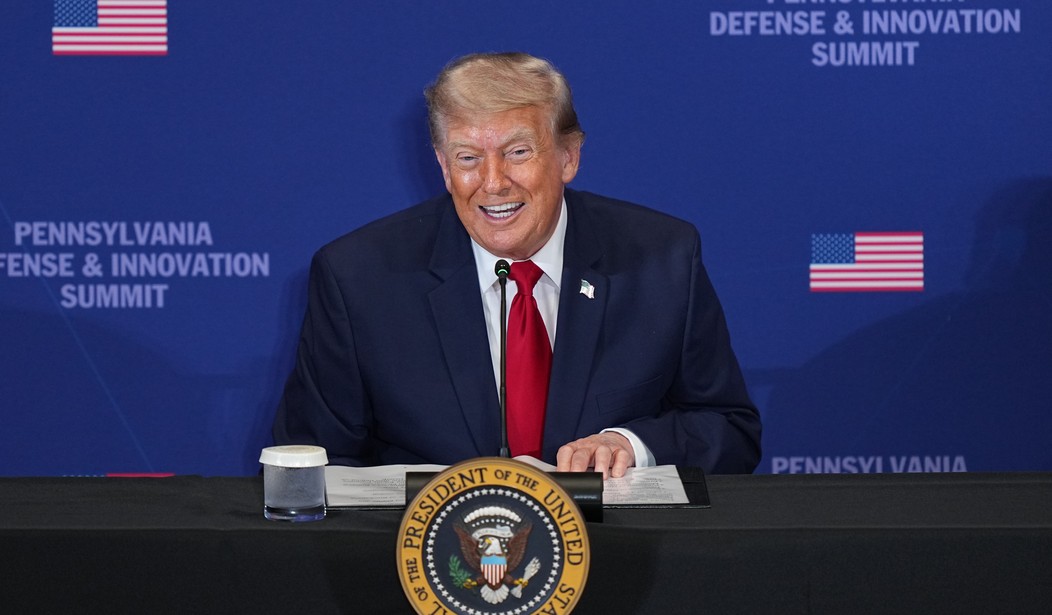
Donald Trump had to return to the tariff drawing board after the Supreme Court shut down his preferred avenue for economic trade penalties on trading partners and competitors alike. His first and temporary moves, applied in the wake of the ruling in February, would have expired this morning. At the last minute, the White House rolled out a new tariff schedule intended to survive a court challenge in the longer term:
The U.S. will impose tariffs ranging from 10% to 12.5% on its major trading partners as part of a new set of duties that the Trump administration says are designed to combat forced labor.
The new duties, announced by U.S. Trade Representative Jamieson Greer’s office on Thursday, are meant to replace President Trump’s temporary 10% global tariff, which expires early Friday. Trump put that temporary tariff in place in February, after the Supreme Court struck down most of his global tariffs.
The new levies target 60 economies, or more than 80 countries, that Greer’s office says represent about 99% of U.S. trade. Countries that have laws on the books to combat forced labor were given a 10% tariff, while those without such statutes were given a 12.5% tariff.
The new levies will go into place at 12:01 a.m. Eastern time on Friday, the same time the temporary tariffs are set to expire. Goods covered by separate national security tariffs like steel, aluminum, automobiles and parts, won’t be subject to the new tariffs, and certain food and agricultural imports, fertilizers and energy products will also be exempt.
CBS News questions the timing. They note that the statute Trump cites for these new tariffs – Section 301 of the Trade Act of 1974 – does allow Trump more latitude to apply tariffs unilaterally based on unfair labor practices. However, the statute also requires a completed investigation to establish those violations of trade agreements, and the readiness of this option at the moment time-limited tariffs expire, and the scope of the tariffs raises questions about the nature of the USTR findings:
It does certainly seem like a large coincidence that the USTR found unfair labor practices in 80 countries simultaneously, just a few months after the Supreme Court struck down Trump's attempts to create a broad tariff policy without congressional approval. Nevertheless, the White House laid out its argument last night that the Section 301 tariffs are both legal and well supported by the USTR investigation:
On March 12, 2026, the United States Trade Representative (Trade Representative) initiated investigations under section 301 of the Trade Act of 1974, as amended (19 U.S.C. 2411) (section 301), into the acts, policies, and practices of 60 economies to examine whether any of the economies subject to these investigations fail to prohibit or to effectively enforce a prohibition on the importation of goods produced wholly or in part with forced labor and whether the failure is unreasonable or discriminatory and burdens or restricts U.S. commerce. 91 Fed. Reg. 12884 (Initiation of Section 301 Investigations). ...
As a result of these determinations, the Trade Representative proposed to determine in each investigation that action is appropriate under section 301 to obtain the elimination of the actionable acts, policies, and practices, including imposing ad valorem tariffs on all goods of each investigated economy, with exemptions for certain goods. To obtain the elimination of the actionable acts, policies, and practices in each investigation, the Trade Representative proposed section 301 tariffs. The Trade Representative proposed tariffs of 10 percent ad valorem on goods of economies that: impose a forced labor import prohibition but do not yet effectively enforce it (Canada, Ecuador, the European Union, Indonesia, Mexico, and Pakistan); have undertaken commitments in their respective Agreements on Reciprocal Trade regarding forced labor import prohibitions (Argentina, Bangladesh, Cambodia, Ecuador, El Salvador, Guatemala, Indonesia, Malaysia, and Taiwan); or have imposed a partial regime with the effect of preventing the importation of certain forced labor goods (the United Kingdom). For all other economies whose failure to impose forced labor import prohibitions the Trade Representative has found actionable under section 301, the Trade Representative proposed section 301 tariffs of 12.5 percent ad valorem. In addition, the Trade Representative proposed to establish a textile mechanism that would allow a certain volume of apparel and textile imports to enter the United States at a zero section 301 tariff rate.
This could best be described by the title of a recent film: Everything Everywhere All At Once.
We can expect the courts to get involved again, and it might be tough for Trump to win this round in the end. The White House used Section 122 immediately after the Supreme Court decision in February, as I predicted, because it didn't require much support due to its time-limited nature. Section 122 came with a 150-day limit before Trump had to ask Congress for an extension, which clearly would not have been forthcoming. Instead, Trump has shifted to Section 301, which is not time-limited but must be substantiated in each case. It took Trump almost three years in the first term to build a 301 case against China. There will be at least a few federal judges who will look very skeptically at this USTR report and its coincidental value to Trump's desire for universal tariff policies, and the people who pay these tariffs will again have standing to challenge them and allow those judges to exercise their skepticism. Trump has some other statutory arrows in his quiver, but those come with even more limitations.
Trump may be calculating that it will take at least two years for any challenges on 301 to reach the Supreme Court, though, and by that time, he will have made his point on tariffs and trade. Trading partners will have to cut deals with him with those in place, and he can manage his presidency with the practical effect of these tariffs remaining in place until the end of his final term. Congress may have to revisit these statutes to limit presidential authority in the future, but right now, Congress can't even pass a budget, so Trump has little to worry about there, too.
Editor's Note: The Democrat Party has never been less popular as voters reject its globalist agenda.
Help us continue exposing Democrats' plans to lead America down a dangerous path. Join HotAir VIP and use promo code FIGHT to receive 60% off your membership.

Join the Conversation
VIP members get the ability to comment on articles.