
And that funny thing is ... incentives. How do they work again?
For many years, the argument against tougher enforcement of immigration law relied on the scope of the problem. With potentially tens of millions of illegal aliens in the US, removing all of them would be nearly impossible through enforcement alone. Politicians in both parties offered varying forms of amnesty instead to offer normalization to longer-term illegal residents, sometimes in combination with harder border security and visa enforcement. Others argued that tougher enforcement would provide enough incentives for "self-deportation," among them Mitt Romney, who got roundly roasted for that argument in the 2012 election cycle.
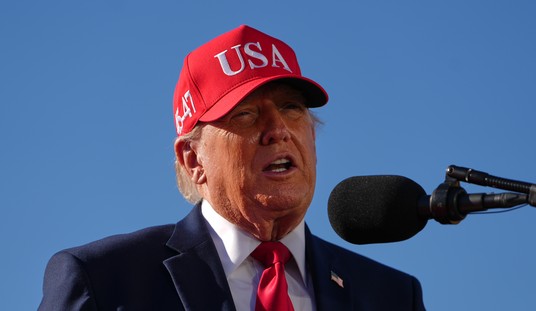
Well, get ready for yet another demonstration of how incentives work in real life. Donald Trump's aggressive enforcement of immigration law, both in arrests of illegal aliens and in refusing bond hearings, has led many more people to throw in the towel and exit the US. CBS News noted the effect yesterday:
As pathways to freedom have narrowed in immigration courts across the United States, a record number of detainees are giving up their cases and voluntarily leaving the country.
Last year, 28% of completed immigration removal cases among those in detention ended in voluntary departure, a higher share than in any year prior, a CBS News analysis of decades of court records found.
That figure only appears to be climbing as the Trump administration's immigration crackdown widens and detention populations swell. The percentage of voluntary departures among those detained grew nearly every month of 2025, reaching 38% in December. The analysis does not include those who were not given a hearing before an immigration judge, such as immigrants in expedited removal proceedings.
CBS then goes on at length with a couple of personal stories intended to pluck heartstrings, but these cases are clear. They involve people in the US illegally, who never took the necessary steps to correct that status, and whose presence eventually got noticed by the Department of Homeland Security. One told CBS that immigration judges "weren't looking at the roots I created in the United States," but that's because those roots are legally irrelevant. The Trump administration has offered people in that position the option to self-deport with an app built for that purpose, along with travel funds and an opportunity to return to the US legally. By this time, the refusal to accept that offer negates these arguments morally, and legally, they mean nothing at all.
Trump ran for this term with immigration enforcement the biggest issue in the election. The choice between Trump and Kamala Harris had differences on many issues, but immigration provided the starkest contrast. Trump won the popular vote and the Electoral College mainly on a get-tough approach to illegal immigration and enforcement, and to this day, deportations of illegal aliens still gets majority support, and deportations of illegal aliens with criminal records is an 80/20 issue.
Getting tough also means maintaining strict standards on asylum requests. The data shows that the Biden administration had been approving 55-75% of all asylum requests, according to the chart CBS News provides. That dropped dramatically after Trump took office, falling to 20% in July before rebounding to the 30% range since. As a result, voluntary removals have hit their highest levels in 40 years, and that number is likely to grow. That impact is not limited to enforcement cases, either. The Brookings Institute determined that net migration for the US in 2025 went negative for the first time in decades as new entries dropped (legal and otherwise) and many chose to exit. The Census Bureau confirmed that trend two weeks later, determining that as many as 1.5 million foreign-born residents in the US departed in 2025.
Wonderful thing, incentives.
But here's the interesting part. This is not the first demonstration of how tough enforcement can lead to self-deportation. In 2019, Politico reported that voluntary departures had soared after the first Trump administration applied much tougher enforcement of immigration law and more scrutiny on asylum applications. Politico called it "the surprising new effect of Trump's immigration crackdown" at that time:
The number of immigrants who have applied for voluntary departure has soared since the election of Donald Trump, according to new Justice Department data obtained by The Marshall Project. In fiscal year 2018, the number of applications doubled from the previous fiscal year—rising much faster than the 17 percent increase in overall immigration cases, according to data from the Transactional Records Access Clearinghouse at Syracuse University. The numbers show yet another way the Trump administration’s crackdown on immigration is having an effect: More people are considering leaving the U.S., rather than being stuck in detention or taking on a lengthy legal battle with little hope of success.
Last year, voluntary departure applications reached a seven-year high of 29,818. In the Atlanta court, which hears cases of Irwin detainees like Zamarrón, the applications multiplied nearly seven times from 2016 to 2018.
The increase in applications for voluntary departure could be seen as a win for the Trump administration, which has made it a goal to get undocumented immigrants out of the country and reduce the backlog of immigration cases. Indeed, the Justice Department has published the growing number of voluntary departures alongside deportations as a sign of a “return to the rule of law” and that Trump’s approach is working. It’s also a sign of how broad immigration enforcement has become, sweeping up the criminals Trump talks about alongside parents like Zamarrón who have little to no criminal history—voluntary departure is only open to immigrants without a serious record. When Mitt Romney once shared his plan to have people “self-deport,” he meant it as an alternative to ramping up Immigration and Customs Enforcement’s power. But the recent spike in voluntary departure has come with an increase in both arrests and detention.
That was the flaw in Romney's argument – not the idea of self-deportation itself, but the idea that it would happen without resetting the incentives around illegal immigration. Trump understands incentive structures and how people respond to them. As a result of tough enforcement in a relatively small number of cases, he has again reset the incentives so that illegal aliens leave on their own rather than wait for the US to kick them out at great cost and expense. Except in "sanctuary" jurisdictions like Minnesota and Los Angeles, that process has run smoothly and made clear the determination to put a serious end to sustained illegal-alien residency, no matter how many "roots" have been sunk.
Trump is applying rational and legal disincentives to reverse decades of neglect in immigration enforcement, and those policies are delivering the results voters chose in November 2024. That is how elections are supposed to work.
Editor’s Note: Democrat politicians and their radical supporters will do everything they can to interfere with and threaten ICE agents enforcing our immigration laws.
Help us hold these leftists accountable and expose their obstruction. Join Hot Air VIP and use promo code FIGHT to get 60% off your membership!










Join the conversation as a VIP Member