






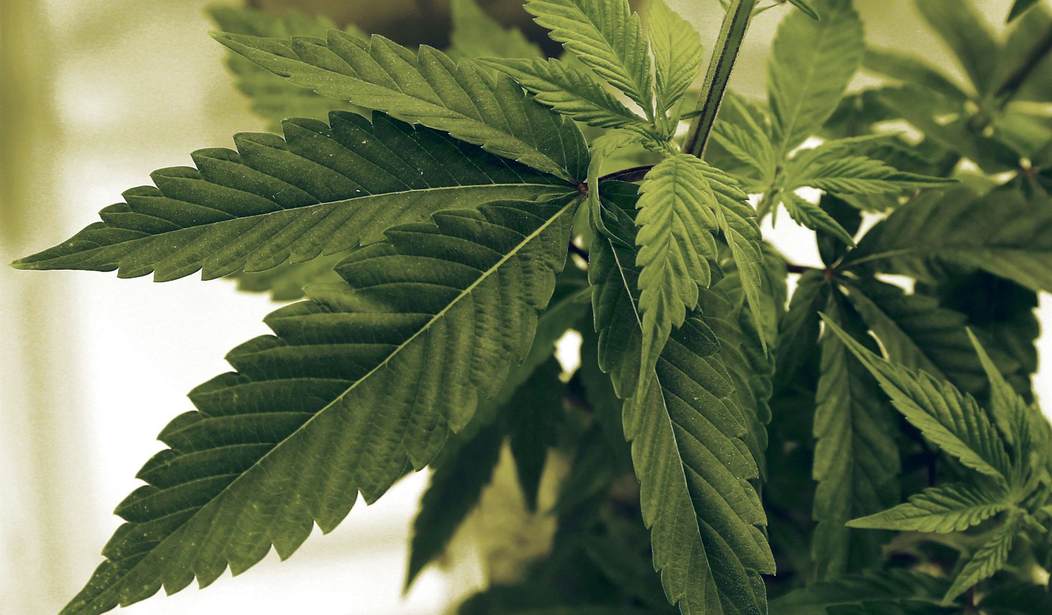
Boy, a lot of people got marijuana legalization wrong. And a lot of people tried to warn them about it.
When the issue began percolating to the mainstream of politics, progressives and libertarians argued that criminalizing marijuana was a replay of the Prohibition era. They painted marijuana as just another intoxicant, similar to alcohol, and of no particular consequence to public health. Libertarians argued – with justification – that the enforcement of marijuana prohibition cut into civil rights too often for its value, along with the usual arguments about free choice. That argument certainly appealed to me at the time too, as long as we're offering mea culpas, with the memory of the marijuana of my youth. Proponents of legalization insisted that the tax benefits would far outweight the social costs of greater marijuana use, and would put the cartels out of business.
After more than a decade of experiments in legalization, the policy has utterly failed, as the New York Times editorial board admits today, after pushing for full legalization twelve years ago:
At the time, supporters of legalization predicted that it would bring few downsides. In our editorials, we described marijuana addiction and dependence as “relatively minor problems.” Many advocates went further and claimed that marijuana was a harmless drug that might even bring net health benefits. They also said that legalization might not lead to greater use.
It is now clear that many of these predictions were wrong. Legalization has led to much more use. Surveys suggest that about 18 million people in the United States have used marijuana almost daily (or about five times a week) in recent years. That was up from around six million in 2012 and less than one million in 1992. More Americans now use marijuana daily than alcohol.
This wider use has caused a rise in addiction and other problems. Each year, nearly 2.8 million people in the United States suffer from cannabinoid hyperemesis syndrome, which causes severe vomiting and stomach pain. More people have also ended up in hospitals with marijuana-linked paranoia and chronic psychotic disorders. Bystanders have also been hurt, including by people driving under the influence of pot.
Even with this admission, the NYT editorial board warns against recriminalizing marijuana. Instead, they want more government regulation, which makes a lot less sense than actual prohibition:
Yet there is a lot of space between heavy-handed criminal prohibition and hands-off commercial legalization. Much as the United States previously went too far in banning pot, it has recently gone too far in accepting and even promoting its use. Given the growing harms from marijuana use, American lawmakers should do more to regulate it. The most promising approach is one popularized by Mark Kleiman, a drug policy scholar who died in 2019. He described it as “grudging toleration.” Governments can enact policies that keep the drug legal and try to curb its biggest downsides.
The problem with this approach is that it has also been tried, in parallel with full legalization. A few states have tried the latter, but most states adopted the "tolerate and regulate" approach. It has not made a difference in outcomes. Legalization still offers a moral endorsement of usage in either approach. More regulation requires more costs, and it also involves more intrusions into the lives of citizens in those jurisdictions. That's the opposite of the libertarians' promises of the benefits of legalization in respecting civil rights, without the clear-cut legal authority of outright criminalization. It also raises the incentives for black-market sales, which legalization was supposed to eliminate but never did.
Besides, the NYT's editors are late to this story. A year ago, The Atlantic threw in the towel on legalization, declaring that the full-legalization projects in Colorado and Washington had proven its promises "to be overstated or simply wrong."
Legalization has raised cannabis consumption dramatically, and also altered patterns of use. In the 1990s and early 2000s, most consumers smoked the drug and did so only occasionally or semi-regularly—say, on weekends with friends. Some people used more regularly, of course: In 2000, 2.5 million Americans reported daily or near-daily cannabis use. But by 2022, that had grown sevenfold to 17.7 million. Remarkably, that’s more than the 14.7 million who reported using alcohol that often. Today, more than 40 percent of Americans who use cannabis take it daily or near-daily, and these users consume perhaps 80 percent of all the cannabis sold in the U.S.
The drug’s potency has also risen sharply. Until the year 2000, the average potency of seized cannabis never exceeded 5 percent THC, the principal intoxicant in the plant. Today, smokeable buds, or flower, sold in licensed stores usually exceed 20 percent THC.
Thirteen months before, Politico reported on how legalization betrayed the inner-city communities that it was supposed to benefit the most:
In the long and contentious fight for marijuana legalization, lawmakers across the country won over skeptical colleagues by promising social justice: The economic benefits of cannabis sales would be targeted at communities marred by decades of racist drug enforcement policies. ...
The result, almost a decade since the start of the legalization movement, has been a series of increasingly elaborate programs designed to ensure that the spoils of legal marijuana sales — which are projected to hit $35 billion this year, and double again by 2030 — would benefit the communities hardest hit by the war on drugs.
But a POLITICO investigation found that those efforts have failed to deliver the promised economic justice, while overwhelmingly white and wealthy investors seek to benefit from the cannabis boom. ...
In Illinois, for example, there were no Black or Hispanic majority owners of dispensaries in 2022, three years after cannabis was legalized, though that number has since climbed to 37 retail outlets in 2023, according to the state’s Department of Financial and Professional Regulation. In Michigan, nearly 90 percent of business license holders who responded to a state survey identified themselves as white, while those who indicated that they were Black, Latino or Asian each accounted for no more than 5 percent of the total. And in Washington state, at least 82 percent of license holders were white, while all other racial and ethnic groups accounted for 16 percent combined, according to a 2022 report.
Three months after the Politico report, former AG William Barr and John P. Walters wrote at length for the Hudson Institute about the dangers of marijuana and the mistake made in legalizing it:
What we know already is alarming. It’s conservatively estimated that one in three people who use marijuana become addicted. (And its novel hyperpotency will likely cause even more addiction in the future.) There’s compelling evidence that marijuana damages mental health as well as cognitive, emotional, and social development. THC, the psychoactive component in cannabis, produces a high by altering brain chemistry and interfering with the nervous system’s normal functioning. With repeated use, this chemical alteration causes long-lasting effects, increasing the risk of psychosis, schizophrenia, social anxiety, and suicidal ideation. As more people use marijuana—54 percent of users are considered “high frequency” users by the industry, accounting for the vast majority of weed consumption—its harmful effects will become more apparent.
There’s mounting evidence that marijuana use poses a risk not just to mental but physical health. According to the CDC, marijuana has many of the same harmful effects as tobacco, containing many of the same toxic and carcinogenic chemicals, some in even higher amounts. And a recent study shows the significant cardiovascular risks of cannabis: regular marijuana use may increase the risk of heart attack and stroke. By legalizing weed without FDA approval, states have laid the groundwork for another “Big Tobacco,” which gained social acceptance before the dangers of smoking were fully appreciated. Why are we rushing to repeat history with the marijuana industry?
States with liberal cannabis laws have seen a significant increase in marijuana-related ER visits, including a spike in teenagers visiting the ER. At the University of Colorado Hospital, the number of cannabis-related visits tripled between 2012 and 2016. The reasons for these visits? Bodily injury, respiratory trouble, and persistent bouts of vomiting, among others.
One in three DUIs issued by Colorado law enforcement in 2020 identified marijuana as an impairing substance. Sadly, the consequences of driving while high also fall on nonusers who are injured—or killed—by impaired drivers.
Legalization turned out to be a massive mistake, in part because no one understood the actual impacts of widespread use of the strains of marijuana grown for competitive markets, and in part because policymakers ignored human nature when rushing into it. These policies have done a tremendous amount of damage, and simply attempting to regulate it will not suffice as a moral signal commensurate with its danger. We have experimented with marijuana, and allowed the damage to accumulate for too long. It is time to return to broad prohibitions that will allow for straightforward enforcement and a restoral of the moral signals against its use.
Editor's note: Join our VIP Membership program! Choose VIP to support Hot Air and access our premium content, VIP Gold to extend your access to all Townhall Media platforms and participate in this show, or VIP Platinum to get access to even more content and discounts on merchandise. Use the promo code FIGHT to join or to upgrade your existing membership level today, and get 60% off!


Join the Conversation
VIP members get the ability to comment on articles.