






The New York Times, as I have argued many times, exists to shape The Narrative™.
It was a key institution that helped catapult Graham Platner to stardom, publishing a glowing profile of him even before he announced his entrance into the race.
Published in August, right before he announced his run to unseat Susan Collins, the Times gave the full tongue-bath to this political unknown, giving him a boost that might have kept Janet Mills, the sitting governor, out of the race until Chuck Schumer begged her to run.
Enter Graham Platner, a 40-year-old oyster farmer and former Marine who served three tours in Iraq and one in Afghanistan, and is set on Tuesday to announce a long-shot challenge to Ms. Collins, with a campaign focused on making life better for his state’s working class.
“We need to stop using the exact same playbook that keeps losing over and over and over again,” said Mr. Platner, a political unknown who serves as the local harbor master in the tiny town of Sullivan. “Running establishment candidates who are chosen or supported by the powers that be in D.C. — in Maine specifically — has been a total failure, certainly in attempts to unseat Susan Collins. It is time for us to try something new.”
Senator Susan Collins of Maine is facing record-low polling, and her race is one of the top targets for Democrats seeking to win back control of the Senate.
A competitive pistol shooter who worked as a bartender at the Tune Inn on Capitol Hill while attending George Washington University on the G.I. Bill, he said that “everyone knows we live in a system that is not built to represent working-class people.”
Platner was literally unknown outside of Maine, was not even a candidate, faced a potential challenge for the nomination by the popular sitting Governor of Maine, and the Times devoted prime real estate to this guy for a race that hadn't even begun.
The Times makes or breaks narratives in Democratic Party circles and, in turn, for Pravda Media. And Pravda Media exists to shape what movers and shakers, both inside and outside Washington, think.
I bring that up because it's not just in political races that this narrative shaping for the benefit of lefty insiders that the Times puts its fingers on the scale. I ran across this story, and it fit the bill perfectly.
There is not a single businessperson quoted in this piece. There are a bunch of liberal lobbyists, attorneys and a CEO who retired in 2012 and subsequently worked in the Obama administration, however. I can’t believe the NYT would mislead readers like this. Btw, here’s my full… pic.twitter.com/tYyJqAhMV1
— Joe Gabriel Simonson (@SaysSimonson) July 7, 2026
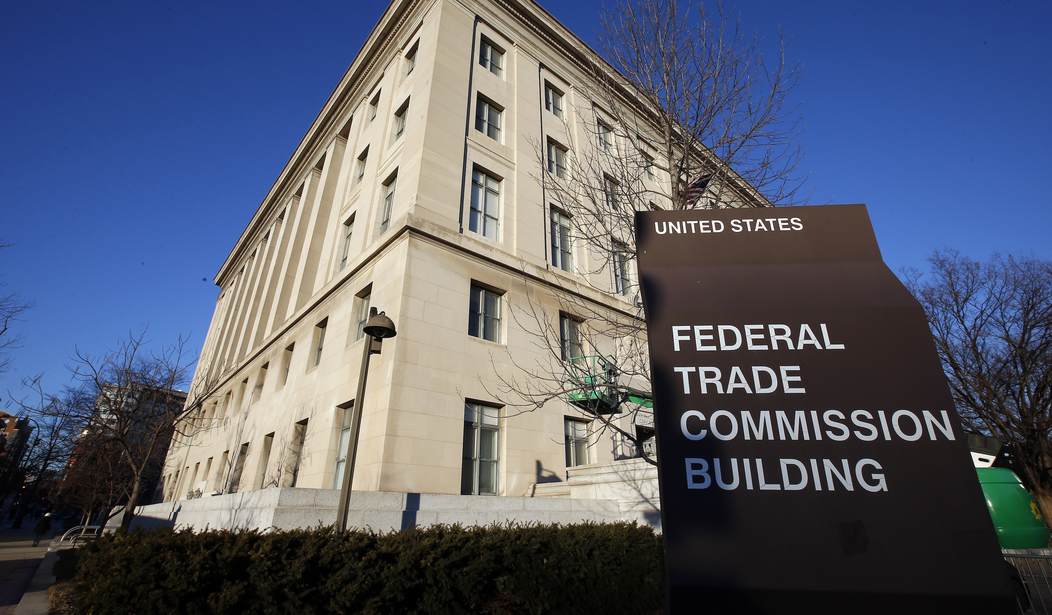
Simonson was right. The New York Times wrote an entire piece about how businessmen think, without speaking to a single... businessman. In fact, all their sources are, in one way or another, connected to the regulatory establishment, Democratic administrations, or lobbyists.
Most prominent of all are the lawyers, whose livelihoods depend on complex regulations to milk for billable hours. They are the ones who charge businesses to fight regulators.
Their basic argument is this: if Donald Trump can fire Executive Branch employees who regulate industries, businesses will freak out. In an ideal world, elections shouldn't matter. Technocrats should rule the roost.
There is an element of truth to that. Big businesses DO love predictability over good policy, especially since the bigger the business and the more lawyers involved, the more likely competitors are to be shut out of the market.
And the examples of horrific uncertainty that Trump is causing? He's slashing regulations and making it easier for businesses to make business decisions.
Two freight rail companies, Union Pacific and Norfolk Southern, last year proposed a merger that would create the nation’s first single network connecting the East and West coasts, a deal that requires approval by the Surface Transportation Board. Last year, Mr. Trump fired Robert E. Primus, a board member who had voted against another big rail merger in 2023.
With Mr. Primus’s removal, Union Pacific and Norfolk Southern may have a better chance of getting the board to approve their merger, some rail analysts have said. A spokeswoman for the board declined to comment.
Some consumer advocacy groups are concerned about the potential impact of a partisan Federal Energy Regulatory Commission on energy prices.
In fact, the Biden administration's regulatory apparatus blocked the merger of JetBlue and Spirit Airlines, supposedly in the name of protecting competition and consumer choice. That didn't work out. Spirit died, and now competition is reduced.
I know. My wife and I flew Spirit all the time, and now our tickets are more expensive, flights are less frequent, and we feel totally screwed. I even loved the Big Front Seats, which were like First Class, for $70. We pay hundreds more per flight now.
Thanks, Biden!
The Times claims that the bureaucracies will become hyperpoliticized now that the bureaucrats are vulnerable to getting fired, but that ignores how politicized, and almost exclusively lefty, these bureaucracies are.
In other words, the Times is selling you a line at the behest of the blob, which profits mightily the lawyers, lobbyists, and big businesses that create and manipulate the system.
Will making regulators accountable to the Executive Branch solve our regulatory mess? Of course not. It is government, and both political parties have interest groups that they respond to.
But making the regulators "independent" is no solution either; it just empowers the technocracy and the people who can pay to manipulate them.
Editor's Note: Do you enjoy HotAir's conservative reporting that takes on the radical left and woke media? Support our work so that we can continue to bring you the truth.
Join HotAir VIP and use promo code FIGHT to receive 60% off your membership.

Join the Conversation
VIP members get the ability to comment on articles.