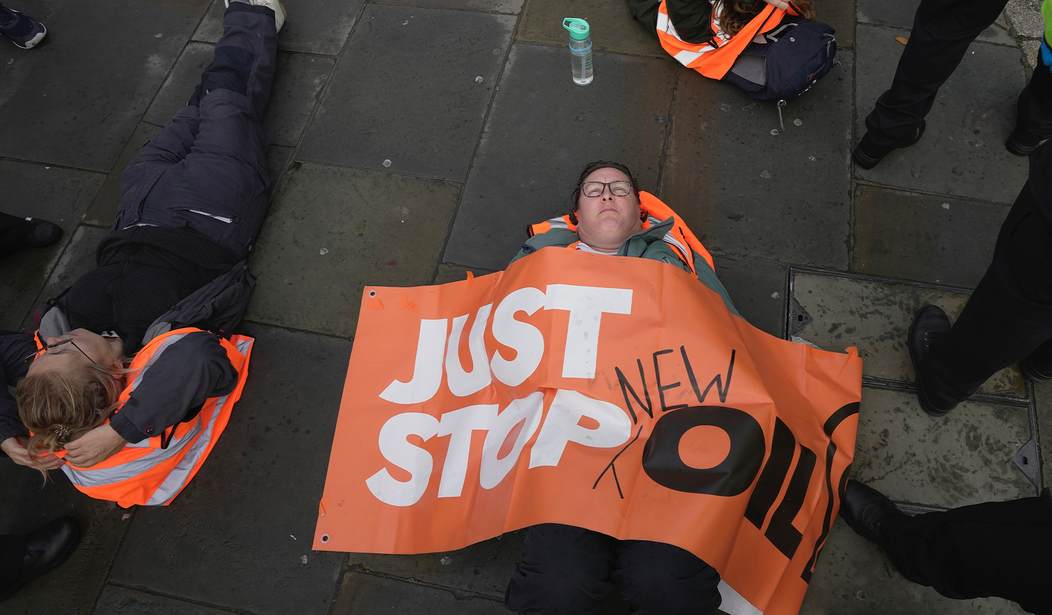
It always irks me when I hear people say stupid things like "No war for oil."
Actually, there are few better reasons to go to war than to ensure the free flow of oil, which is the lifeblood of the world economy. When Saddam Hussein invaded Kuwait, George H.W. Bush went to great pains to assert that the war had nothing at all to do with the war, which was manifestly absurd.
Oil is the lifeblood of the modern economy, even in the age of microprocessors and artificial intelligence, and it will be for the foreseeable future. Any American president who doesn't work every day to ensure that it remains cheap and plentiful is not doing his job. Downplaying the importance of oil as a key commodity would be as absurd as ignoring the importance of food or water.
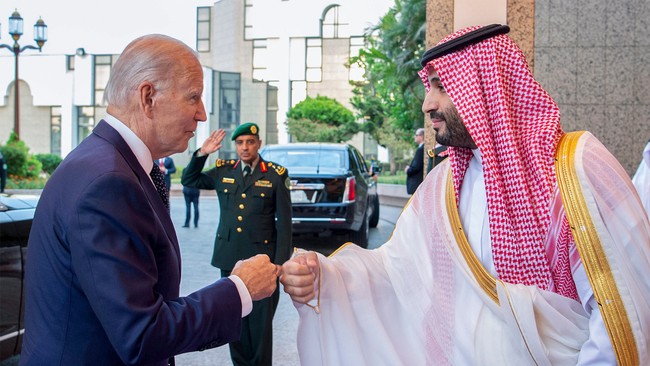
Remember how Biden's presidency started with a flourish, calling Saudi Crown Prince Mohammed bin Salman a "pariah" and refusing to speak to him over the murder of Washington Post journalist Jamal Khashoggi? That didn't end well for Joe Biden, and he did an about-face, although he never gained Saudi Arabia's friendship. That, among other things, hobbled his presidency.
When people talk about "war for oil," they mistakenly believe that Americans are sending soldiers off to fight for the profits of oil companies.
Ironically, the opposite is often the case. The more oil that flows through the markets, the less profitable oil companies are. If you look at the profit margins of oil companies, they tend to do better, not worse, when supplies are constrained a bit because the demand for oil tends to be inelastic—demand doesn't drop much when the supply drops, so prices skyrocket and everybody feels pain and the economy stalls.
Even a few million barrels taken off the market will lead to a spike in prices and shave tenths of a percent off of economic growth. That translates into even higher deficits, fewer jobs, more poverty, and even geopolitical instability.
Hence, the President of the United States, who hates Mohammed bin Salman, was making a pilgrimage to Saudi Arabia. America looks weak, and our enemies rejoice.
Of course we would go to war to ensure the free flow of oil.
Ask the Japanese in 1941 about the importance of oil. The attack on Pearl Harbor didn't happen because the island nation was suicidal. In 1941, as a response to Japanese expansion into Southeast Asia, Roosevelt imposed an oil embargo on Japan. 80% of Japan's oil was imported from the United States, and the embargo was seen as an existential threat, as it surely was. Roosevelt calculated that the embargo would reverse Japan's policy of imperial expansion; instead, it helped spark a war in the Pacific.
Oil. Our economy and our military run on oil. The military consumes hundreds of thousands of barrels of oil per day.
Venezuela a strategic prize: not just 303bn barrels of oil, but 10k tonnes gold for AI chips & aerospace, 14bn tonnes of iron ore for EV frames, coltan for tech capacitors, 5.5m tonnes nickel for batteries. A magnet for hedge fund short-sellers, lobbyists, brokers & billionaires. pic.twitter.com/KXqg7B4XTl
— Özer (@OzerKhalid) January 5, 2026
A lot of people are arguing that the real reason Trump decided to "arrest" Maduro was to reopen the oil flow from Venezuela, and no doubt that was part of the calculation. There were surely other reasons, including the cited drug running and Venezuela's relationships with Russia and China, as well as Hizbollah.
But even if the only reason was oil, that would be good enough. Depriving China of cheap oil and reducing oil prices in the West are more than sufficient reasons to conduct a military operation.
Sane people should get over their squeamishness about this fact.
Seizing oil fields is indeed a bad look, and it makes much more sense to maintain good relations with oil-producing countries and pursue mutually beneficial deals than to impose our will directly on other countries. Mutual trade is better policy, better for the economy, and ultimately cheaper in blood and treasure.
There are far worse reasons to go to war than for oil.