








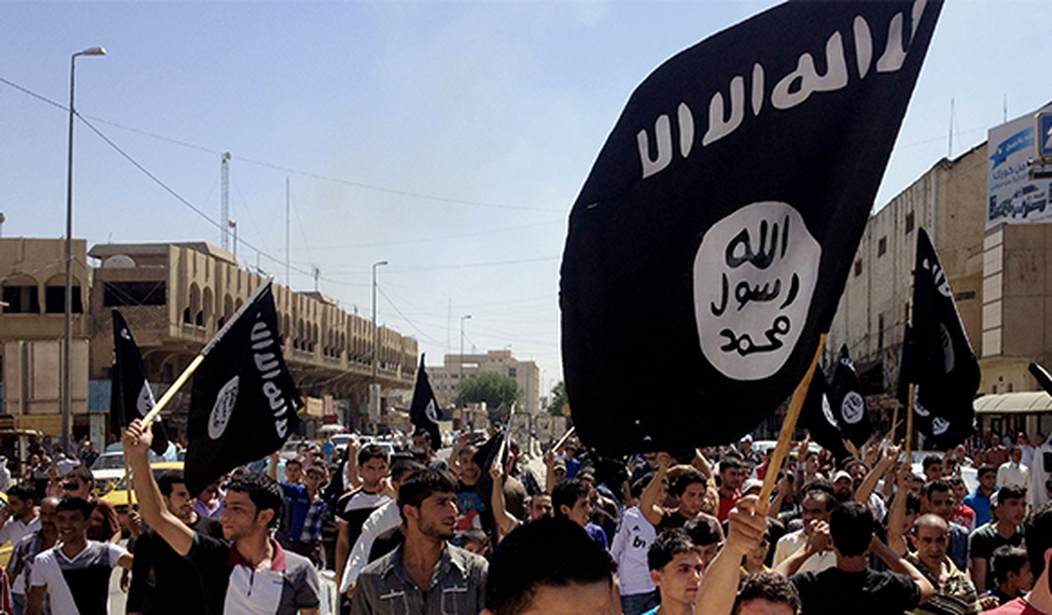
I have been struggling to reconcile my commitment to Classical Liberalism and religious non-discrimination with my conviction that Islamists should not be tolerated in Western society to the extent that it is legally possible to suppress or expel them.
I have been thinking on and off about it, but hadn't developed a coherent theory of how to make my beliefs compatible. Perhaps, I thought, this problem exists in the inevitable gray areas in life where principle and practicalities clash. It's not like there aren't many such areas where we find uncomfortable compromises to fit square pegs into round holes, but frankly, it is unsatisfying when we are forced to do so.
But then I ran across this X post, and thought it hit the nail on the head, at least in terms of the categorical issues, if not all the practical problems.
“Ordinary Muslim” is much harder, but “Islamist” is not. Islamism obliges its Muslim adherents in seeking to install Islam as a sacralized political authority, considering it as a necessarily total way of life. This is because Islamists go beyond treating Islam as the primary and…
— dan linnaeus (@DanLinnaeus) December 16, 2025
“Ordinary Muslim” is much harder, but “Islamist” is not. Islamism obliges its Muslim adherents in seeking to install Islam as a sacralized political authority, considering it as a necessarily total way of life. This is because Islamists go beyond treating Islam as the primary and ultimate reference for all domains of life, to the belief that the only legitimate authority in politics, law and war is Islam. They therefore treat politics as an instrument for instating Islam as such within non-Islamist society, and where politics fails and a balance of jurisprudences permits, or certain thresholds are met, violence is mandatory toward that aim.
Your everyday Muslim doesn’t subscribe to all of that. Many Muslims reject theocracy, other than Oman and Qatar, Gulf nations designate Islamist groups as terrorists and actively constrain them, shut them down and expel them, or where necessary more pragmatically contain them.
“Ordinary Muslim” is as complex as “ordinary Jew” or “ordinary Christian.” Because, ultimately, “Islamist” is a definable category in a way that “ordinary Muslim” is not; Islamism is an ideological program rather than a demography, much like white Christian nationalist is a definable category whereas Christian is abroad religious demographic baseline.
It would suffice to say that Islamism is not the ideology of “ordinary Muslims”, it’s the ideology of Islamists, but that’s the problem isn’t it? People are asking who are they and how do they differentiate themselves. That’s a problem of cross-cultural understanding I’m not equipped to solve but I’ll offer a few generalist thoughts.
Islam provides a totalistic treatment of life, that’s true, but it itself doesn’t mandate a total political system. Many Muslims practice under secular or pluralist political systems without experiencing this as theologically problematic, because Islam itself doesn’t require that every domain it covers be enforced through a Muslim ruler or state coercion.
Islam mandates Sharia primarily as a personal code of conduct for Muslims but it doesn’t mandate a state-backed total legal system over society. It covers how a Muslim-majority society should govern itself, but it doesn’t say: impose Islam everywhere—that’s the Islamist project.
Sharia covers worship, ethics, family, and morality, but many Muslims today observe and worship privately under secular governments, and they’re fine with just that. Sharia is juristically incompatible with commonwealth and constitutional legal systems according to a number of legal analyses, but many Muslims living in the west embrace that, some resolving disputes in local communally supported arbitration settings aligned with Sharia.
In sum, Islamism is not exactly “Islam taken seriously,” it goes far beyond that. Nor is the ordinary Muslim exactly “Islam lite.” Islamism instrumentalizes Islamic sources for a project of political domination. Ordinary Muslim life is selectively observant, personally pious, and accommodating to non-Islamic political orders
If and where Islamists self-identify in manifestos, symbols like black flags, militia flags, groups like Muslim Brotherhood, and their activist networks, ordinary Muslims don’t, and oppose them publicly where it is safe to do so.
Yes, I know that post is, in itself, an essay and a bit long to read embedded in another essay, but it captures an important distinction that I think Classical Liberals should ponder: individual Muslims are more often than not decent people whose practice of Islam is compatible with life in a Liberal society, in much the same way that Christians and Jews can live with people whose views differ from their own.
One can be a practicing Muslim without being a member of a totalitarian cult, but it is also true that there is a wide swathe of Muslims who are Islamists and adherents of a totalitarian ideology rooted in Islam.
I hesitate to point to specific passages in the Koran and say, "See!," because that is a game of gotcha that anybody can play if they comb through the Old Testament, for instance. You can find prescriptions for stoning, for instance, and atheists often point to periods in history when Christians burned heretics or slaughtered adherents of other religions. Catholics and Protestants have fought holy wars against each other, and if you like, you can read about the necessity of "priest holes" during the religious conflicts in England.
On the other hand, there have been periods of history where Muslim societies were much more civilized than their contemporary Christian counterparts. Civilizations wax and wane, and religious practices often do as well.
Welcome to the real world. Hope you like it here, warts and all.
Dan's point helps square the circle. To say that Islam is the problem is not entirely wrong, but it is not entirely right either. It is better to focus on Islamism as a totalitarian ideology, which is not the same thing at all.
A Muslim in Australia just got shot after disarming the armed jihadi at Bondi Beach. He risked his life to save Jews, fellow Australians.
— dan linnaeus (@DanLinnaeus) December 16, 2025
The Bondi Beach terrorist attack is an excellent example of why we should, at the very least, intellectually distinguish between Muslims and Islamists. Two Islamists committed a heinous crime in the name of Islam; another Muslim risked his life and took two bullets to save Jews who were under attack.
If you are committed to the idea that being Muslim makes you a dangerous person driven by hatred of all non-Muslims, this discontinuity should bother you, as it bothered me when I read the stories.
Ahmed al Ahmed is a Muslim of Syrian background, and he risked his life to save his fellow Australians. Reportedly, he fully expected to die, telling his friends as much before he bravely tackled one of the shooters. He was a Muslim, an immigrant, and he ran to the gunfire to save people whom he did not know.
He performed much more bravely than the police did, to their eternal shame.
No doubt his faith in God played a role in making that decision, suggesting that his Islamic faith was not a barrier to defending others who most certainly were not Muslims.
Of course, the terrorists were Islamists, making the other point clear: the totalitarian ideology of Islamism is not in itself a "perversion" of a "religion of peace;" it is a variation of the religious practice that assumes that being a true Muslim means subordinating the entirety of life to an ideology built on Muslim foundations.
BREAKING:
— Visegrád 24 (@visegrad24) December 14, 2025
Authorities confirm that 2 active IED bombs were found at Bondi Beach yesterday.
It’s likely that the bombs malfunctioned and that the massacre could have been much worse. pic.twitter.com/Vq6w7nyhQB
Which brings up the much more complicated practical problems: how do we sort the wheat from the chaff, to what extent is it our responsibility to do so while defending our society from a clear and present danger, and how suspicious are we allowed to be when dealing with Muslim immigrants or their descendants in our societies?
As Liberals, we should try to avoid allowing fears and prejudices to creep into policy decisions; as people who live in the real world, we shouldn't ignore uncomfortable realities.
Is it prejudice to exercise greater care while walking in certain neighborhoods, or to focus our police presence there? After all, even in crime-ridden areas, most people are not dangerous to you.
If you aren't more careful, you are stupid. Certainly too stupid to have a say over other people.
Apply this to migration policies, and you get similar answers. Clearly, people from certain regions and of certain religious persuasions are much more likely to present a danger in aggregate, even if, individually, many are or could be perfectly safe. And since it is nearly impossible to screen refugees from Syria, Afghanistan, or Somalia appropriately, should we ignore the increased risk because we don't want to prejudge?
I would say not. Nobody has a right to immigrate here, so picking and choosing is inherent to the process. This is just one more variable. We need not exclude all Muslims, but it would be wise to be especially choosy because the risks of getting it wrong are quite high.
Does that mean that many decent people might get excluded? Undoubtedly so. Even if we didn't use this particular variable, more people who want to emigrate to the United States are turned away than are allowed to come here.
In 2011, Gallup estimated that about 150 million people wanted to emigrate to the United States, and no doubt that is a drastic underestimate. Add in all Western countries, and the numbers would be staggering.
Almost none of them are admitted in any given year, so it's hard to argue that there is any greater injustice in turning away an Afghan applicant than one from Japan or Russia, even if, in principle, they would be equally valuable immigrants.
I have more thinking to do on the subject, but public policies are not designed to address specific cases one by one because in a world with 8 billion people, that is a fool's errand. We need to think about these problems as broadly as possible, while avoiding lazy thinking.
- At HotAir, we’ve been dealing with real government suppression of free speech for YEARS. Despite the threats and consequences, we refuse to go silent and remain committed to delivering the truth.
But we can't do it without your support.
Please help Ed, Beege, John, and me continue fighting back against government censorship by joining our terrific HotAir VIP community today. Use promo code FIGHT to receive 60% off your membership.
And thank you so much again for being here with us at HotAir.


Join the Conversation
VIP members get the ability to comment on articles.