






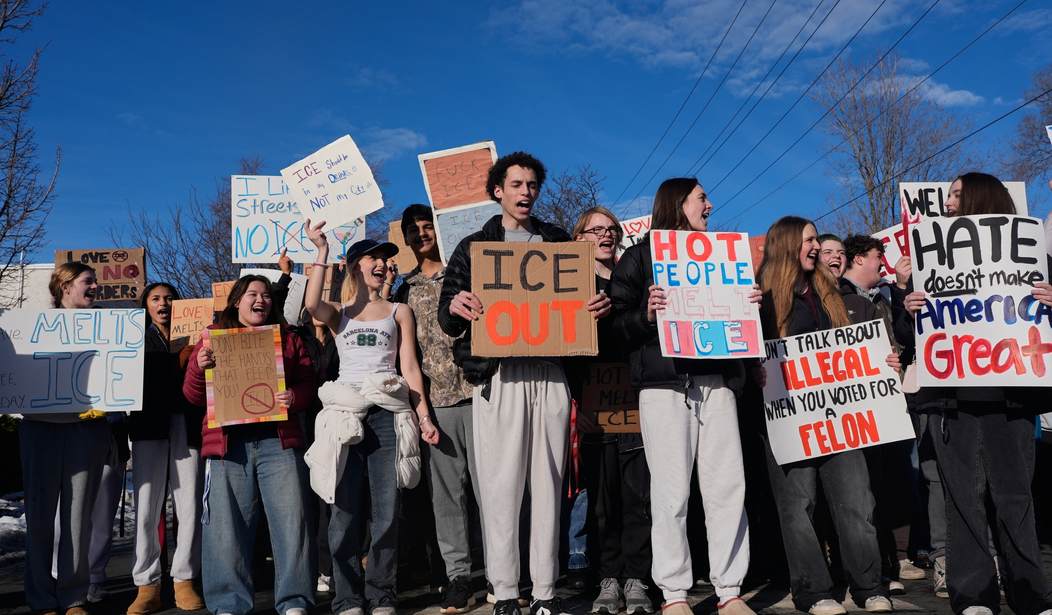

Savannah Hernandez, a Turning Point USA contributor and reporter, was doing her job in the Twin Cities—filming and asking questions outside the Bishop Henry Whipple Federal Building during an anti-ICE protest. For that "crime" of reporting on the wrong side of the activist narrative, she was swarmed by protesters. Horns and whistles were blasted in her face at close range. A grown man shoved her to the ground, injuring her neck, leg, and back. The FBI has opened a federal investigation, and four people were arrested, including individuals involved in the physical confrontation.
Hernandez later described the fear: "I'm terrified to do my job. I can't even interview people properly on the street because I got brutally assaulted and pushed to the ground by a 250 lb man for simply going and reporting on anti-ICE activities." This wasn't random street crime. It was the inversion of violence playing out in real time: conservative journalism branded as "harm," while actual physical aggression gets reframed as righteous "resistance."
This incident isn't isolated. It reflects a deeper cultural and institutional shift that has warped the very meaning of violence. Traditionally, violence meant physical force—punches, use of weapons, property destruction, or coercion that overrides consent. Over the past decade, especially in activist and academic circles, that definition has been expanded and even inverted. Speech that challenges progressive orthodoxies is now labeled "violence." Enforcing laws or contracts like leases can be "violence." Mere disagreement, particularly if it questions someone's identity or worldview, becomes an "assault."
Once an idea or person is tagged as violent, debate ends. They must be stopped—drowned out, disinvited, or physically confronted. As one protester's sign and rhetoric suggested during related campus exchanges, conservative speech itself oppresses and inflicts harm, justifying shutdown tactics.
This framework draws on concepts like "structural violence," where neutral systems producing unequal outcomes are deemed inherently harmful, and "epistemic violence," where rejecting certain "ways of knowing" or lived experiences supposedly inflicts tangible damage. The result? Claims that rejecting radical gender ideology constitutes an "ongoing genocide" against trans people. Disagreeing or failing to affirm becomes equivalent to killing. Persuasion collapses into force; emotional discomfort equates to physical attack.
The moral inversion follows logically: If speech is violence, then silencing it is self-defense. If disagreement harms, intimidation becomes justified. This produces scenes where a journalist covering a protest faces mob tactics, yet the real question in some circles becomes whether her reporting was "harmful." We've seen billions in property damage from riots described as "mostly peaceful" because the cause was deemed just. Speakers are shouted down or events canceled over potential offense. Even the widow of the late Charlie Kirk, Erika Kirk (now leading Turning Point USA after his 2025 assassination at a Utah event), recently withdrew from a planned appearance amid "very serious threats."
Rhetoric from officials and activists amplifies it. Public figures have equated eviction with violence while downplaying property rights. We've heard calls to "fight in the streets," "bring weapons to the bar fight," "get in their face," and warnings that pushing people too far will spark "uprisings." Donald Trump and MAGA supporters are routinely cast as existential threats to democracy, with implications that extreme measures are warranted. Empathy gets weaponized: the noble impulse to protect the vulnerable stretches into subjective definitions of harm with no limiting principle. When harm is whatever someone feels, power—not truth or objective standards—decides outcomes. Might makes right.
A functioning republic depends on a bright line between persuasion and coercion. Argue, disagree, even be wrong—that's protected. Use force to impose your will? That's not. Erase that line, and justice dissolves into selective enforcement. Sympathetic "systemic" motives excuse criminals; victims get dismissed based on their beliefs.
Restoring clarity requires consistency with no exceptions. Violations of constitutional protections—free speech, due process, equal protection—must carry consequences based on objective behavior, not ideology. Expect accusations that enforcing the law "weaponizes" it. That's projection: institutions have already been bent to undermine objective standards.
Republicans recognize the rhetoric but haven't fully operationalized a response. Complaining about double standards isn't enough. This is an institutional problem demanding engagement at that level—reshaping incentives so radicals can't operate under different rules. We can choose to restore order through equal application of law, or keep losing ground we should hold.
The assault on Savannah Hernandez in Minnesota isn't just an attack on one reporter. It's a symptom of a worldview that inverts good and evil, where journalism becomes provocation and thuggery becomes activism. Until that framework is confronted head-on—with clear distinctions and unflinching enforcement of actual rights—the chaos will continue.