







I grew up in a pretty "high-trust" place. It was a good idea to bring your bikes inside or lock them up at night - teenagers are gonna be teenagers - but my dad didn't start locking his doors at night until I'd left for college. Graffiti is confined to a couple of abandoned buildings down by the railroad tracks.
Of course, I've been living in major cities for a few decades now. And while the level of trust was never anywhere near that high, there was a certain baseline common notion of "right" and 'wrong" in effect - most notably that if you were a law-abiding citizen, the government and its law enforcement apparatus were on your side.
Not the criminals' side.
For instance, in the early-mid 1990s, there was a surge in street crime. Crime in general surged. The homicide rate in Minneapolis earned the city the nickname "Murderapolis" for a while around 1995.
And during that surge, even though both cities were no less Democrat-run than they are today, you got the impression that the mayors (Sharon Sayes-Belton, Minneapolis's first female and black mayor, and Saint Paul's Norm Coleman, who was eventually kicked out of the DFL and became a Republican and a US Senator) were on the side of the citizens, not the criminals.
If you live in a "blue" city, you may get the impression that that's not true today - that the prosecutors are working to make criminality a viable, safe career choice for people.
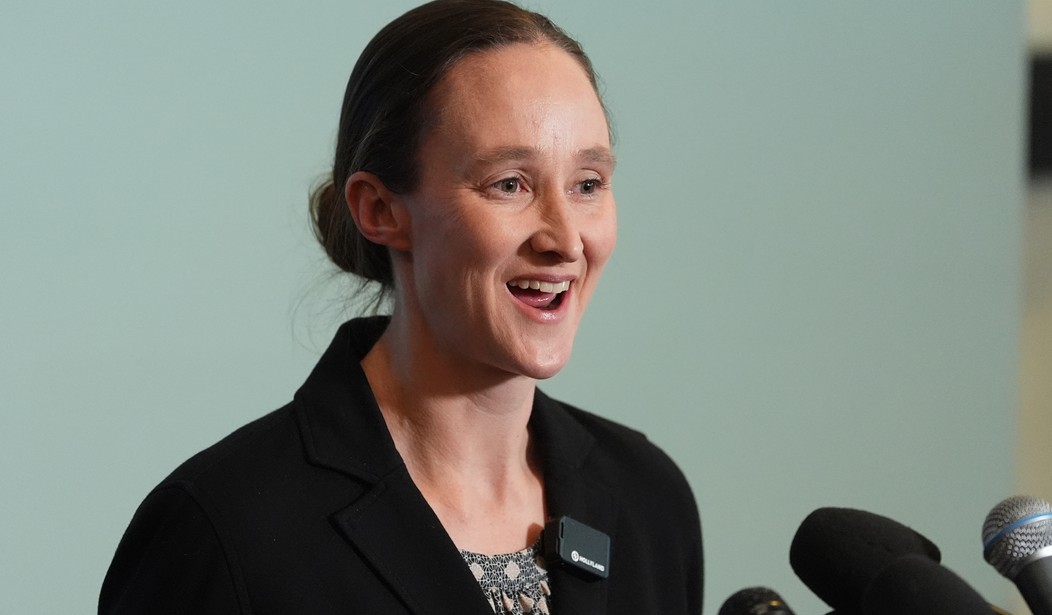
Which brings us to Seattle, whose mayor, Katie Wilson, looks like the star of "The Last of Us" and seems to be on track to make Seattle look and feel like the show.
Seattle has a bit of a street problem - especially gang-related gunfire in North Seattle.
As in many other cities, Seattle and King County seem to believe that's the natural order of things.
Local residents tried to take matters into their own hands:
Nothing says socialism more than citizen barricades. https://t.co/aTWRWr4zWV In this case, Les Miserables are seeking to protect their property. After electing a mayor who once called for the defunding of police, Seattle neighborhoods are reverting to self-help measures.
— Jonathan Turley (@JonathanTurley) May 27, 2026
Residents near North 98th Street and Linden Avenue North spent part of the Memorial Day weekend piling dirt, gravel, logs and chunks of concrete into roadblocks that now partially block access to three residential streets near Aurora Ave.
Supporters of the barriers said they are desperate to stop shootings they believe are tied to prostitution-related activity along the Aurora corridor. Opponents argue the barricades could slow firefighters, medics and other emergency responders trying to reach homes in the area.
“It’s either this, or bullets in my neighbor’s houses,” resident Peter Orr said.
Over the past month, residents documented at least eight shootings within roughly 10 blocks of their homes using incident numbers, surveillance footage and shell casings, according to neighbors who have tracked incident numbers, surveillance footage and shell casings.
Now, I'm sure you can see the problem: if street gangs can't get through, neither can fire trucks or ambulances.
Which was the city's rationale for removing the barricades:
Mayor Katie Wilson directed Seattle Department of Transportation crews to remove the homemade barriers and install temporary traffic-calming measures.
City of Seattle removes barriers set up by people trying to protect their neighborhoods from criminalspic.twitter.com/eEYmQbSFgw
— Defiant L’s (@DefiantLs) May 30, 2026
The effort shifted Friday to North 97th and North 102nd streets, where Seattle Department of Transportation crews installed staggered concrete barriers that still allow vehicle access.
The temporary barriers, known as chicanes, are designed to reduce high-speed cut-through traffic while restoring access for emergency responders and service vehicles, city officials said.
Maybe there's a lesson there for beleaguered blue-city normies: if you want something fixed, do it yourself. The city will fight you - but if you're luck, they'll replicate your effort. with Democrat-supported union labor, more expensively and less reliably.
It's not much of a win, but if you're a normie in a blue city, you take what you can get.