









It was almost a cliché - during 20 combined years that Bill Clinton, Barack Obama, and Joe Biden held office, the response to any act of terror against the United States or its allies would be to "send a message" to the terrorists' leadership, usually via some more or less symbolic attack on a few rump nodes of the terror network.
That message was usually treated about the same way Gen-Z kids treat voicemail messages; ignored, even if they knew how to find the message in the first place.
The prototype may have been Bill Clinton's response to the Al Qaeda bombings of the US embassies in Kenya and Tanzania; a wave of cruise missiles hitting "terror training camps" (collections of tents and huts) in Afghanistan and a pharmaceutical plant in Sudan.
Between 75 and 100 Tomahawk missiles were fired from six US warships and a submarine at 'terrorist facilities' in Afghanistan and in Sudan in retaliatory raids against the embassy bombings in east Africa, which killed at least 263 people, among them 12 Americans.
The president announced the attacks on the same day that the former White House intern Monica Lewinsky testified for a second time to the grand jury that is investigating her affair with him.
The Clinton adminstration vowed the attacks were not an isolated raid but part of an ongoing assault against the resurgence of anti-American atrocities.
They were, in fact, an isolated raid. The only "ongoing assault" was the terrorists, who saw the attack as the impotent half measure it was, and a barometer of America's stomach for a hard fight that helped cement the idea, three years later, of attacking the Pentagon, Capitol, and the World Trade Center. The notion of "sending a message" became such a joke on the right that, in the wake of 9/11, George W. Bush was moved to repudiate that legacy:
"When I take action," he said, "I'm not going to fire a $2 million missile at a $10 empty tent and hit a camel in the butt. It's going to be decisive."
And to his credit, he delivered, although the 20 years of follow-up left much to be desired.
Obama continued and expanded Clinton's policy, sending drones and cruise missiles to kill terror networks' bag men in hopes that this would be the time the capo di tutti capi would get the message. And the only message Biden sent, via his abandonment of Afghanistan, was "we quit".
How the turntables have turned.
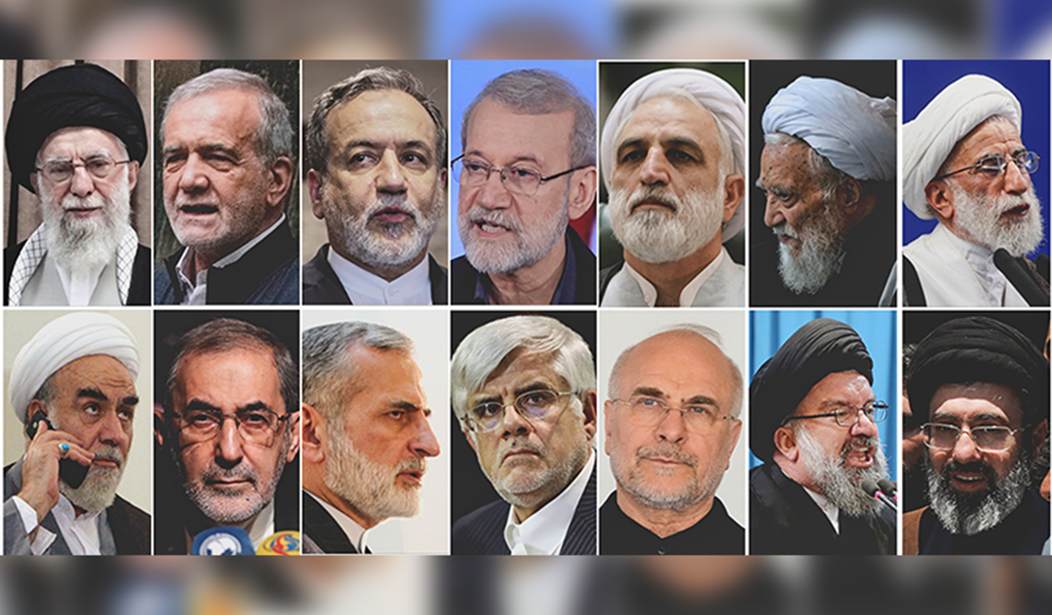
The most encouraging thing about last weekend's attacks on the Tehran regime is that it was the geometric opposite of everything Biden, Obama, and Clinton did, and a repudiation of the notion of "sending messages" to terror kingpins.
The message went to the followers.
The ever-more-essential Richard Fernandez:
The 2026 calendar. Maduro in January. El Mencio in February. Khamenei in March announces the new American way of war. An unnoticed development in the history of conflict has taken place. For the first time in memory it is the kingpins, not the henchmen, who are dying first in…
— wretchardthecat (@wretchardthecat) March 1, 2026
The essential pullquote:
None of this should be read to justify war or trivialize it, but it is nevertheless a fact that changes in the technology of combat have made it far more economical and altogether less trouble to target the kingpins rather than the NPCs.
The days of Bomber Command incinerating Dresden or Curtis Le May torching Tokyo then trying a few Nazis and sparing Hirohito are long gone. If WW2 were refought, Hitler would be among the first targets taken out.
Not everything about the good old days was good.
Under Trump, the US has consistently "sent its messages" to the people who most need to hear them - the rank and file followers.
Say what you will about Truimp - this is a huge improvement.