Not to date myself, but my high school had one computer. It was in the full-time custody of the typing teachers, and it did double duty - managing the school's scheduling, and serving as the classroom computer for the one, single "Computer Programming" class the school offered - a semester of hacking away at writing BASIC code (kids, ask your parents, or ChatCPT, whichever is easier). Getting into the class had barriers to entry - you needed to have decent grades, and you had to be able to tolerate the typing teacher. I'll let you guess which half I was barely able to qualify at.
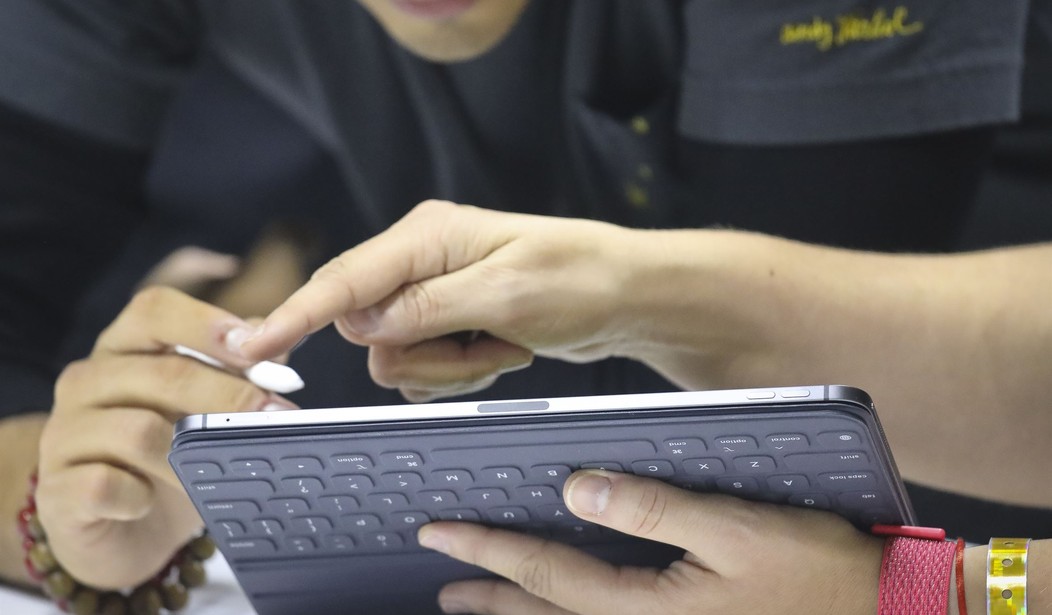
Anyway, sometime not long after my kids were in school, that changed completely; my school district started giving devices - laptops, chromebooks, iPads - to all the kids.
My father was a teacher, and my day job was, as it is today, in software human factors - so I could see a lot or problems; on a good day, even a great teacher (like Dad) had his work cut out for him keeping 25 high school aged kids focused on the task at hand, even before everyone had a smart phone and a device leading them to a world of distractions.
That was then. This is now. Technology is everywhere.
And it's not working. One former teacher's tweet has stirred up a discussion that a whole lot of school districts need to take seriously:
I taught during the rise of Chromebooks in classrooms and it was a nightmare
— Auron MacIntyre (@AuronMacintyre) February 22, 2026
Kids cheating rampantly, Googling every single fact, refusing to read assuming that copy and pasting things from Wikipedia counted as an answer
Students were regularly able to circumvent controls to… pic.twitter.com/GOlFNMsFl9
It worked about as anyone who's ever met a high school boy might expect:
Students were regularly able to circumvent controls to watch porn, play video games, and watch movies or YouTube in class
Students used shared Google Docs to gossip, bully each other, and plan crime (not joking)
Everyone knew it was a disaster but the district refused to stop using them because “this is the future, kids need to learn computers”, plus massive amounts of funding were tied to them
Mandatory testing was done on the computers and they were used for IEP accommodations so they were unavoidable
The tweet was a response to this piece from Forbes last week, and the problems aren't just behavioral; it's affected students' learning and their capacity to learn:
Earlier this year, in written testimony before the U.S. Senate Committee on Commerce, Science, and Transportation, neuroscientist Jared Cooney Horvath said that Gen Z is less cognitively capable than previous generations, despite its unprecedented access to technology. He said Gen Z is the first generation in modern history to score lower on standardized tests than the previous one.
While skills measured by these tests, like literacy and numeracy, aren’t always indicative of intelligence, they are a reflection of cognitive capability, which Horvath said has been on the decline over the last decade or so.
And this would seem to be really bad timing, given the other advancements in technology happening:
Gen Z will now have to face the ramifications of eroding learning capabilities. The generation has already been hit hard by the transformations of the 21st century’s other technological revolution: generative AI.
Early data from a first-of-its-kind Stanford University study published last year found AI advancements to have “significant and disproportionate impact on entry-level workers in the U.S. labor market.” But a less capable population means more than just poorer job prospects and less promotions, Horvath warned; it endangers how humans are able to overcome existential challenges in the decades to come.
There are calls to start turning that particular ship around:
Where are the students who think they benefited from Chromebooks and iPads in school?
— Jonathan Haidt (@JonHaidt) February 23, 2026
Where are the teachers who believe that ed tech greatly improved education?
Let's get this stuff out of elementary schools by September. Older grades will be harder, but let's start with… https://t.co/cUf5tWc3n5
It's worth noting that there is a baby in that bucket of bathwater:
Laptops are super useful for collaboration, research, etc if you have strong pedagogy and know how to manage a class.
— Gareth Manning (@worldteacherman) February 23, 2026
Phones produce distraction. iPads are terrible.
Saying all edtech is bad (although much is) is a gross oversimplification. There are lots of great tools.
We live in a tech-driven society - but as tech becomes more able to drive itself, the cognitive ability that seems to have languished with Gen Z is going to become more important to have, just as it appears to be becoming more and more a premium.